Quick Answer
Quick Answer:
1 yard equals 36 inches exactly.To convert yards to inches, multiply the number of yards by 36.
Formula:
Yards × 36 = Inches
Example:
2 yards × 36 = 72 inches
If you’ve ever wondered how many inches in a yard really looks like in everyday life, you’re not alone. Most people can understand inches or feet, but yards often feel harder to picture without a reference point. That’s because a yard sits in the middle of the imperial measurement system—larger than a foot, but still small enough to be used in clothing, fabric, sports fields, and home projects.
In this guide, you’ll learn exactly how many inches are in a yard through clear explanations, real-world examples, comparison charts, and easy visualization tricks. By the end, you’ll be able to “see” a yard instantly in your mind without needing a ruler or calculator.
See Also: How Many Inches in a Foot? (Complete Guide with Real Examples & Visuals)
Conversion Table: Yards to Inches
| Yards | Inches |
|---|---|
| 1 yard | 36 inches |
| 2 yards | 72 inches |
| 3 yards | 108 inches |
| 4 yards | 144 inches |
| 5 yards | 180 inches |
| 10 yards | 360 inches |
| 20 yards | 720 inches |
Quick Reference Rule
- 1 yard = 3 feet
- 1 foot = 12 inches
- So, 1 yard = 3 × 12 = 36 inches
What Does a Yard Mean in Measurement?
A yard is a unit of length in the imperial system, commonly used in the United States and a few other countries. It is primarily used for:
- Fabric and textiles
- Sports field measurements (football, soccer, cricket boundaries)
- Landscaping and construction
- Everyday distance estimation
A yard sits neatly between a foot and a meter in terms of size:
- Smaller than a meter (1 yard ≈ 0.914 meters)
- Larger than a foot (1 yard = 3 feet)
Understanding that 1 yard equals 36 inches helps you quickly convert between small and medium-scale measurements without confusion.
Why This Conversion Matters
Knowing how many inches are in a yard is useful in many real-life situations:
- Buying fabric for sewing or tailoring
- Measuring furniture or room layouts
- Estimating distances in sports fields
- DIY home improvement projects
- Reading product specifications online
When you understand this conversion, you don’t need to rely on tools every time—you can estimate quickly in your head.
How the Conversion Works
The imperial system is built on simple relationships:
- 12 inches = 1 foot
- 3 feet = 1 yard
So:
1 yard = 3 feet × 12 inches = 36 inches
This makes conversions predictable and easy once you remember the base rule.
To convert any yard value into inches:
- Multiply yards by 36
- That’s it
Example:
- 6 yards × 36 = 216 inches
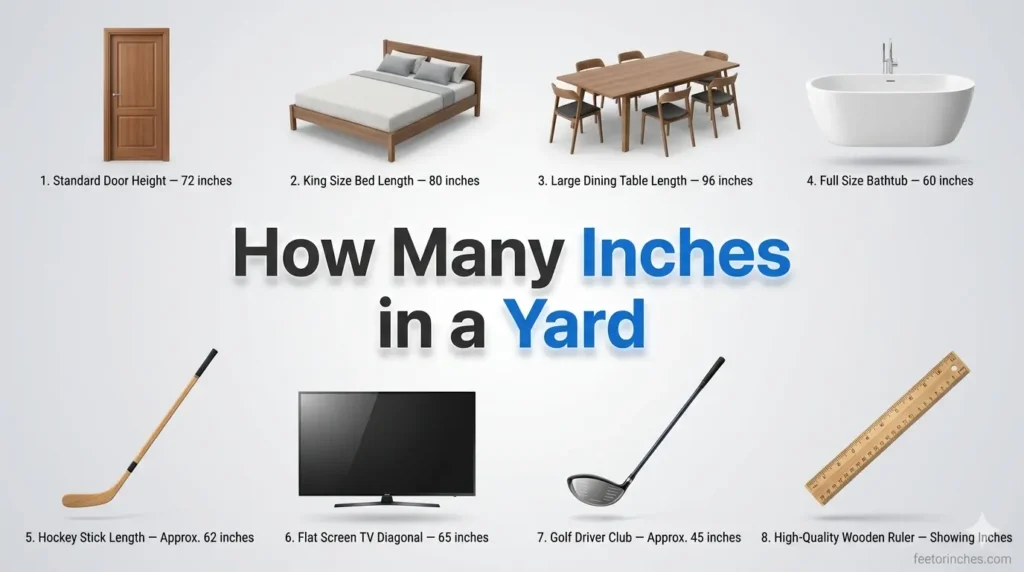
Real-Life Examples of 1 Yard (36 Inches)
Here’s how 1 yard compares to everyday objects so you can visualize it instantly.
Example 1: Baseball Bat Length
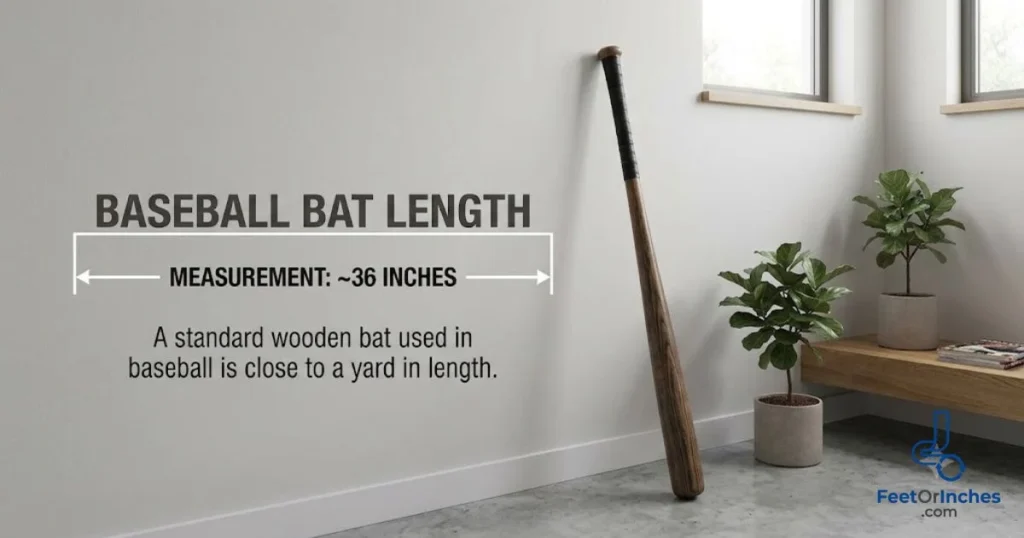
- Measurement: ~36 inches
- Visualization: A standard wooden bat used in baseball is close to a yard in length.
- Insight: Perfect for understanding sports equipment sizing.
Example 2: Three Rulers End-to-End
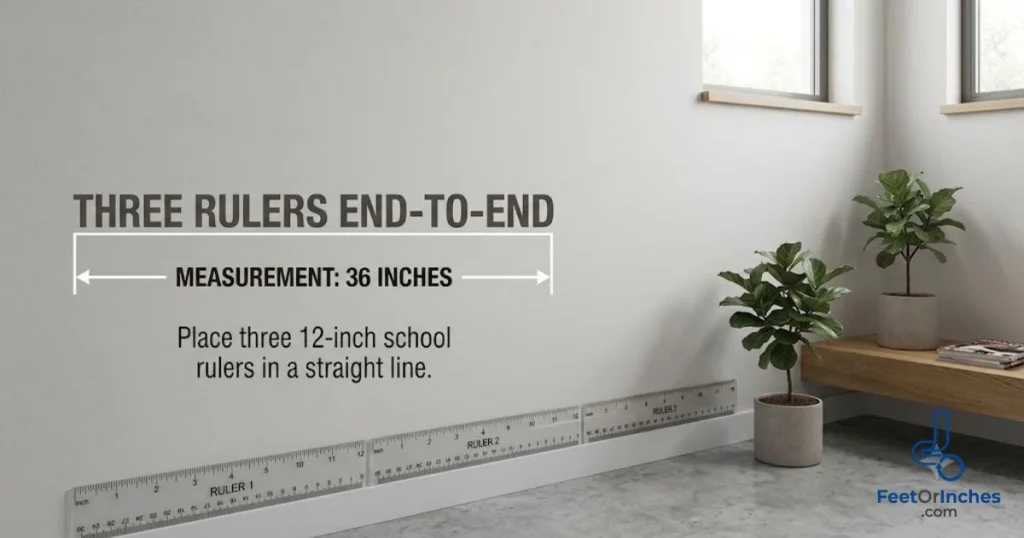
- Measurement: 36 inches
- Visualization: Place three 12-inch school rulers in a straight line.
- Insight: This is one of the easiest ways to picture a yard.
Example 3: Guitar Length
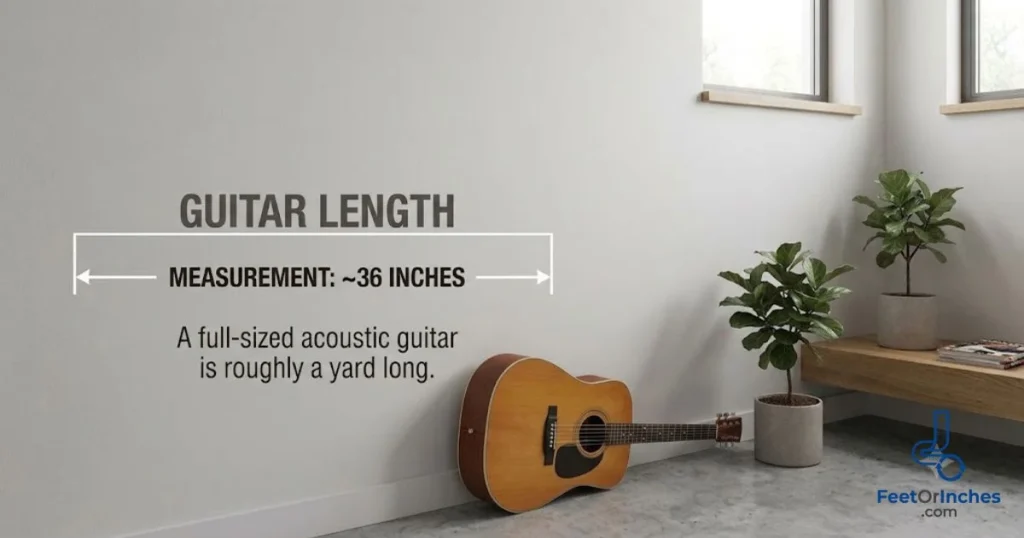
- Measurement: ~36 inches
- Visualization: A full-sized acoustic guitar is roughly a yard long.
- Insight: Great for music lovers to visualize measurement.
Example 4: Kitchen Counter Width Section
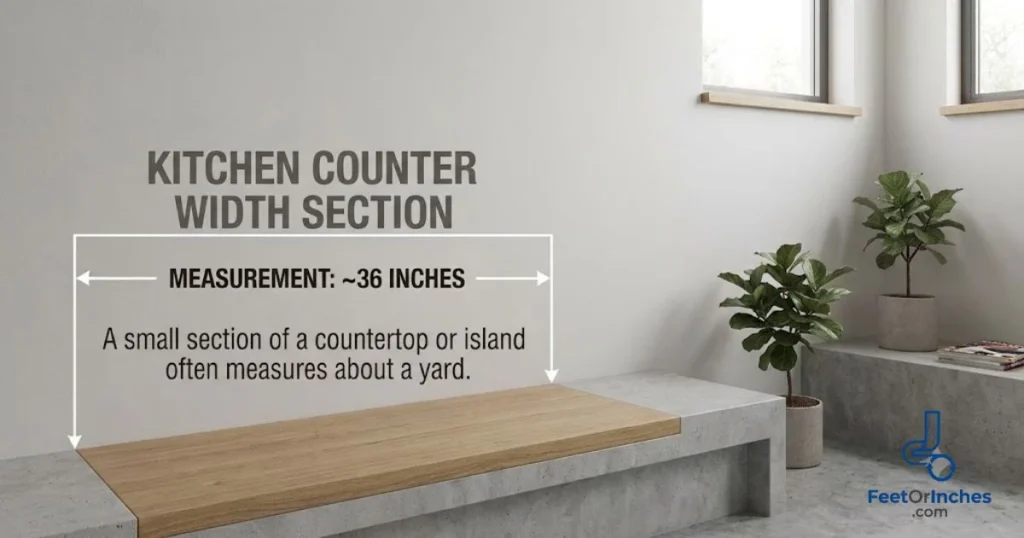
- Measurement: 36 inches
- Visualization: A small section of a countertop or island often measures about a yard.
- Insight: Useful in kitchen planning.
Example 5: Waist-High Table
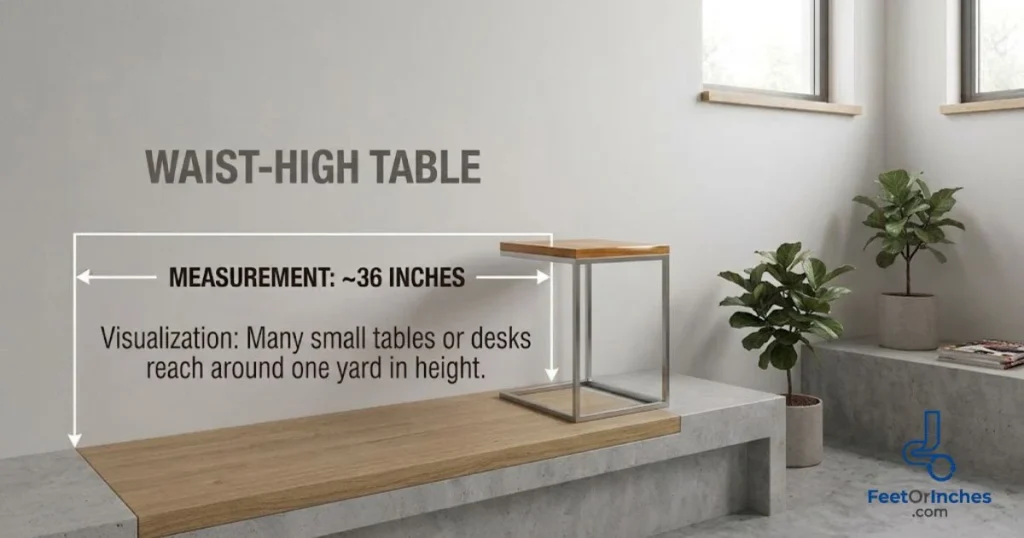
- Measurement: ~36 inches
- Visualization: Many small tables or desks reach around one yard in height.
- Insight: Helps with furniture comparisons.
Example 6: Toddler Height Range
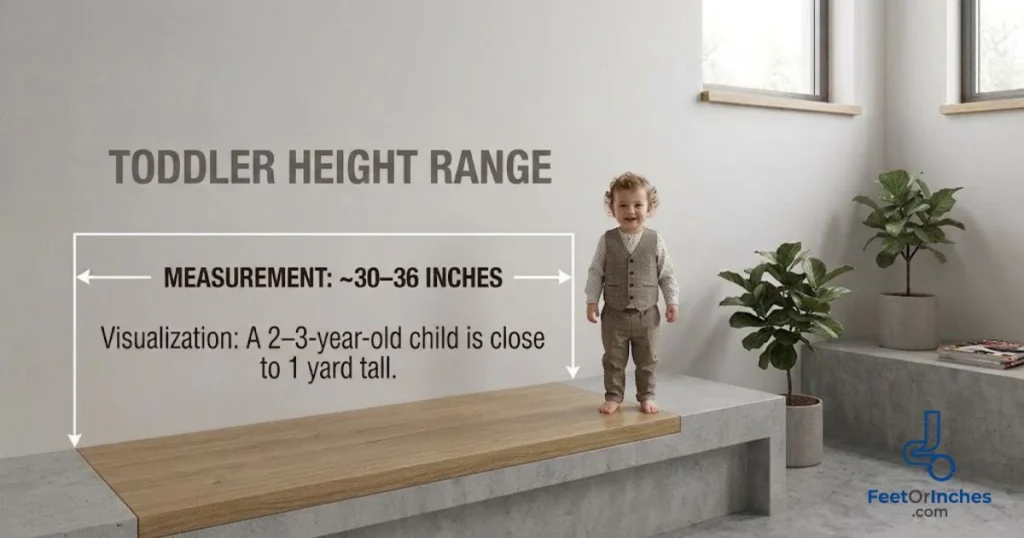
- Measurement: ~30–36 inches
- Visualization: A 2–3-year-old child is close to 1 yard tall.
- Insight: Makes human-scale visualization easy.
Example 7: Fabric Cut for Clothing
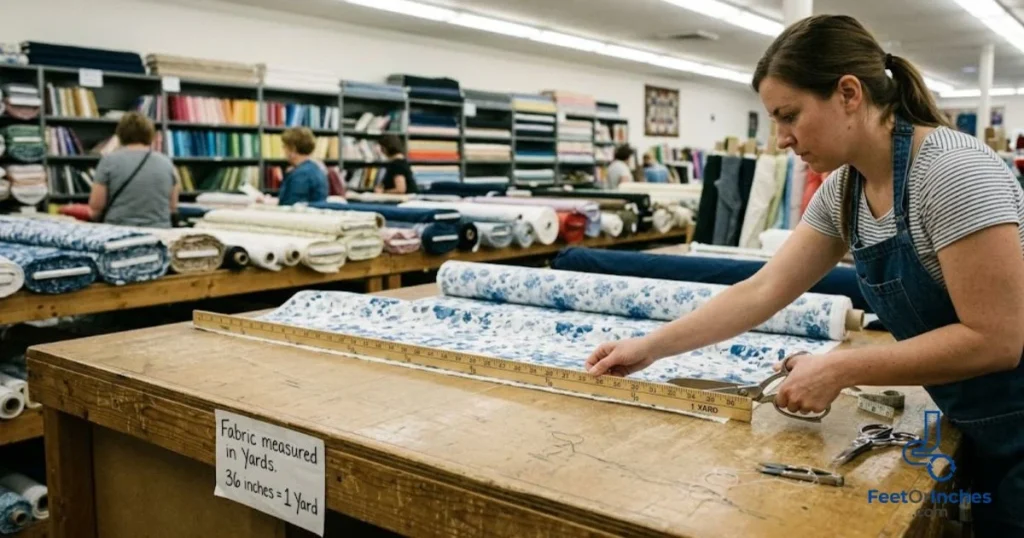
- Measurement: 36 inches of fabric = 1 yard
- Visualization: Fabric stores measure material in yards for convenience.
- Insight: Common in tailoring and sewing.
Example 8: Small Coffee Table Length
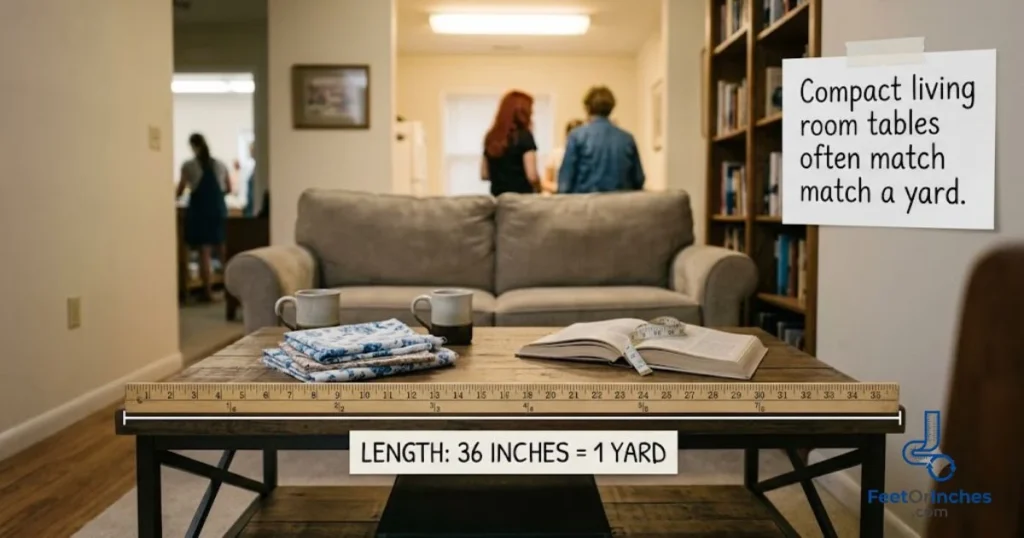
- Measurement: ~36 inches
- Visualization: Compact living room tables often match a yard.
- Insight: Useful in interior design.
Example 9: Large Backpack Height
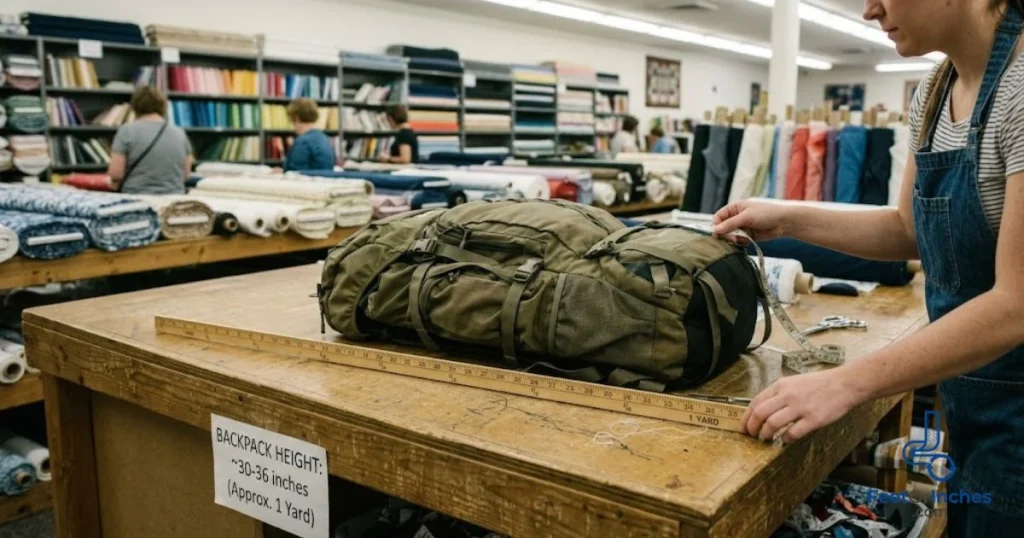
- Measurement: ~30–36 inches
- Visualization: Hiking backpacks laid flat are close to a yard.
- Insight: Helps in travel gear sizing.
Example 10: TV Width (Small Models)
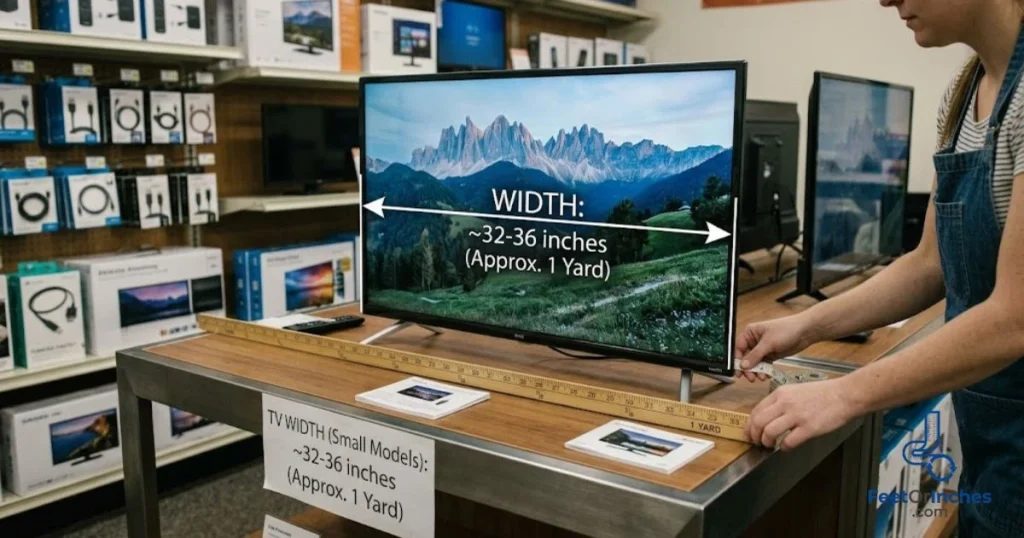
- Measurement: ~32–36 inches
- Visualization: Smaller TVs are nearly one yard across.
- Insight: Good for electronics comparison.
Example 11: Crib Length
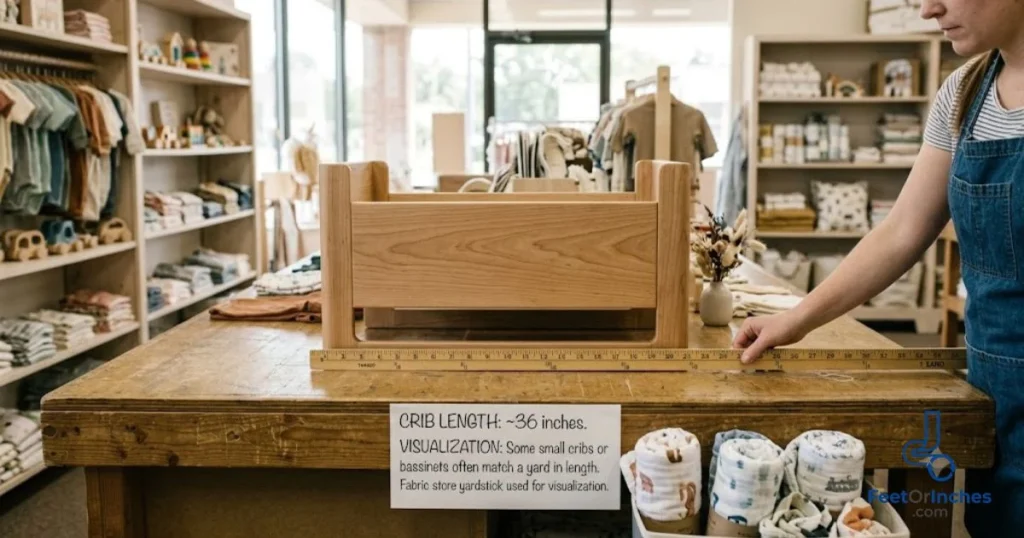
- Measurement: ~36 inches (some models)
- Visualization: Baby cribs or bassinets often match a yard in width.
- Insight: Helpful for parenting products.
Example 12: One-Step Walking Distance
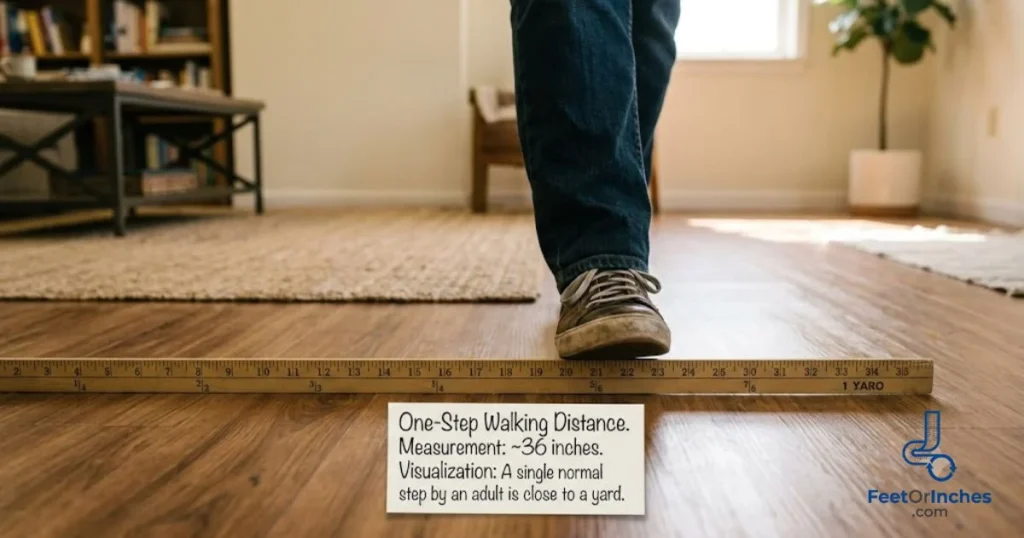
- Measurement: ~36 inches
- Visualization: A single normal step by an adult is close to a yard.
- Insight: Great for estimating space without tools.
Yard vs Other Measurements (Scale Comparison)
Understanding how a yard compares with other units helps build strong mental math skills.
Smaller Units
- 1 inch → very small (finger width)
- 12 inches (1 foot) → forearm length
- 36 inches (1 yard) → full arm span section or large object size
Larger Units
- 1 yard = 3 feet
- 2 yards = 6 feet (approx human height range)
- 3 yards = 9 feet (small room height or doorway clearance space)
Everyday Object Scale
- Smartphone: ~6 inches
- Laptop: ~12–15 inches
- Yard: 36 inches (3–6 times larger than common devices)
Human Dimension Comparison
- Hand span: ~7–8 inches
- Arm length: ~24–30 inches
- Yard: slightly longer than arm reach
What a Yard Feels Like in Real Life
To truly understand how many inches in a yard is, think in physical movement:
- It’s about one long step forward
- It’s roughly the width of a small desk
- It feels like stretching your arms across a medium object
- It is close to the length of a guitar or baseball bat
When you walk past a yard, your brain naturally recognizes it as a “medium distance”—not too small, not too large.
Practical Uses of Yard-to-Inch Conversion
You’ll see this conversion used in many fields:
Construction
- Measuring flooring materials
- Wall spacing and framing
Interior Design
- Furniture layout planning
- Room dimension estimation
DIY Projects
- Cutting wood or fabric
- Building shelves or tables
Sports
- Football field markings
- Track and field measurements
Shopping
- Fabric stores (sold by the yard)
- Curtain and upholstery materials
Education
- Math learning
- Unit conversion exercises
FAQs About How Many Inches in a Yard
1. How many inches are in 1 yard?
1 yard equals exactly 36 inches in the imperial system. This is a fixed conversion and does not change.
2. Why is a yard equal to 36 inches?
Because 1 yard equals 3 feet, and each foot contains 12 inches. So 3 × 12 = 36 inches.
3. Is a yard bigger than a foot?
Yes. A yard is three times larger than a foot since 1 yard = 3 feet.
4. How do you convert yards into inches?
Multiply the number of yards by 36. For example, 5 yards × 36 = 180 inches.
5. Is a meter the same as a yard?
No. A yard is slightly shorter.
1 yard ≈ 0.914 meters.
6. Where is yard measurement commonly used?
It is commonly used in sports, construction, fabric sales, and home improvement projects.
7. How many feet are in a yard?
There are 3 feet in 1 yard.
8. What is half a yard in inches?
Half a yard is 18 inches (36 ÷ 2 = 18).
9. Is a yard used worldwide?
Mostly in the United States and a few other countries. Most of the world uses the metric system.
10. What objects are about 1 yard long?
Common examples include baseball bats, guitars, small tables, and fabric cuts.
Conclusion
Understanding how many inches in a yard—exactly 36 inches—gives you a strong foundation for working with everyday measurements. Whether you’re sewing fabric, designing a room, building something, or just estimating distance, this conversion helps you think more clearly and accurately.
Once you remember the simple rule (yards × 36 = inches), you can quickly switch between units without a calculator. Over time, you’ll even start visualizing a yard naturally as the length of common objects like a baseball bat or a step forward.
This small piece of measurement knowledge makes everyday planning, shopping, and building much easier and more intuitive.
Related conversions: How Many Cubic Inches in a Cubic Yard? Complete Conversion Guide, How Many Inches Are in a Yard? (Complete Conversion Guide), What Is 6 mm in Inches? Complete Conversion Guide, How Tall Is 78 Inches in Feet? (Exact Conversion Explained).