Quick Answer Box
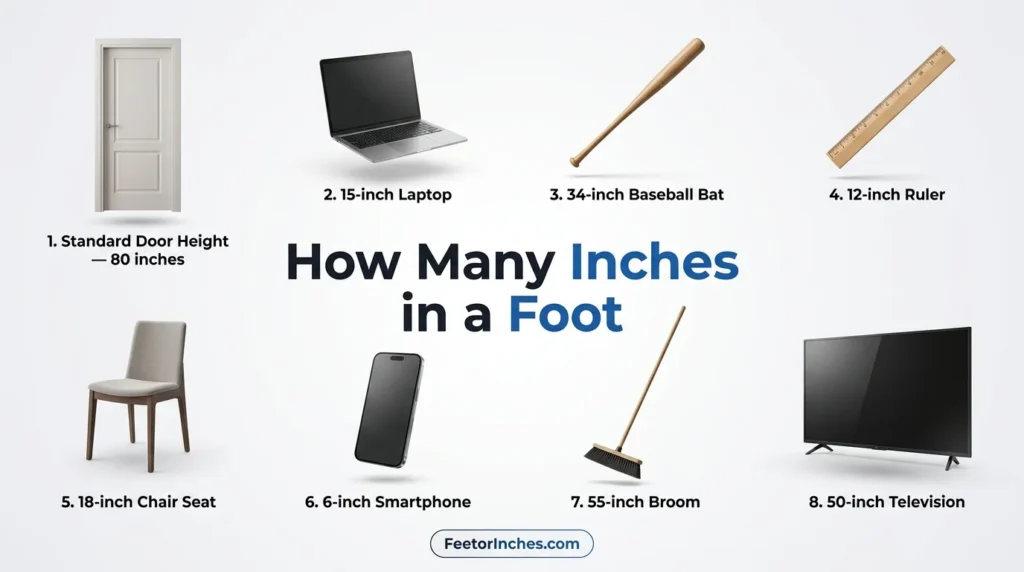
1 foot = 12 inches
This is a fixed conversion in the Imperial measurement system used in the United States and a few other regions.
So whenever you see “feet,” just multiply by 12 to get inches.
Understanding how many inches are in a foot is one of the most useful measurement conversions you’ll ever learn. Whether you’re measuring furniture, planning a room, checking your height, or working on a DIY project, knowing that 1 foot equals 12 inches helps you estimate lengths quickly and accurately. Below, you’ll find conversion charts, examples, and visualization tips.
Example:
- 3 feet = 36 inches
- 5 feet = 60 inches
- 10 feet = 120 inches
This simple rule is the foundation of everyday measurement conversions in length, height, and distance.
Conversion Table: Feet to Inches (Quick Reference)
| Feet | Inches | Real-World Meaning |
| 1 ft | 12 in | A ruler length |
| 2 ft | 24 in | Large backpack height |
| 3 ft | 36 in | Average toddler height |
| 4 ft | 48 in | Small doorway width |
| 5 ft | 60 in | Short adult height |
| 6 ft | 72 in | Tall adult height |
| 8 ft | 96 in | Standard ceiling height |
| 10 ft | 120 in | Small room length |
| 12 ft | 144 in | Large bedroom wall |
This table is widely used in construction, home design, and everyday measurement tasks.
What Does “Foot” and “Inch” Mean?
To understand the conversion, it helps to know the system behind it.
The Foot (ft) is part of the Imperial system, a historical measurement system still used in countries like the United States.
The Inch (in) is a smaller unit used to measure fine details like screen size, fabric length, and furniture dimensions.
In the standardized system:
1 foot = 12 inches exactly
This comes from the broader structure of the Imperial system, where units are divided into consistent multiples for practical use.
The system is closely tied to the concept of the Imperial system, which organizes length units like inches, feet, yards, and miles.
Another key unit is the Foot (unit), which forms the basis of this conversion.
Why Is 1 Foot Equal to 12 Inches?
The number 12 was chosen for practical division.
It is highly divisible:
- 2, 3, 4, and 6 all divide 12 evenly
This makes it easy for construction, carpentry, and trade.
For example:
- Half a foot = 6 inches
- One-third foot = 4 inches
- One-quarter foot = 3 inches
This flexibility is why the system survived for centuries despite the rise of metric measurements.
Real-Life Examples (8–15 Practical Visualizations)
Here’s where the conversion becomes real and memorable.
1. A Standard Ruler
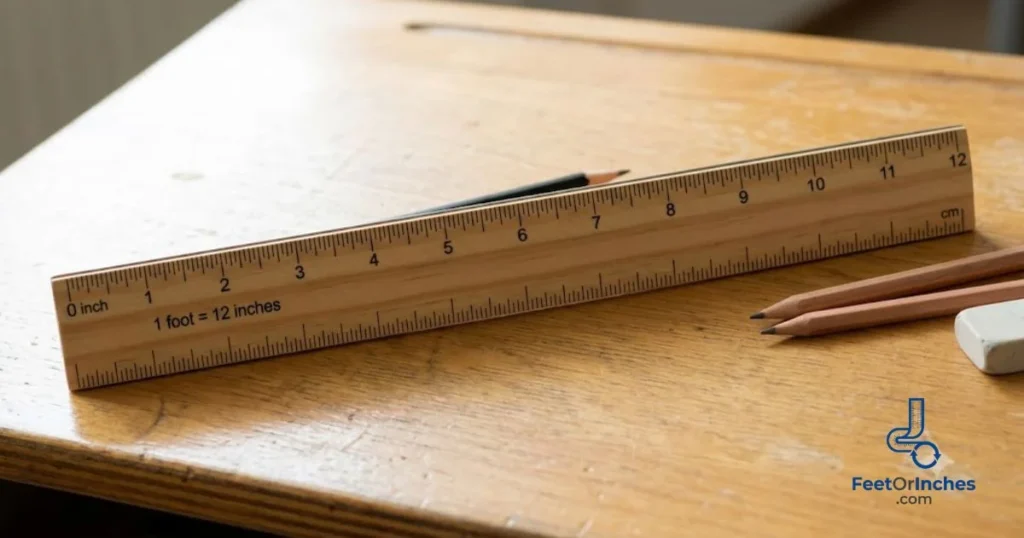
- 1 foot = 12 inches
- Visual: a school ruler
- Insight: This is the most common reference point worldwide
2. A Laptop Screen Width
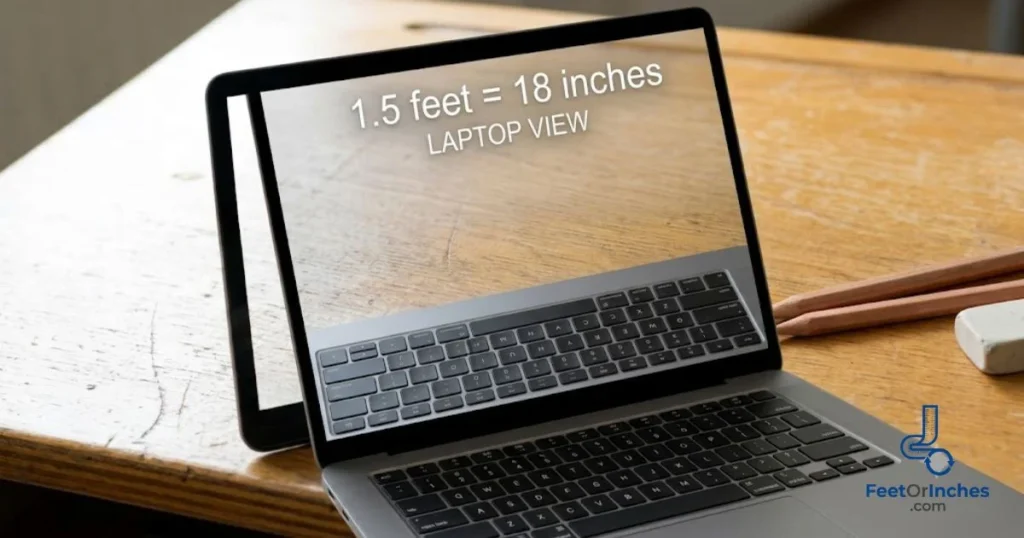
- 1.5 feet = 18 inches
- Visual: medium-sized laptop
- Insight: Screen sizes are often measured in inches
3. A Newborn Baby Length
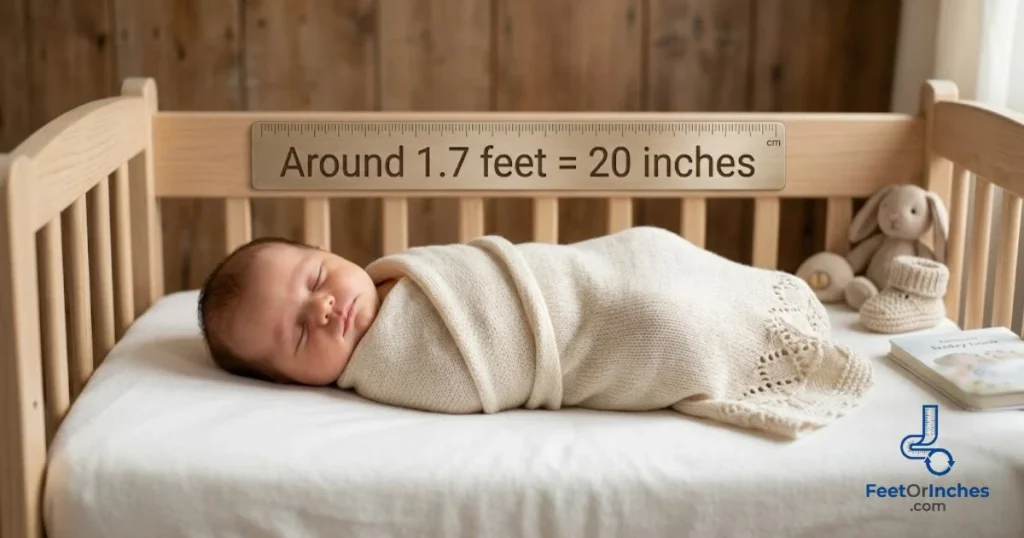
- Around 1.7 feet = 20 inches
- Visual: baby lying in crib
- Insight: Hospitals often use inches for precision
4. Kitchen Counter Height
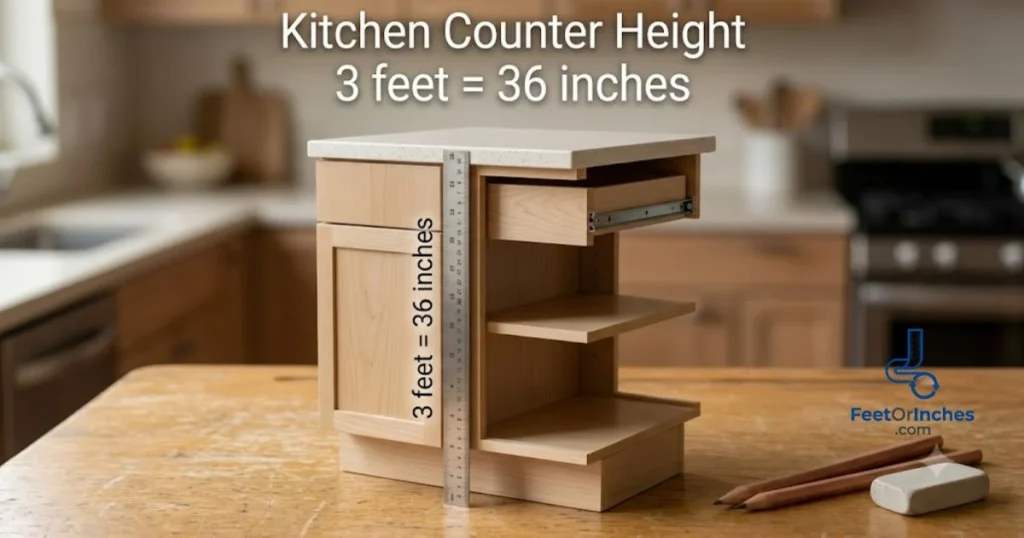
- 3 feet = 36 inches
- Visual: standard countertop
- Insight: Most kitchen designs follow this height rule
5. Door Width (Interior)
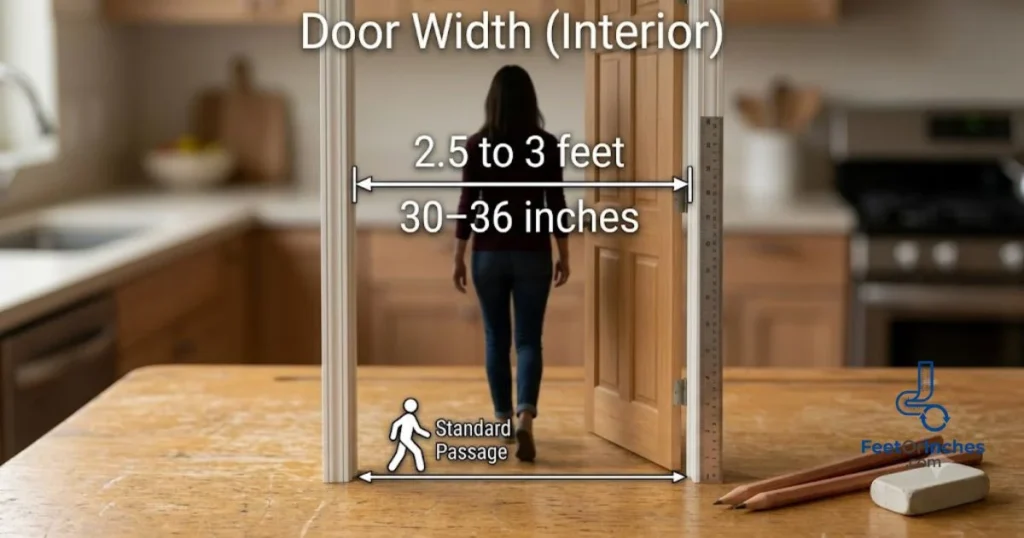
- 2.5 to 3 feet = 30–36 inches
- Visual: walking through a doorway
- Insight: Accessibility standards depend on this measurement
6. Dining Table Height
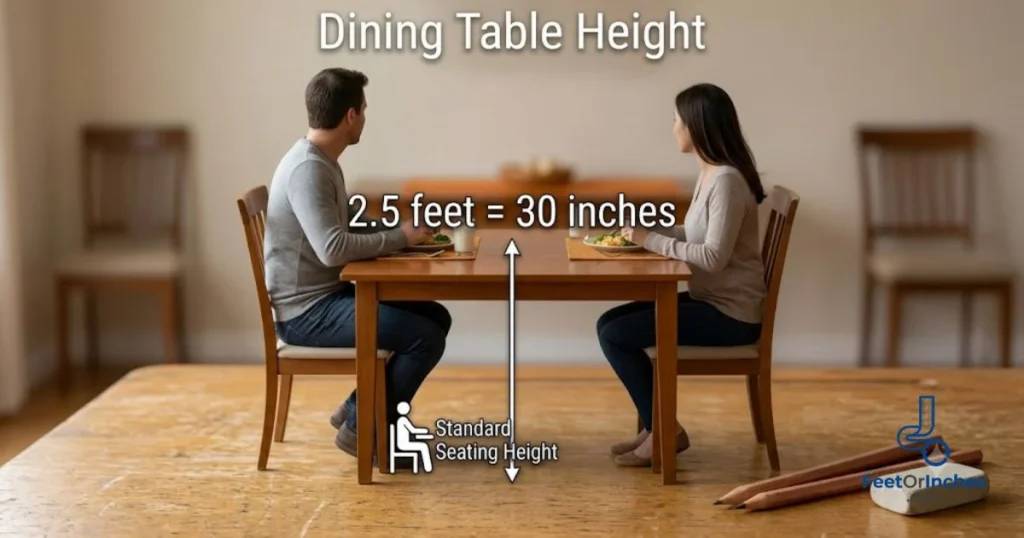
- 2.5 feet = 30 inches
- Visual: sitting at dinner table
- Insight: Designed for comfortable seating posture
7. Average Adult Height Comparison
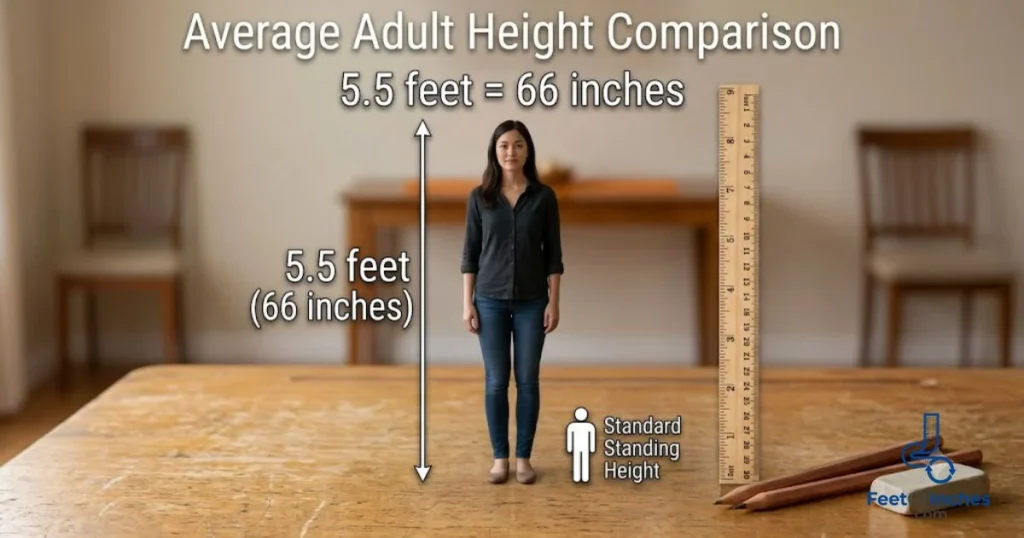
- 5.5 feet = 66 inches
- Visual: average adult standing
- Insight: Height charts often switch between feet and inches
8. Refrigerator Height
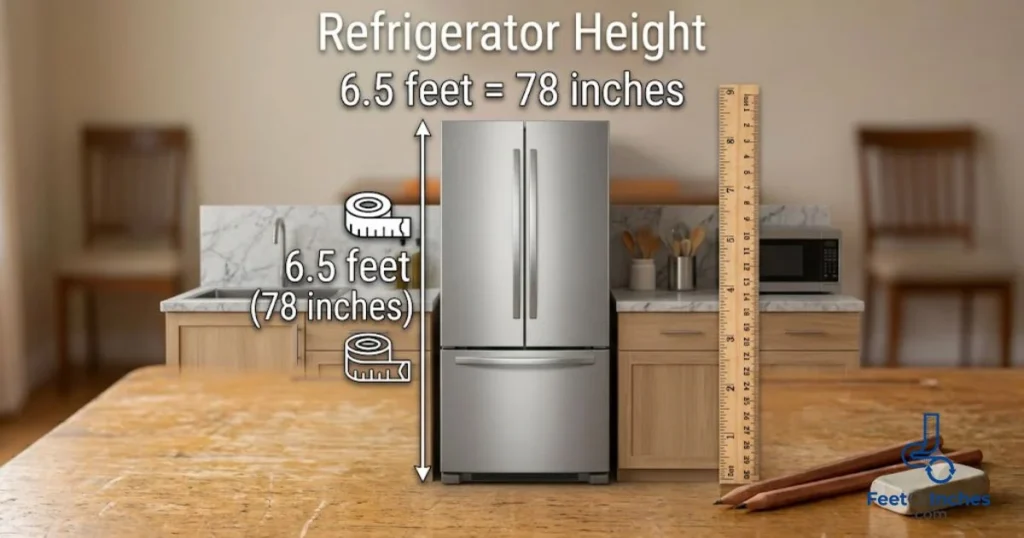
- 6.5 feet = 78 inches
- Visual: tall fridge in kitchen
- Insight: Appliances use inches for manufacturing specs
9. Ceiling Height (Modern Homes)
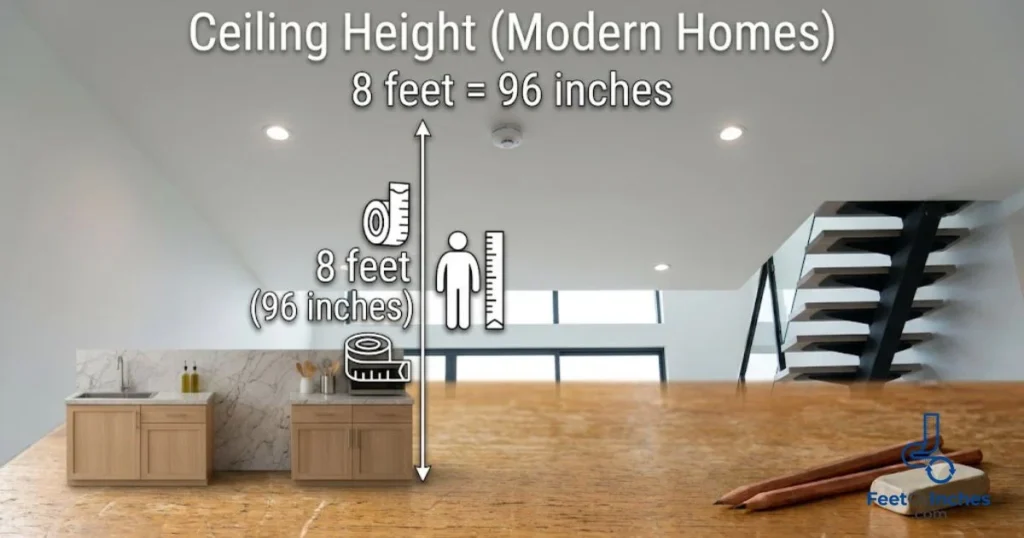
- 8 feet = 96 inches
- Visual: looking up in a room
- Insight: Higher ceilings improve airflow and space feel
10. Small Car Length
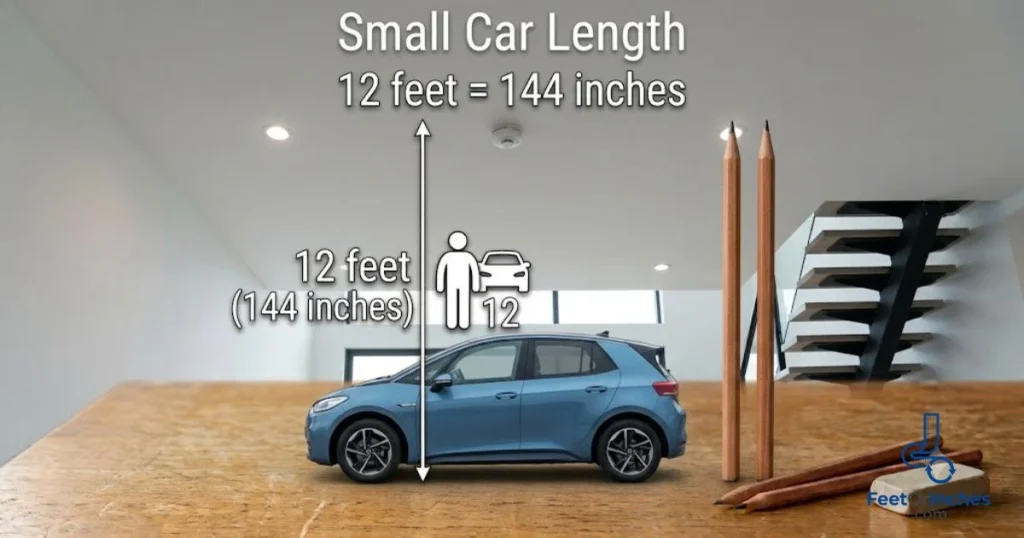
- 12 feet = 144 inches
- Visual: compact vehicle
- Insight: Car design often blends both units
11. TV Screen Size

- 55-inch TV ≈ 4.6 feet wide
- Visual: wall-mounted screen
- Insight: TV marketing uses inches globally
12. Office Desk Width

- 4 feet = 48 inches
- Visual: workstation setup
- Insight: Ergonomic office planning relies on inches
13. Bed Size (Queen)

- 5 feet wide = 60 inches
- Visual: double occupancy bed
- Insight: Bedding sizes always use inches
14. Stair Step Height (Total Rise)
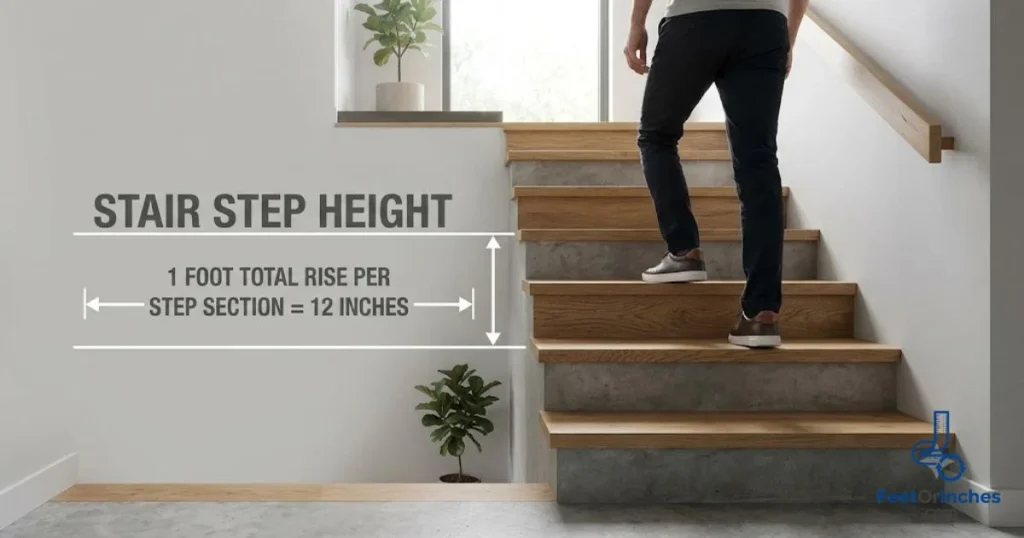
- 1 foot total rise per step section = 12 inches
- Visual: climbing stairs
- Insight: Safety standards depend on consistent conversion
Comparison Section: Inches vs Feet in Real Life
Understanding the scale difference makes it easier to estimate without tools.
Smaller than 1 Foot (Under 12 Inches)
- Phone length: ~6–7 inches
- Pencil: ~7 inches
- Tablet width: ~8–10 inches
These are handheld objects where inches are more practical.
Exactly 1 Foot (12 Inches)
- Ruler
- Large notebook
- Small cutting board
This is your baseline reference unit
Larger than 1 Foot
- Chair height: 1.5–3 feet
- Door height: 6–7 feet
- Room height: 8–10 feet
Feet become more practical when measuring space and architecture.
How It Feels: Human Visualization Guide
Instead of numbers, think in physical experience.
- 1 inch feels like the width of your thumb
- 12 inches (1 foot) feels like a full school ruler
- 3 feet feels like a small child standing beside you
- 6 feet feels like an adult male height
- 10 feet feels like a small room ceiling stretch
Once you internalize these reference points, estimation becomes automatic.
You can even “eyeball measure” objects without tools after enough practice.
Why This Conversion Matters in Real Life
This simple relationship between inches and feet is used everywhere:
- Home construction and architecture
- Clothing and tailoring
- Furniture design
- Engineering and manufacturing
- Online shopping product sizes
- Sports field measurements
Without this conversion, standardization would break down in design and trade.
FAQs
How many inches are in 1 foot exactly?
There are exactly 12 inches in 1 foot.
Why is 1 foot equal to 12 inches?
It comes from the Imperial system, designed for easy division into halves, thirds, and quarters.
Is 12 inches always 1 foot?
Yes, it is a fixed conversion and never changes.
How do you convert feet into inches?
Multiply the number of feet by 12.
What is 5 feet in inches?
5 × 12 = 60 inches.
Is inches bigger than feet?
No. Feet are larger. 1 foot equals 12 inches.
Where is the foot measurement used?
Mainly in the United States, Canada, and the UK for certain applications.
How many inches is 2 feet?
2 × 12 = 24 inches.
What comes after inches in measurement?
12 inches make 1 foot, and 3 feet make 1 yard.
Is the metric system better than feet and inches?
Metric is simpler mathematically, but feet and inches are still widely used in construction and daily life in some countries.
Conclusion
So the answer is simple but powerful: 1 foot always equals 12 inches.
This conversion is the backbone of the Imperial measurement system and appears everywhere from home design to human height measurement.
Once you understand this relationship, you can quickly estimate lengths, convert measurements, and visualize real-world sizes without needing a calculator.
It’s one of those foundational rules that makes everyday measurement easier, faster, and far more intuitive.