
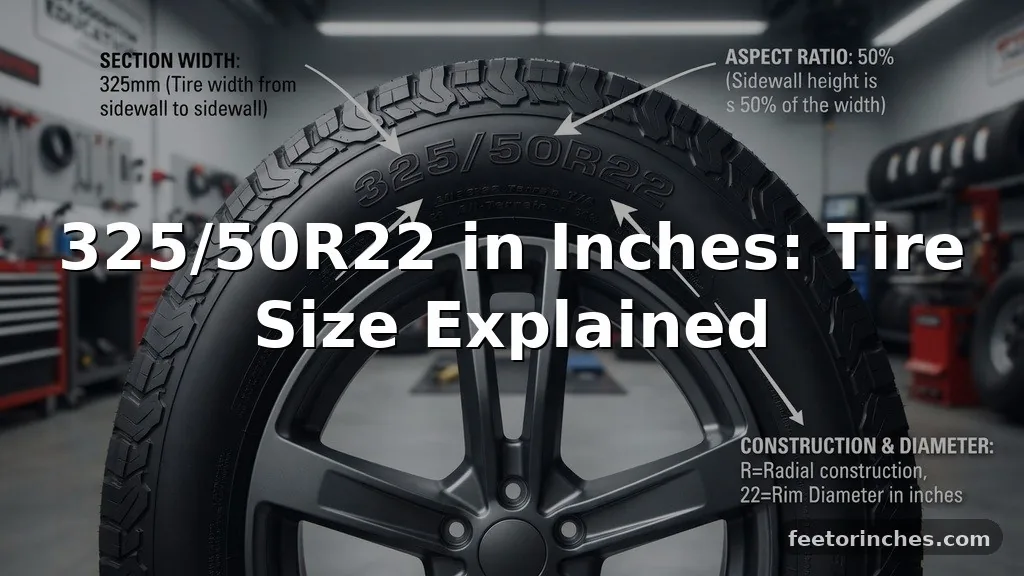
Calculating a 325/50R22 in inches is a common task for truck owners looking to upgrade their vehicle’s stance. This specific tire size uses a metric system for width and aspect ratio, which often confuses drivers accustomed to standard inch-based measurements. Understanding these numbers ensures you choose a tire that fits your wheel wells without causing rubbing or suspension interference.
You can determine the physical height of this tire by performing a few simple calculations. A 325/50R22 tire measures approximately 34.8 inches in total diameter. By breaking down the metric components, you gain a clearer picture of how these tires will change your vehicle’s ground clearance and speedometer accuracy.
Decoding the Metric Measurement
The numbers on your sidewall follow a standardized international code. Each segment provides a specific piece of information about the tire’s geometry. You must look at the sequence as three distinct parts to find the total height in inches.
Breaking Down the Numbers
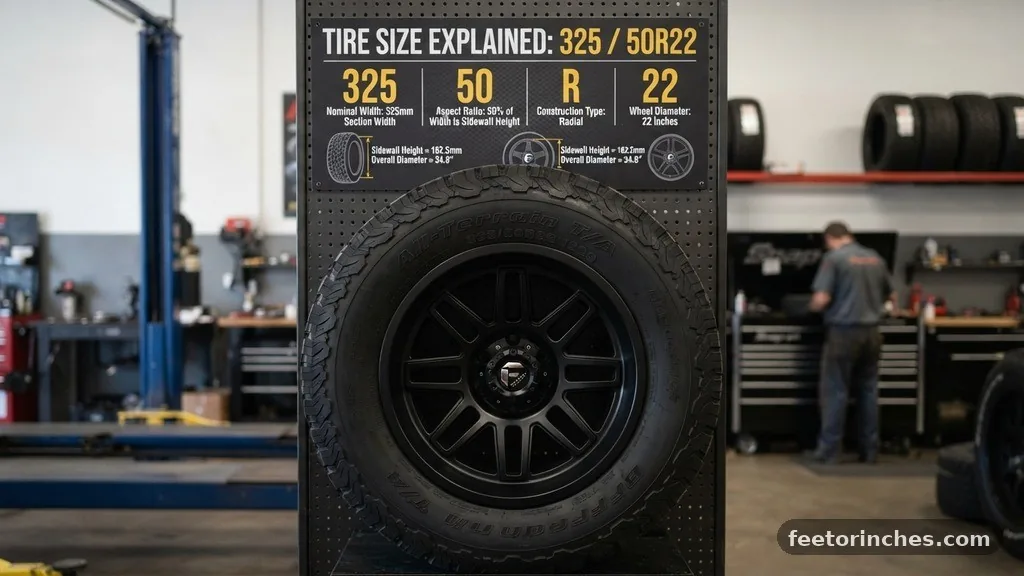
The first number, 325, represents the section width of the tire in millimeters. This is the width of the tire from sidewall to sidewall when mounted on a measuring rim. To convert this to inches, you divide by 25.4, which gives you approximately 12.8 inches of width.
The second number, 50, is the aspect ratio. This is a percentage, not a measurement in inches or millimeters.
It indicates that the sidewall height is 50% of the section width. In this case, 50% of 325mm equals 162.5mm per sidewall.
Calculating Total Diameter
To find the total height, you multiply the sidewall height by two because the tire has a top and bottom section relative to the wheel. You then add the wheel diameter, which is 22 inches in this instance. The formula looks like this:
- Sidewall height: 162.5mm / 25.4 = 6.4 inches
- Total sidewall contribution: 6.4 inches x 2 = 12.8 inches
- Rim diameter: 22 inches
- Total tire diameter: 12.8 + 22 = 34.8 inches
Tire Size Conversion Table
When you need to compare different tire sizes, having a reference table saves time. The following data highlights how the 325/50R22 compares to other common light truck tire profiles in terms of approximate diameter.
| Tire Size | Approx. Diameter (Inches) | Section Width (Inches) |
|---|---|---|
| 325/50R22 | 34.8 | 12.8 |
| 305/55R22 | 35.2 | 12.0 |
| 33/12.50R22 | 33.0 | 12.5 |
| 35/12.50R22 | 35.0 | 12.5 |
Impact on Vehicle Performance
Installing a 34.8-inch tire affects more than just the look of your truck. Larger tires change the effective gear ratio of your drivetrain. Since the tire is taller than the factory equipment, your engine will have to work harder to turn the wheels from a dead stop.
Speedometer and Odometer Calibration
Because the tire completes fewer rotations per mile than a smaller factory tire, your speedometer will read lower than your actual speed. You may need to use a calibration tool to adjust the vehicle’s computer settings. Failing to do this can lead to incorrect mileage readings on your odometer and potentially inaccurate shifting points for your transmission.
Suspension and Clearance
A 34.8-inch tire is a significant jump from stock sizes on many half-ton trucks. You will likely need a suspension lift or a leveling kit to prevent the tires from rubbing against the inner fender liners or sway bars. Consult the National Highway Traffic Safety Administration guidelines on tire safety and load ratings before finalizing your choice.
Comparing 325/50R22 to Similar Sizes
Many drivers search for a “35-inch tire” equivalent when they see the 325/50R22. While it is technically closer to 34.8 inches, in the real world, it is often marketed and grouped with 35-inch tires. The primary difference lies in the width.
A 325mm tire is wider than a standard 12.50-inch tire, measuring roughly 12.8 inches wide. This extra width provides more rubber on the road, which can improve traction in dry conditions. However, it also increases the risk of hydroplaning in heavy rain compared to a narrower profile.
Practical Estimation Techniques
You can estimate tire dimensions without specialized tools by using common objects. A standard sheet of legal-size paper is 14 inches long. If you hold this against the side of your tire, you can visualize how much of the tread surface it covers.
Another method involves using your own anatomy. The average adult hand span, measured from the tip of the thumb to the tip of the pinky when fully extended, is often between 8 and 9 inches. Two hand spans placed end-to-end provide a rough approximation of 16 to 18 inches, which helps you gauge the sidewall and rim area quickly.
Common Misconceptions
One frequent error is confusing the rim diameter with the total tire height. The “22” in 325/50R22 refers strictly to the wheel diameter, not the size of the tire itself. Always remember that the sidewall height is calculated based on the width, not a fixed value.
Another misconception involves the “equivalent” size. Many people ask if a 325 is the same as a 35.
While the diameters are very close, the section widths often differ. Always check the manufacturer’s specifications for the exact dimensions of the specific model, as tread patterns and rubber compounds can slightly alter the final footprint.
Real-World Objects Measuring 14 Inches
Understanding a scale of 14 inches helps when visualizing components of your vehicle. While your tires are much larger, 14 inches is a common length for many automotive and household items.
Automotive and Tools
- Standard wiper blade length for compact cars.
- Length of a medium-sized adjustable wrench.
- Width of a standard temporary spare tire tread.
- Height of a small hydraulic bottle jack.
- Length of a heavy-duty breaker bar handle.
Household and Kitchen
- Diameter of a large pizza pan.
- Length of a standard kitchen chef’s knife blade.
- Width of a standard bathroom vanity cabinet drawer.
- Height of a tall drinking glass or pint glass.
- Length of a standard wooden rolling pin.
Frequently Asked Questions
Is a 325/50R22 the same as a 35-inch tire?
They are not exactly the same, but they are very close. A 325/50R22 is roughly 34.8 inches tall, while a 35-inch tire is exactly that. Most tire manufacturers categorize them in the same class for lift kit and fitment purposes.
Will a 325/50R22 fit on a stock truck?
In most cases, no. Because the tire is nearly 35 inches tall and over 12 inches wide, it will likely rub on your wheel wells or suspension components without a leveling kit or lift kit installed.
How do I calculate the diameter if I don’t have a calculator?
You can use the simple rule of thumb: divide the width by 25.4 to get inches, multiply that by the aspect ratio, double it, and add the rim size. For 325/50R22, it is (325/25.4) * 0.50 * 2 + 22 = 34.8.
Does the width affect the ride quality?
Yes, wider tires like the 325 profile tend to follow road imperfections more closely than narrower tires. This is known as “tramlining,” where the tire pulls toward grooves in the pavement.
Final Thoughts
Choosing a 325/50R22 in inches requires a basic grasp of how metric tire sizing translates to standard measurements. At 34.8 inches in height, this tire provides a substantial look and performance boost for many trucks. Always verify your vehicle’s clearance and ensure your speedometer is calibrated after installation to maintain safe driving standards.
If you are uncertain about fitment for your specific make and model, consult with a professional shop to avoid potential damage to your vehicle’s components. Proper research before purchase will help you achieve the desired aesthetic and functionality for your truck’s setup. Feel free to reach out if you have further questions about specific tire brands or fitment challenges.
Explore more on FeetOrInches.




