
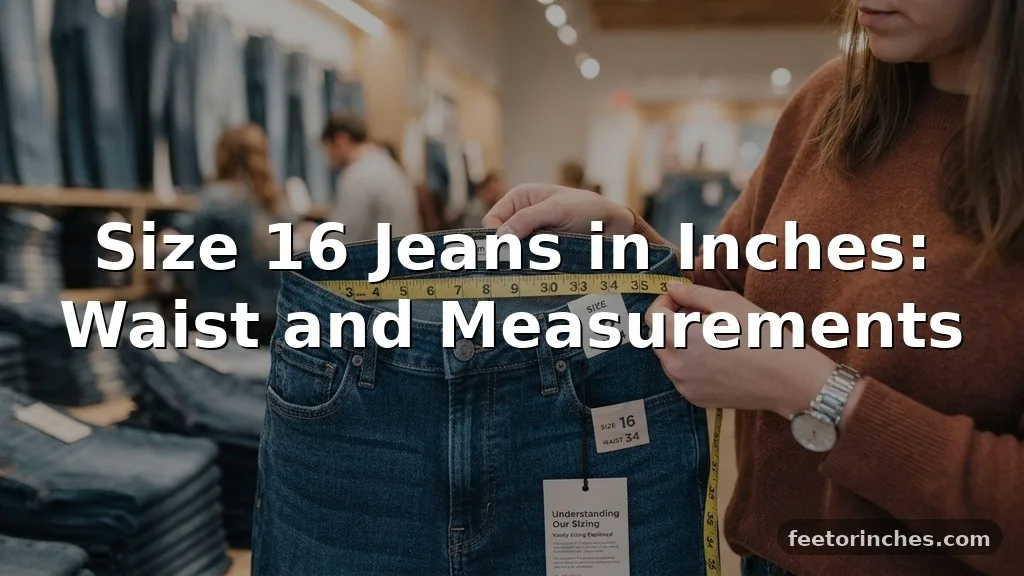
Finding the right size 16 jeans in inches often feels like a guessing game because clothing brands rarely follow a universal standard. If you have been searching for a consistent waist measurement, you likely know the frustration of grabbing a pair that fits perfectly in one store and feels two sizes too small in another.
Understanding how these measurements translate into real-world inches is the key to shopping with confidence. By learning where to place your tape measure and how to interpret industry standards, you can stop relying on guesswork and start finding a fit that actually works for your body.
Understanding Vanity Sizing and Standards
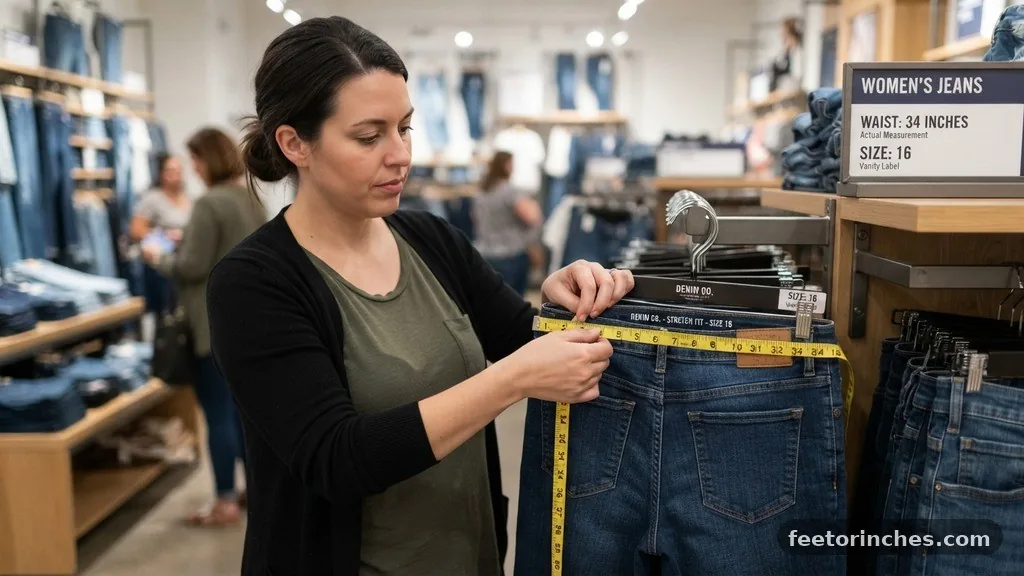
The primary reason size 16 jeans vary so much is a practice known as vanity sizing. Manufacturers adjust their patterns to align with their specific customer base rather than a standardized human scale. A label stating size 16 might have been accurate in the 1970s, but today that same label is often applied to a much larger garment.
Because of this, you cannot rely solely on the number printed on the tag. You need to look for size charts provided by individual brands. Even within a single company, different styles—like high-rise versus low-rise—will change how the waist sits on your body.
Why Labels Fail to Tell the Whole Story
Most brands design their size 16 based on a target demographic rather than a static inch measurement. A premium denim brand might cut a size 16 to fit a 33-inch waist, while a fast-fashion retailer might cut the same size for a 35-inch waist. This range creates a significant gap for the consumer.
If you are struggling to find your fit, always prioritize your own body measurements over the tag. Using a soft tape measure is the only way to get an accurate starting point. When you know your actual waist and hip dimensions, you can compare them against the specific sizing guide for the brand you are purchasing.
How to Measure Your Waist and Hips
To find the right fit, you must measure your body correctly. Start by locating your natural waist, which is the narrowest part of your torso, usually found just above the belly button. Stand straight, keep the tape measure level, and breathe out naturally before checking the number.
Next, measure your hips at their fullest part. This area is essential for ensuring your jeans won’t pull or gap in the seat. For a more precise understanding of how to take these measurements, you can consult the official guidance on standardized measurements provided by government resources.
- Keep the tape measure snug but not tight against your skin.
- Measure yourself in the morning before eating, when you are least bloated.
- Ensure the tape is parallel to the floor, especially around the hips.
- Write down both your waist and hip measurements for easier comparison.
Common Waist Conversions for Size 16
While a “standard” size 16 is elusive, industry averages often place the waist measurement between 33 and 35 inches. However, this is just a baseline. The way the fabric stretches and the cut of the denim will change how that number translates to your comfort.
The following table demonstrates how a typical size 16 compares to other common sizes. Note that these are approximations, as every manufacturer uses their own grading system for their production lines.
| Size | Approximate Waist (Inches) | Typical Hip (Inches) |
|---|---|---|
| 12 | 29 – 30 | 39 – 40 |
| 14 | 31 – 32 | 41 – 42 |
| 16 | 33 – 35 | 43 – 45 |
| 18 | 36 – 37 | 46 – 47 |
The Role of Inseam and Leg Length
Your leg length is just as important as your waist measurement when finding the perfect fit. The inseam is the distance from the crotch seam to the bottom of the ankle. If you are tall, a standard size 16 might leave you with high-waters, while shorter individuals may need to hem their jeans.
Most retailers offer three standard inseam lengths: petite, regular, and tall. A petite inseam usually falls around 28 inches, while a regular is typically 30 to 32 inches. Always check the product description, as the inseam length is often listed separately from the waist size.
Estimating Measurements Without a Tool
If you find yourself in a store without a tape measure, you can use your body or common objects to estimate the waist size of your jeans. A standard sheet of legal-size paper is 14 inches long, which can serve as a rough reference for width if you are in a pinch. Alternatively, you can use the “forearm test.”
Place your forearm inside the waist of the jeans with your elbow at one side and your fist at the other. If your arm fits snugly with a little room to spare, it is often a good indicator that the waist will accommodate your natural movement. While not as precise as a tape measure, these tricks help when you are shopping in person and need a quick sanity check.
Distinguishing Between Waist and Hip Fit
One of the most common issues with size 16 jeans is the gap that appears at the waist when the hips fit perfectly. This happens because many brands use a “straight” cut that doesn’t account for the difference between a smaller waist and wider hips. If you have an hourglass figure, you might find that the waist is too loose even if the legs fit well.
To solve this, look for “curvy” fits designed specifically with extra room in the hips and thighs while keeping the waist smaller. These cuts are tailored to prevent that annoying gap at the back. If you cannot find a curvy fit, consider having the waist taken in by a tailor, which is a simple and inexpensive fix.
Comparing Size 16 to Other Numerical Labels
People often ask if a size 16 is the same as an XL or a size 32. The truth is that there is no direct, universal link between these systems.
A size 16 might be labeled as an XL in some brands but a Large in others. Similarly, numerical waist sizes (like 32 or 34) are often more reliable than generic size 16 labels.
If a pair of jeans is labeled by its waist size in inches, you have a much better chance of finding a fit on the first try. A size 34 usually corresponds to a 34-inch waist, which is a much clearer metric than a brand-assigned number. Always check for a size chart that lists the specific garment measurements rather than just the body measurements.
Common Misconceptions About Sizing
Many shoppers believe that a higher number always means a larger cut, but this is not always true. Some brands use “vanity sizing” to make customers feel smaller by labeling a 36-inch waist as a size 14. This practice makes it nearly impossible to shop across different brands without checking the size guide every single time.
Another misconception is that the tag reflects the exact measurement of the fabric. In reality, the tag is a marketing tool. The only way to know if a pair of jeans will fit is to measure the garment itself or to use your own body measurements to verify against the brand’s provided chart.
Frequently Asked Questions
Is a size 16 in jeans the same as a 34-inch waist?
Not necessarily. While many brands equate a size 16 to a 33 or 34-inch waist, this varies wildly by manufacturer. Always look at the specific size chart provided by the brand you are buying from rather than assuming a universal conversion.
Does a size 16 jeans size mean I am an XL?
Often, yes, but it is not a rule. Some brands categorize a size 16 as a Large, while others place it in the XL or even XXL category. Relying on the numerical waist measurement in inches is always more accurate than relying on the letter size.
How do I stop jeans from gaping at the waist?
Gaping at the waist is usually caused by a mismatch between your waist and hip measurements. Look for “curvy” fit jeans, which are cut with more room in the hips and a narrower waist. If you find a pair you love, a tailor can easily take in the waist for a perfect fit.
What if my waist measurement is between two sizes?
When you find yourself between sizes, it is usually better to size up and use a belt. It is much easier to shrink or tailor a pair of jeans that is slightly too large than it is to stretch out a pair that is too tight in the waist or hips.
Final Thoughts on Finding Your Fit
Navigating the world of women’s denim requires a bit of patience and a reliable tape measure. When you stop relying on the label and start focusing on your own waist and hip measurements, you remove much of the frustration from the process. Remember that the goal is comfort and confidence, not a specific number on a tag.
Take the time to measure your natural waist and the fullest part of your hips before your next shopping trip. By comparing these numbers against the specific charts for each brand, you will spend less time in the fitting room and more time wearing clothes that you love.
Finding the perfect size 16 jeans in inches is entirely possible when you have the right data at your fingertips. If you found this information helpful, feel free to share your own tips for finding the perfect pair of jeans.
Related conversions: How Many Inches in a Foot? (Complete Guide with Real Examples & Visuals), How Many Inches in a Yard? Complete Conversion Guide With Examples, What Is 6 mm in Inches? Complete Conversion Guide, How Many Cubic Inches in a Cubic Yard? Complete Conversion Guide.




