
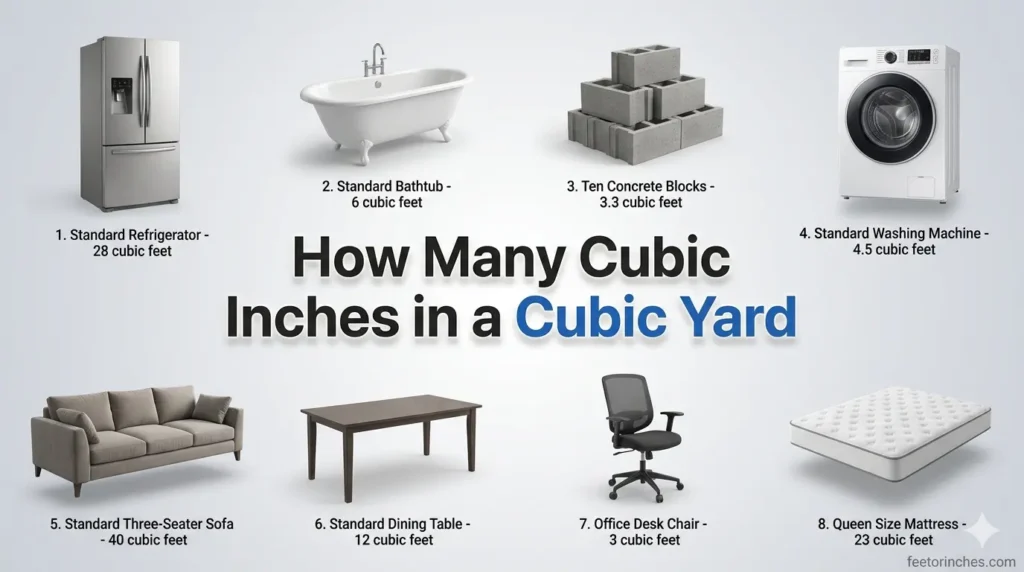
Quick Answer
Quick Answer:
There are 46,656 cubic inches in 1 cubic yard.Formula:
1 cubic yard = 36 inches × 36 inches × 36 inches
= 46,656 cubic inches
So, to convert cubic yards to cubic inches:
Cubic yards × 46,656 = Cubic inches
If you’ve ever wondered how many cubic inches in a cubic yard really looks like in everyday life, you’re not alone. Most people struggle to imagine such large volume conversions without a clear visual reference. A cubic yard is commonly used in construction, landscaping, and material delivery, but cubic inches feel much smaller and more precise.
In this guide, you’ll learn exactly what how many cubic inches in a cubic yard means through real-world comparisons, simple breakdowns, conversion logic, and practical examples. By the end, you’ll be able to visualize and use this conversion confidently in DIY projects, construction planning, and everyday measurements.
Conversion Table: Cubic Yards to Cubic Inches
| Cubic Yards | Cubic Inches | Real-World Meaning |
|---|---|---|
| 1 yd³ | 46,656 in³ | Small dump truck load of soil |
| 2 yd³ | 93,312 in³ | Medium landscaping project |
| 5 yd³ | 233,280 in³ | Large garden fill |
| 10 yd³ | 466,560 in³ | Full truck delivery |
| 20 yd³ | 933,120 in³ | Major construction fill |
What Does a Cubic Yard Mean?
A cubic yard is a three-dimensional unit of volume used mainly in the imperial system.
It represents a cube with:
- Length: 1 yard (36 inches)
- Width: 1 yard (36 inches)
- Height: 1 yard (36 inches)
When you convert each side into inches:
- 36 inches × 36 inches × 36 inches = 46,656 cubic inches
So, a cubic yard is simply a large cube made up of smaller cubic inches stacked together.
Why This Conversion Matters
Understanding how many cubic inches are in a cubic yard is important because:
- Construction materials are often sold in cubic yards
- Engineering calculations may require cubic inches for precision
- Landscaping materials like soil, mulch, and gravel use cubic yards
- DIY projects often require unit conversion for accuracy
- Manufacturing and packaging rely on cubic inches for small-scale measurements
In short, it connects large-scale bulk measurement with precise small-scale calculation.
How the Conversion Works (Step-by-Step)
To fully understand the math behind this conversion, break it down:
Step 1: Understand the base unit
1 yard = 36 inches
Step 2: Cube the value
Because volume is 3D:
36 × 36 × 36
Step 3: Multiply
36 × 36 = 1,296
1,296 × 36 = 46,656
Final Result:
👉 1 cubic yard = 46,656 cubic inches
This is a fixed and exact conversion.
SeeAlso:How Many Inches in a Foot? (Complete Guide with Real Examples & Visuals)
Real-Life Examples of 1 Cubic Yard (46,656 in³)
Here are practical ways to visualize this volume:
Example 1: Standard Washing Machine Drum (Full Load Space)
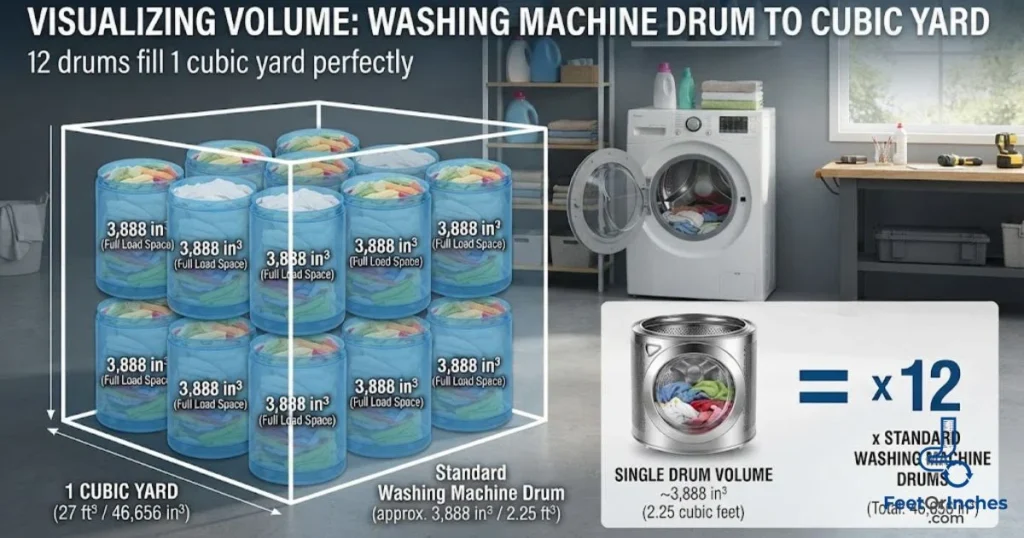
- Measurement: ~3,000–4,000 in³
- Visualization: A cubic yard equals about 12 washing machine drums
- Insight: Shows how large bulk materials really are
Example 2: Household Refrigerator
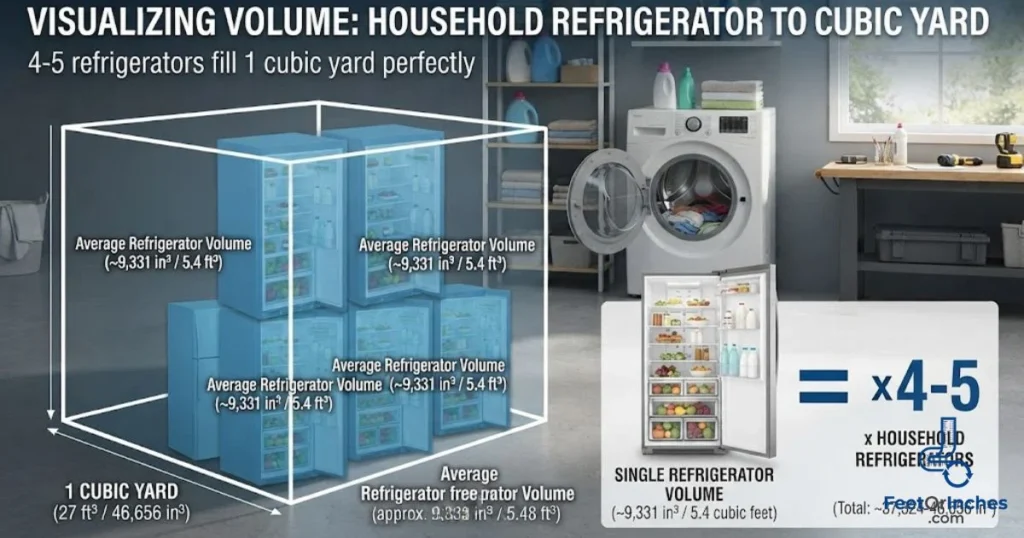
- Measurement: ~8,000–10,000 in³
- Visualization: A cubic yard fills about 4–5 refrigerators
- Insight: Great for imagining storage volume
Example 3: Kitchen Cabinets
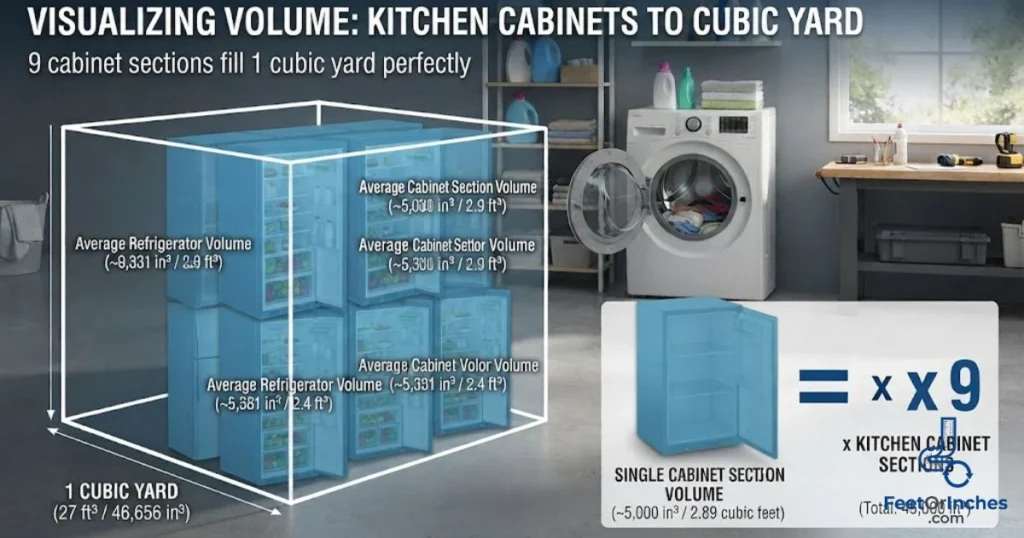
- Measurement: ~5,000 in³ per cabinet section
- Visualization: About 9 kitchen cabinets
- Insight: Helps in remodeling projects
Example 4: Large Suitcase
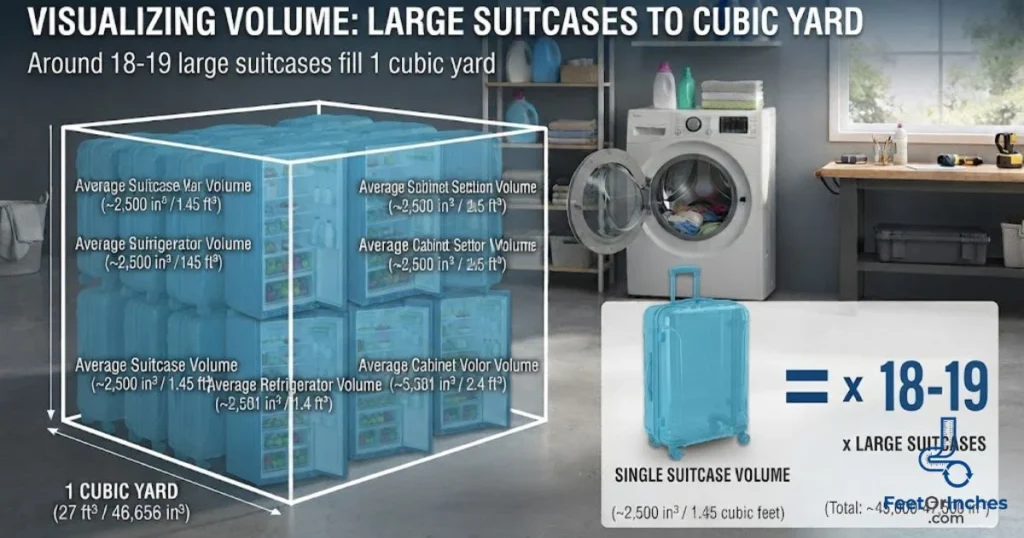
- Measurement: ~2,500 in³
- Visualization: Around 18–19 suitcases
- Insight: Useful for travel-based comparisons
Example 5: Standard Bathtub
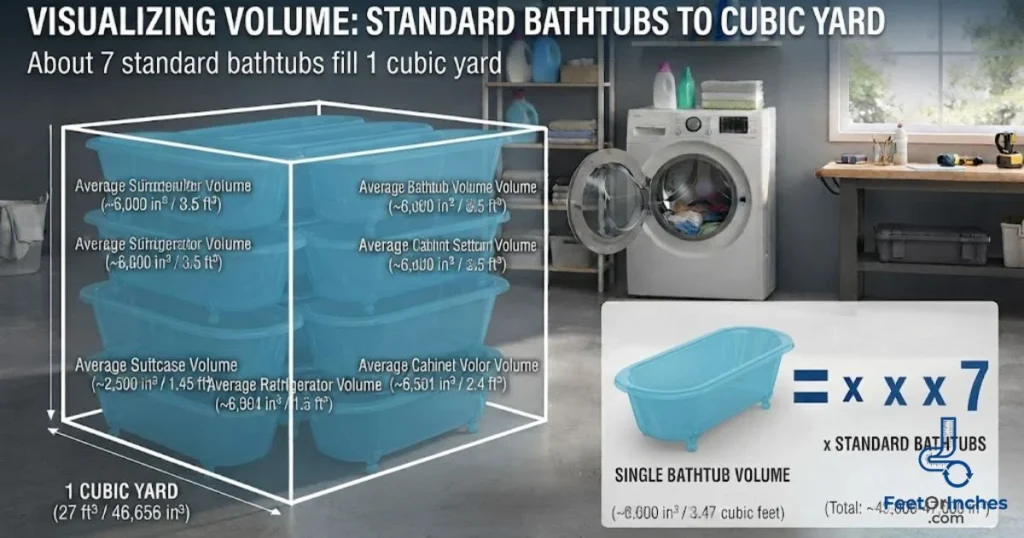
- Measurement: ~5,500–6,500 in³
- Visualization: About 7 bathtubs
- Insight: Easy bathroom-scale reference
Example 6: Mini Car Trunk Space
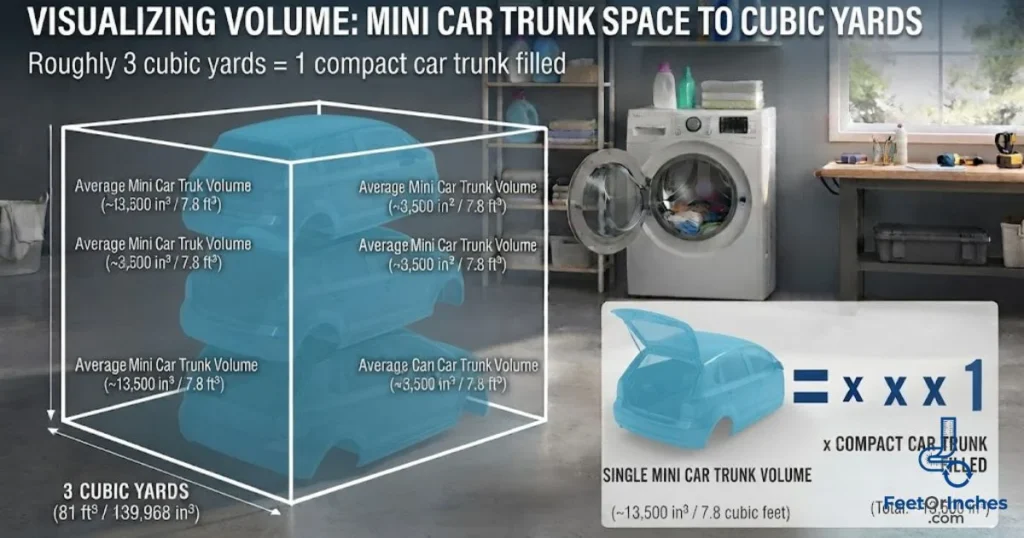
- Measurement: ~12,000–15,000 in³
- Visualization: Roughly 3 cubic yards = 1 compact car trunk filled
- Insight: Good for automotive comparison
Example 7: Concrete Mix Bag Volume
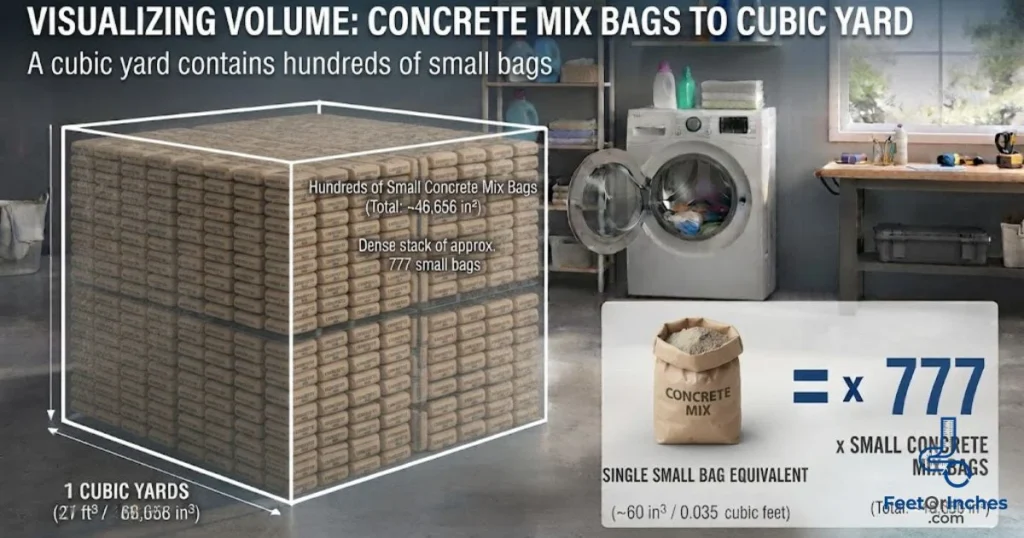
- Measurement: ~60 in³ per small bag equivalent
- Visualization: A cubic yard equals hundreds of small bags
- Insight: Shows why concrete is sold in bulk
Example 8: Office Desk Storage
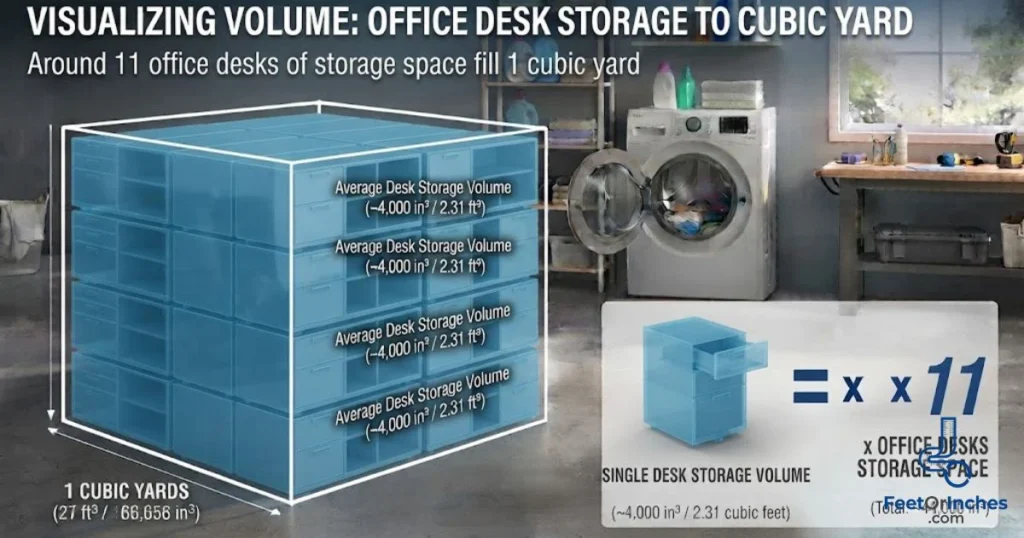
- Measurement: ~4,000 in³
- Visualization: Around 11 office desks of storage space
- Insight: Helps office planning
Example 9: Standard Closet
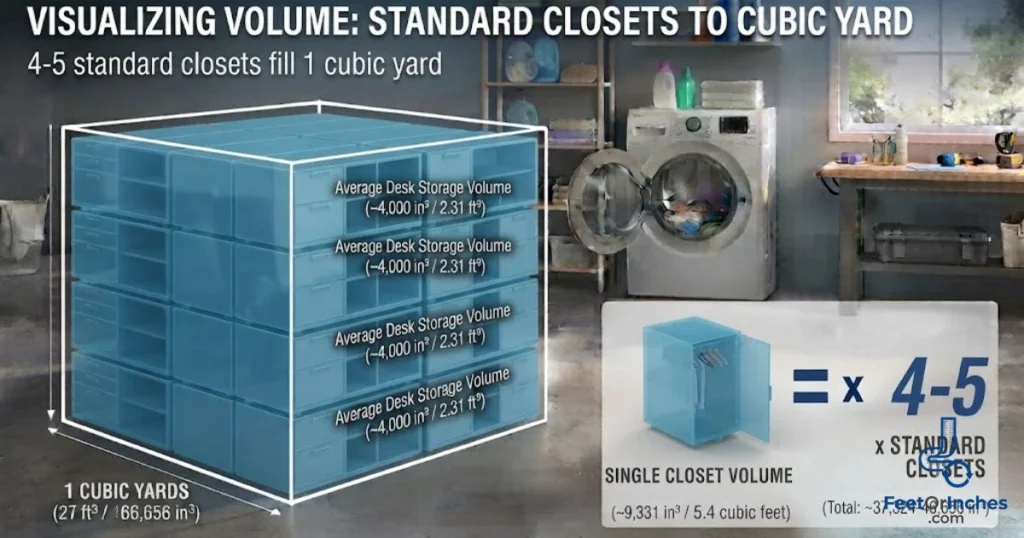
- Measurement: ~10,000 in³
- Visualization: About 4–5 closets
- Insight: Useful for home storage planning
Example 10: Wheelbarrow Capacity
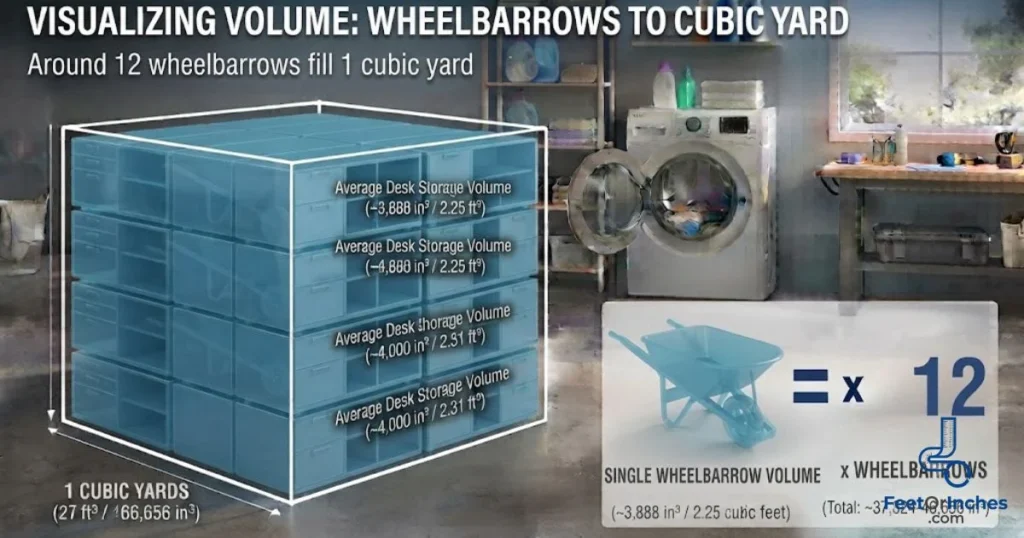
- Measurement: ~3,500–4,000 in³
- Visualization: Around 12 wheelbarrows
- Insight: Common in landscaping work
Comparison With Other Measurements
Smaller Units
- 1 cubic inch = extremely small (like a dice volume)
- 1 cubic foot = 1,728 cubic inches
- 1 cubic yard = 27 cubic feet
Larger Context
- 1 cubic yard = 46,656 cubic inches
- 10 cubic yards = nearly half a million cubic inches
Everyday Objects
- A sugar cube = ~1 cubic inch
- A cubic yard = thousands of sugar cubes stacked together
Human Scale
- A human head volume ≈ 100–120 cubic inches
- A cubic yard ≈ almost 400–450 human heads in volume
How It Feels in Real Life
A cubic yard feels like standing next to a large pile of material—soil, sand, or gravel—that could fill a small pickup truck bed.
When converted into cubic inches, it becomes clear how densely packed that space really is. Instead of thinking of one big cube, imagine:
- Thousands of small cubes
- Like stacking LEGO blocks endlessly
- Or filling a room with tiny boxes
It gives you a sense of both scale and density at the same time.
See Also:How Many Inches in a Yard? Complete Conversion Guide With Examples
Practical Uses of This Conversion
You’ll often use this conversion in:
Construction
- Concrete pouring
- Foundation calculations
- Material ordering
Landscaping
- Soil delivery
- Mulch distribution
- Garden bed filling
DIY Projects
- Home renovation planning
- Furniture design
- Storage optimization
Education
- Math and geometry learning
- Volume conversion practice
Engineering
- Manufacturing precision
- Packaging design
- Mechanical calculations
FAQ: Cubic Inches in a Cubic Yard
How many cubic inches are in 1 cubic yard?
1 cubic yard equals 46,656 cubic inches. This is calculated by multiplying 36 inches × 36 inches × 36 inches. It is a fixed conversion used in geometry, construction, and engineering fields.
Why is a cubic yard equal to 46,656 cubic inches?
Because a yard is 36 inches, and volume is three-dimensional. So you cube the value: 36³ = 46,656 cubic inches. This ensures accurate scaling between large and small volume units.
How many cubic feet are in a cubic yard?
There are 27 cubic feet in 1 cubic yard. Since each foot is 12 inches, cubic conversions scale differently than linear measurements.
Is a cubic yard bigger than a cubic foot?
Yes. A cubic yard is much larger. In fact, 1 cubic yard equals 27 cubic feet, making it significantly larger for material measurement.
Where is cubic yard measurement used?
It is widely used in construction, landscaping, excavation, and bulk material delivery such as soil, sand, gravel, and concrete.
How do I convert cubic yards to cubic inches quickly?
Multiply the number of cubic yards by 46,656. This gives you the exact cubic inches instantly.
Can I visualize a cubic yard easily?
Yes. Think of a cube that is 3 feet long, wide, and tall. It is roughly the size of a small refrigerator stacked volume or a large pile of yard material.
Why do engineers use cubic inches?
Cubic inches are used for precision work, especially in mechanical design, manufacturing, and small-scale volume calculations.
How many cubic inches in half a cubic yard?
Half a cubic yard equals 23,328 cubic inches.
What is bigger: cubic inch or cubic yard?
A cubic yard is much larger. One cubic yard contains 46,656 cubic inches.
Conclusion
A cubic yard may seem like a simple large unit, but when broken down, it equals 46,656 cubic inches, showing just how many small units make up larger measurements. This conversion is essential in construction, landscaping, engineering, and everyday problem-solving.
By understanding this relationship, you can confidently estimate material volumes, plan projects more accurately, and visualize measurements in a practical, real-world way.