Finding the right fit in modern retail often feels like solving a puzzle with missing pieces. When you look at a size 8 waist in inches, you aren’t just looking for one fixed number, but rather a range that shifts depending on the manufacturer and the specific cut of the garment.
Many shoppers assume a label size corresponds to a universal measurement, yet the reality of apparel production is far more fluid. Understanding these variations helps you move past the frustration of inconsistent fit and toward a more informed approach to your wardrobe.
If you have ever felt confused by why a pair of trousers fits perfectly in one store but feels tight in another, you are not alone. Apparel companies frequently adjust their patterns to suit their specific target demographics and design aesthetic.
By knowing how to accurately measure your waist and interpreting how these numbers translate across different brands, you can reclaim control over your shopping experience. This article provides the clarity you need to navigate sizing charts with confidence and precision.
Defining the Standard Size 8
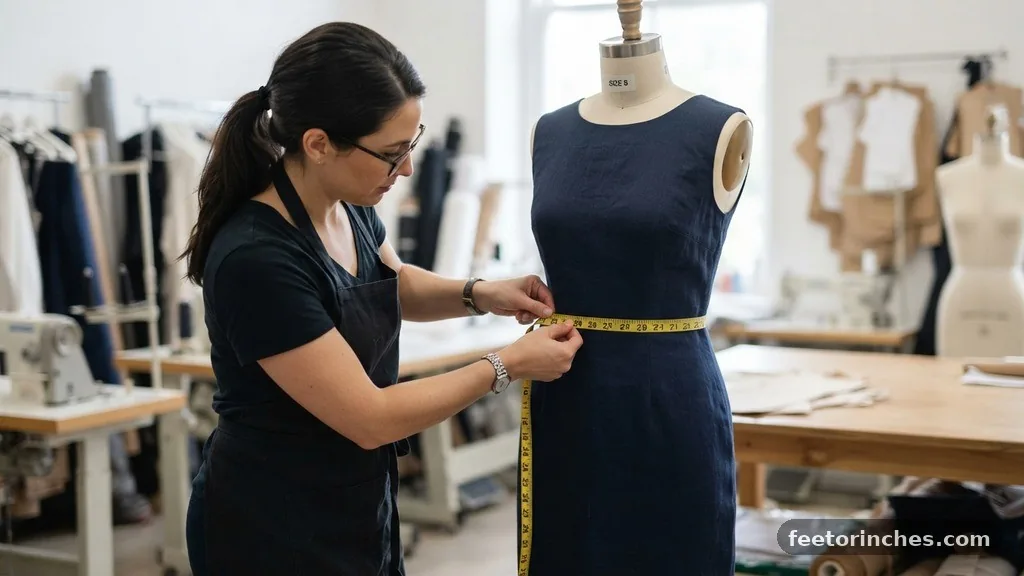
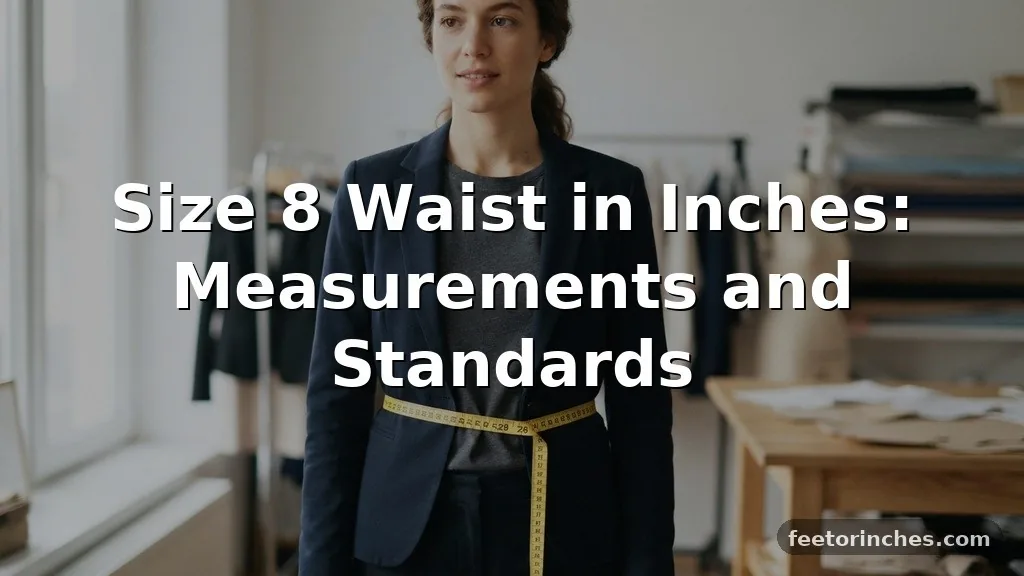
In the world of mass-market clothing, a size 8 is generally intended to fit a specific body type within the “misses” category. Historically, a size 8 waist typically falls between 27 and 28 inches.
However, this is a baseline rather than a universal law. Brands often use “vanity sizing,” where the physical measurements of a garment are intentionally made larger than the tag suggests to provide a more flattering experience for the consumer.
You should always consult the specific size chart provided by the retailer before making a purchase. Because these figures are not regulated by a global governing body, they remain internal to each corporation.
A pair of pants from a high-end designer might align with traditional measurements, while a fast-fashion brand may adjust their size 8 to accommodate a wider range of body shapes. This discrepancy is why your closet likely contains items ranging from size 6 to size 10 that all fit you equally well.
How to Measure Your Waist Accurately
To determine your actual waist size, you must identify the correct point on your torso. Most people make the mistake of measuring where they wear their jeans, which is often lower than the natural waist.
Your natural waist is the narrowest part of your midsection, usually located just above the belly button and below the rib cage. Stand straight and exhale naturally without pulling your stomach in, as this will give you an inaccurate reading.
Keep the measuring tape parallel to the floor as you wrap it around your body. Ensure it is snug against the skin but not tight enough to indent the flesh.
If you are struggling to find this point, bend slightly to the side; the crease that forms is your natural waistline. Write down this number in inches, as this remains the gold standard for most garment manufacturers when they design their patterns.
Tools and Techniques
- Use a flexible fabric tape measure rather than a metal carpenter’s rule.
- Always measure against your skin or over very thin undergarments for consistency.
- Check your measurement in a mirror to ensure the tape hasn’t twisted in the back.
- Record your measurement in both inches and centimeters to compare against international charts.
Comparison of Waist Measurements
Understanding where a size 8 sits in the hierarchy of clothing sizes helps you better gauge how garments will drape on your frame. While a size 8 is often the median, it sits in close proximity to size 6 and size 10.
Small shifts in these measurements can drastically change how a garment sits on the hips or rises at the waist. The following table provides a general reference for how these sizes typically compare in the retail market.
| Size | Typical Waist Range (Inches) | Category |
|---|---|---|
| Size 6 | 26 – 27 inches | Misses/Standard |
| Size 8 | 27 – 28 inches | Misses/Standard |
| Size 10 | 28 – 29 inches | Misses/Standard |
| Size 12 | 29 – 30 inches | Misses/Standard |
Why Sizes Vary Between Brands
The primary reason for sizing inconsistency lies in the demographic data companies use to build their “fit models.” A brand catering to a younger, trend-focused audience often uses different proportions than a brand designing for professional office wear.
These companies test their patterns on specific fit models, and the resulting garment is graded up or down from that base size. If the base model has a 27-inch waist, the size 8 is built around that specific measurement.
Marketing strategies also influence how brands label their clothing. Some labels choose to use more generous sizing to foster customer loyalty, as people are statistically more likely to purchase an item that makes them feel they are a smaller size.
This practice makes it nearly impossible to rely on a single size across your entire wardrobe. Instead of focusing on the number on the tag, prioritize the actual measurements provided in the brand’s official sizing guidelines.
Measuring for Different Garment Types
Not all clothing is designed to sit at the same point on your body. A high-waisted pair of trousers will require a different measurement than a pair of low-rise jeans.
When you are buying high-rise clothing, you are measuring closer to your natural waist. Conversely, low-rise styles are measured closer to the hip bones, where the circumference of the body is naturally wider.
If you are buying a dress, the waist measurement is critical, but you must also consider the bust and hip ratios. A size 8 dress might have a 28-inch waist, but if the cut is straight, it may not accommodate wider hips.
Always check if the fabric has any “give” or stretch. A garment with 2% elastane will be much more forgiving than 100% cotton, allowing for more variance in your actual body measurements.
Common Misconceptions About Sizing
Many shoppers believe that a size 8 is a static, unchanging measurement that applies to every item of clothing they own. This is a common fallacy that leads to significant frustration when ordering online.
Clothing size is a construct of marketing and mass production, not a biological measurement. You might be a size 8 in one brand and a size 12 in another, and both labels are technically “correct” within the context of those specific manufacturers.
Another common myth is that there is a direct, linear relationship between your weight and your clothing size. Muscle density, bone structure, and fat distribution all play roles in how clothing fits, regardless of the scale’s readout.
A size 8 waist in inches is simply a geometric measurement of circumference. It does not define your shape, your health, or your worth; it is merely a tool for selecting a product that will physically fit your frame.
Practical Estimation Without Tools
If you find yourself shopping and realize you have forgotten your measurements, you can use common objects to get a rough estimate. A standard piece of letter-size paper is 8.5 inches wide.
If you hold a piece of paper against your waist, you can get a sense of the scale of your midsection. Three widths of a standard piece of paper would be roughly 25.5 inches, which is a helpful baseline for smaller sizes.
You can also use your hands as a makeshift gauge. The average span of a human hand, from thumb tip to pinky tip, is roughly 8 to 9 inches when fully extended.
By placing your hand against your waist and counting the spans, you can quickly estimate whether you are hovering near that 27 or 28-inch mark. While these methods are not precise enough for tailoring, they are excellent for a quick check when you are browsing a rack.
Frequently Asked Questions
Is a 26-inch waist considered a size 8?
Typically, a 26-inch waist is closer to a size 6 in most standard brands. However, some brands with generous sizing might label a 26-inch waist as a size 8. Always refer to the specific brand’s chart.
Does a size 8 always equal 28 inches?
No, a size 8 is not standardized. While 27 to 28 inches is a common range, it can vary significantly between manufacturers, regions, and even between different product lines from the same company.
How do I know if I should size up?
If your measurement is at the higher end of the brand’s size 8 chart, or if the garment is made of non-stretch material, sizing up is usually the safer choice. It is much easier to take in a garment that is slightly too large than to let out one that is too small.
Why do my pants fit differently even though they are all size 8?
Clothing fit is affected by the cut, the fabric composition, and the brand’s unique fit model. A pair of jeans with a rigid weave will feel tighter than a pair of stretch-denim trousers, even if both are labeled as a size 8.
The Future of Apparel Sizing
While the industry currently relies on these somewhat arbitrary size charts, technology is slowly changing the way we shop. Many retailers are now incorporating virtual fitting rooms that use your phone’s camera to create a 3D model of your body.
These tools compare your physical dimensions against the actual garment measurements, effectively removing the guesswork of “size 8” labels. As these digital solutions become more accurate, the reliance on traditional sizing will likely diminish.
For now, your best strategy is to keep a record of your own measurements and treat them as your primary guide. Do not let the number on a tag dictate your choices or your perception of your body. When you understand that a size 8 waist in inches is just a starting point for finding a comfortable fit, you can approach your next shopping trip with clarity.
Measure yourself, check the brand’s specific chart, and prioritize your comfort above the label. Feel free to reach out with your own experiences regarding sizing inconsistencies, as sharing this information helps everyone make better-informed decisions.
Related conversions: How Many Inches in 8 Feet?, 5.8 Inches in cm: How Many Centimeters?, How Many Inches in a Foot? (Complete Guide with Real Examples & Visuals), How Many Inches in a Yard? Complete Conversion Guide With Examples.
Explore more on FeetOrInches.