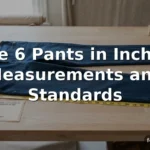
Understanding the specific dimensions behind a size 6 pair of pants is a common frustration for shoppers. Because sizing varies significantly between brands, there is no single universal measurement that applies to every manufacturer.
Generally, a size 6 in women’s clothing is intended to fit a waist measurement of approximately 27 to 28 inches and a hip measurement of 37 to 38 inches. However, these figures are only estimates, as vanity sizing and regional differences often shift these numbers by an inch or more in either direction.
Knowing how to accurately measure your body is the most reliable way to ensure a proper fit when ordering online. This guide breaks down the essential techniques for measuring your waist and hips, helping you decode sizing charts regardless of the brand’s internal standards.
Standardized Sizing and the Size 6 Baseline
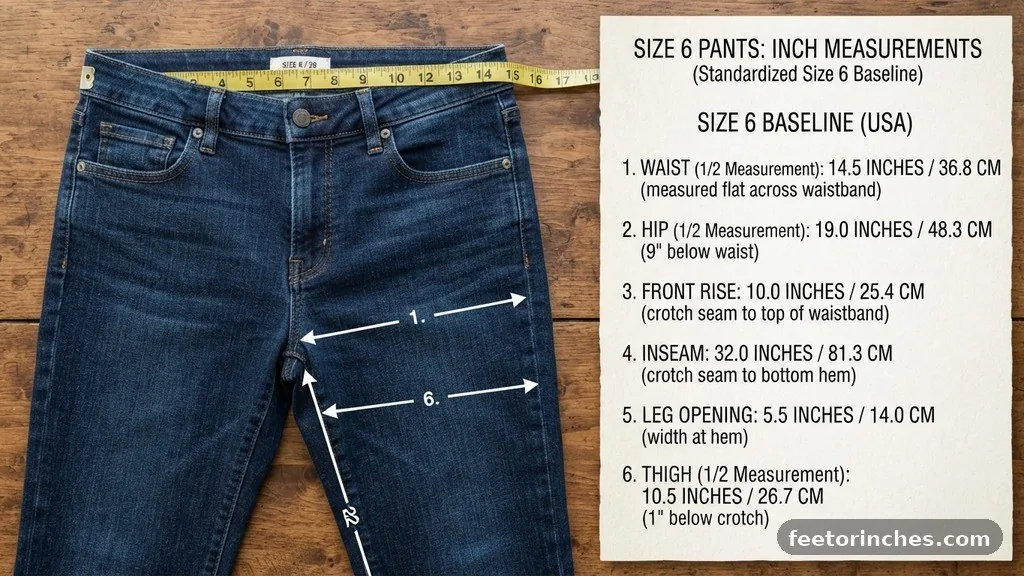
The industry standard for a size 6 typically targets a specific body profile. While individual retailers define their own charts, you will find that most department stores align with the 27-28 inch waist range. This measurement is taken at the natural waist, which is the narrowest part of your torso, usually located just above the belly button.
When you look at the hip measurement, the industry usually targets the fullest part of the glutes. For a size 6, this usually lands between 37 and 38 inches.
If your measurements fall outside these ranges, you might find the garment pulls at the seams or gaps significantly at the waistband. Always consult the specific brand’s size guide before making a purchase.
Why Measurements Fluctuate Between Brands
Retailers often adjust their sizing to appeal to target demographics, a practice known as vanity sizing. A pair of pants labeled as a size 6 in a high-end designer boutique might fit much smaller than a size 6 from a mass-market retailer. This discrepancy exists because companies want to make their customers feel like they fit into a smaller size.
Consistency is rarely found across the industry. Even within the same brand, different styles like high-rise versus low-rise pants will require different waist measurements to fit the same person. Relying on the size number alone is a recipe for returns.
How to Take Accurate Body Measurements
To get the most precise numbers, you need a flexible cloth measuring tape. Do not use a metal construction tape, as it cannot conform to the curves of your body. Stand in front of a mirror to ensure the tape remains level throughout the process.
Follow these steps to find your true size:
- Find your natural waist by bending to the side; the crease that forms is your target point.
- Measure your waist while standing straight, keeping the tape snug but not tight against your skin.
- Locate the fullest part of your hips by wrapping the tape around the widest point of your glutes.
- Keep the tape parallel to the floor at all times to avoid skewed data.
- Record your numbers in both inches and centimeters for easier comparison against international charts.
Comparison Table for Common Sizes
Comparing a size 6 to adjacent sizes helps visualize how much the fit changes with each increment. Most brands increase measurements by one to two inches per size increase. The table below illustrates the typical progression for women’s trousers.
| Size | Approximate Waist (Inches) | Approximate Hip (Inches) |
|---|---|---|
| 4 | 26 – 27 | 36 – 37 |
| 6 | 27 – 28 | 37 – 38 |
| 8 | 28 – 29 | 38 – 39 |
| 10 | 29 – 30 | 39 – 40 |
The Role of Fabric and Stretch
The material composition of the pants significantly impacts how a size 6 will feel. Denim with a high percentage of elastane or spandex will accommodate a wider range of hip measurements than rigid, 100% cotton denim. When you see labels mentioning “stretch,” you might be able to size down if you prefer a compression fit.
Conversely, non-stretch fabrics like linen or heavy wool require a more precise measurement. If your waist is 28.5 inches, a rigid size 6 may not close, whereas a stretch-blend size 6 would be comfortable. Always check the garment’s fiber content on the inner tag.
Measuring Your Existing Pants
If you own a pair of pants that fit perfectly, you can measure those to establish your baseline. Lay the pants flat on a hard surface and pull the waistband taut. Measure the distance from one side of the waist to the other, then double that number to get the total circumference.
Do the same for the hips by measuring the widest point across the seat. Compare these numbers against the brand’s online size chart.
This method is often more accurate than measuring your own body because it accounts for the ease and cut of the garment. You can find more detailed advice on garment construction and sizing at the Federal Trade Commission resources on consumer labeling.
Common Misconceptions About Sizing
A frequent point of confusion is the relationship between the number on the tag and the actual measurement in inches. Many shoppers assume a size 6 means the waist is exactly 6 inches, which is physically impossible for adult clothing. The number is merely an arbitrary code assigned by the manufacturer.
Another mistake is measuring at the wrong part of the body. If you measure your waist at your hips, you will get a number that is far too large. Always ensure you are measuring the smallest part of your waist and the fullest part of your hips to get the correct data.
Adjusting for Different Pant Styles
The rise of the pants dictates where the waistband sits on your body. High-rise pants sit at your natural waist, which is thinner than where mid-rise or low-rise pants sit. If you are buying low-rise pants, you should measure your waist a few inches lower than your natural waistline.
The length of the leg is another factor to consider. While waist and hip measurements define the fit of the torso, you must check the inseam to ensure the hem hits at the right point on your ankle. A size 6 is not a single, monolithic entity; it is a starting point for fitting your unique proportions.
FAQ
Is a size 6 in jeans the same as a size 28?
Often, yes. Many denim brands use the waist measurement in inches as the size, so a size 28 jeans roughly corresponds to a size 6 in traditional dress pant sizing.
Should I measure while wearing clothes?
It is best to measure in your undergarments. Wearing thick clothing like heavy sweaters or jeans will add bulk and result in inaccurate measurements.
What if my waist and hips are two different sizes?
This is extremely common. Most people have a “pear” or “apple” shape, meaning they may need to buy for the larger of the two measurements and have the other part tailored.
Do international brands use the same size 6?
No. A UK size 6 is significantly smaller than a US size 6. Always check the country-specific conversion chart on the retailer’s website.
How often should I re-measure myself?
You should re-measure every six months or whenever your weight fluctuates. Body composition changes over time, and relying on old measurements can lead to poor-fitting purchases.
Final Thoughts on Finding Your Fit
Navigating the world of clothing labels requires a bit of patience and the right tools. By focusing on your actual body measurements rather than the arbitrary number on a tag, you can take the guesswork out of your next shopping trip. Whether you are looking for a pair of trousers for the office or casual denim for the weekend, knowing your waist and hip dimensions in inches is the most effective way to ensure a perfect look.
If you find that a size 6 fits in the waist but is tight in the hips, do not be discouraged. Most mass-produced clothing is designed for a generic silhouette that rarely exists in reality.
Consider finding a reliable tailor who can adjust your favorite pieces to match your specific frame. Taking these steps will help you build a wardrobe that fits you comfortably and correctly.
You may also like: Size 16 Jeans in Inches
You may also like: M8 to Inches
Explore more on FeetOrInches.