

Calculating 24 inches to cm reveals that the exact measurement is 60.96 centimeters. Many people instinctively guess 60 centimeters because the numbers are close, but that slight difference matters in precision engineering, manufacturing, and garment sizing. Whether you are measuring a computer monitor, a piece of fabric, or a tabletop, understanding this conversion ensures your projects align perfectly with international standards.
Moving between the imperial system and the metric system is a common necessity for DIY enthusiasts and professionals alike. By mastering the relationship between these two units, you gain the ability to switch between measurement systems without relying on a calculator for every minor adjustment. Let’s look at why this specific conversion is so frequently required in daily life.
Standard Conversion Data
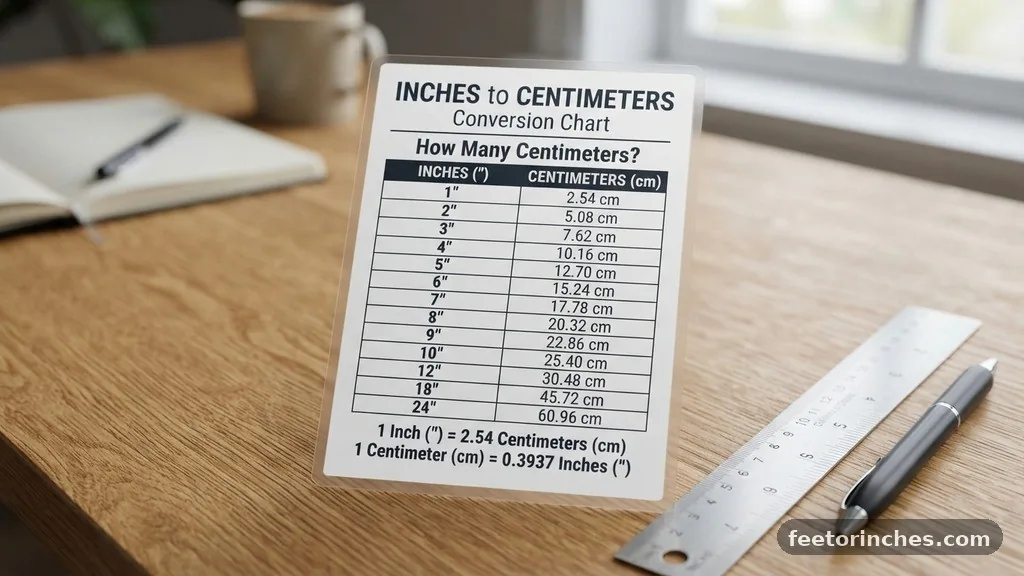
When you need to convert 24 inches into other common units of measurement, having a quick reference chart is essential. The following table provides the exact values for 24 inches compared to various international standards, ensuring you have the right data for any project.
| Unit | Equivalent Value |
|---|---|
| Centimeters | 60.96 cm |
| Millimeters | 609.6 mm |
| Meters | 0.6096 m |
| Feet | 2 feet |
| Inches | 24 inches |
The calculation relies on the internationally accepted standard where one inch is defined as exactly 2.54 centimeters. Multiplying 24 by 2.54 yields the result of 60.96. This fixed ratio is the foundation of the National Institute of Standards and Technology guidelines for unit conversion.
Real-World Objects Measuring 24 Inches
Visualizing a measurement is often easier than staring at a ruler. Below are 24 items categorized by their use that sit at or near the 24-inch mark, helping you estimate size on the fly.
- Kitchen
- Standard base cabinet depth (roughly 24 inches).
- Small under-counter dishwasher width.
- Wide baking sheet diagonal length.
- Large pizza stone diameter.
- Standard kitchen sink width for single-basin models.
- Technology
- Diagonal screen size of many entry-level desktop monitors.
- Width of a standard mid-tower computer chassis.
- Length of a standard high-speed HDMI cable.
- Vertical height of a compact desktop printer.
- Diagonal measurement of a small television screen.
- Household
- Width of a standard hallway runner rug.
- Length of a standard throw pillow insert.
- Average height of a small bedside table.
- Depth of a standard closet shelf.
- Length of a standard fireplace poker.
- Office
- Width of a standard ergonomic keyboard tray.
- Length of a standard desk lamp arm.
- Vertical height of a standard office chair backrest.
- Width of a standard legal-size file folder.
- Diagonal length of a standard laptop screen (14-inch class).
- Recreation
- Diameter of a standard large tractor tire.
- Length of a small skateboard deck.
- Height of a standard youth-size soccer goal.
- Width of a small portable camping table.
- Length of a standard beginner’s tennis racket.
Estimating Without Tools
Sometimes you need to know how big 24 inches is but don’t have a tape measure handy. You can use your own body or common household items to get a surprisingly accurate estimate. The average adult arm span from the center of the chest to the fingertips is often close to 24 inches, though this varies by individual.
Another reliable method involves using standard office supplies. A piece of legal-size paper is 14 inches long, so two pieces placed end-to-end measure 28 inches. By subtracting roughly 4 inches—about the width of an adult hand—you arrive at a visual representation of 24 inches.
Comparing Nearby Measurements
Understanding 24 inches requires context. It sits in a range of sizes that are common in consumer goods, so knowing how it compares to 12, 13, 15, and 16 inches is helpful for sizing decisions. For instance, 24 inches is exactly double the length of a standard 12-inch ruler.
When you look at 13-inch or 15-inch laptop screens, these measurements refer to the diagonal, not the width. A 24-inch screen is significantly wider than two 13-inch laptops placed side-by-side. Always verify whether a manufacturer is citing the diagonal or the horizontal width to avoid confusion.
The Metric vs. Customary System
The imperial system, or the customary system, uses inches as a primary unit for length. In contrast, the metric system uses the centimeter as its standard base. Whereas the metric system is decimal-based, the customary system often uses fractions, making the conversion to centimeters a cleaner mathematical process.
When you convert 24 inches to cm, you are essentially translating between two different ways of perceiving physical space. The centimeter part of the metric system is smaller than an inch, which is why 24 inches results in a larger numerical value in centimeters. This inverse relationship is consistent across all length conversions.
Common Misconceptions
A frequent error is assuming that 24 inches is equal to 60 centimeters. While 60 cm is a convenient estimate, the missing 0.96 cm can cause issues in precision woodworking or high-tolerance manufacturing. Always use the 2.54 multiplier if your project requires an exact fit.
Another point of confusion is the difference between diameter and circumference. If you have a circular object that is 24 inches in diameter, its circumference is actually 75.4 inches, or approximately 191.5 cm. Never confuse these two dimensions when ordering materials like pipes or circular tabletop glass.
Precision in Manufacturing
In industries like furniture design, 24 inches is a standard module. Kitchen cabinets, for example, are almost universally built to a 24-inch depth to accommodate standard appliances. Designers often work in inches but must convert to centimeters for international manufacturing partners.
Errors in this conversion can lead to significant waste. If a factory interprets 24 inches as exactly 60 cm instead of 60.96 cm, a run of 1,000 units would result in a discrepancy of nearly 10 meters. Precision is not just a mathematical preference; it is a necessity for supply chain efficiency.
FAQ
Is 24 inches exactly 60 cm?
No, 24 inches is exactly 60.96 centimeters. The common assumption of 60 cm is a rounded estimate that should be avoided for precise work.
How do I convert 24 inches to feet?
Since there are 12 inches in a foot, you simply divide 24 by 12. This gives you exactly 2 feet.
Does the 2.54 conversion factor apply to all inches?
Yes, the international inch is defined as exactly 2.54 centimeters. This standard has been in place since 1959 and is used globally for scientific and commercial purposes.
Why is 24 inches a common size for household items?
It is a highly divisible number, which makes it useful for construction and design. It can be divided by 2, 3, 4, 6, 8, and 12, allowing for symmetrical layouts in home architecture and furniture.
Summary and Next Steps
Knowing that 24 inches to cm equals 60.96 centimeters provides a solid foundation for any project requiring precision. Whether you are measuring space for new kitchen cabinets or selecting the right monitor size, this conversion ensures your plans remain accurate. Relying on the exact 2.54 multiplier prevents the small, cumulative errors that often arise from using rounded estimations.
If you find yourself frequently switching between these units, keep the conversion table provided here bookmarked for quick access. As you continue your work, remember that small differences in measurement can have a large impact on the final result. If you have a specific project in mind, feel free to measure your materials twice and convert once to ensure the best possible outcome.
Related conversions: What Is 20 Centimeters in Inches? 10 Everyday Comparisons, 157 cm to Inches: How Many Inches?, 5.8 Inches in cm: How Many Centimeters?, 56 Inches in cm: How Many Centimeters?.




