
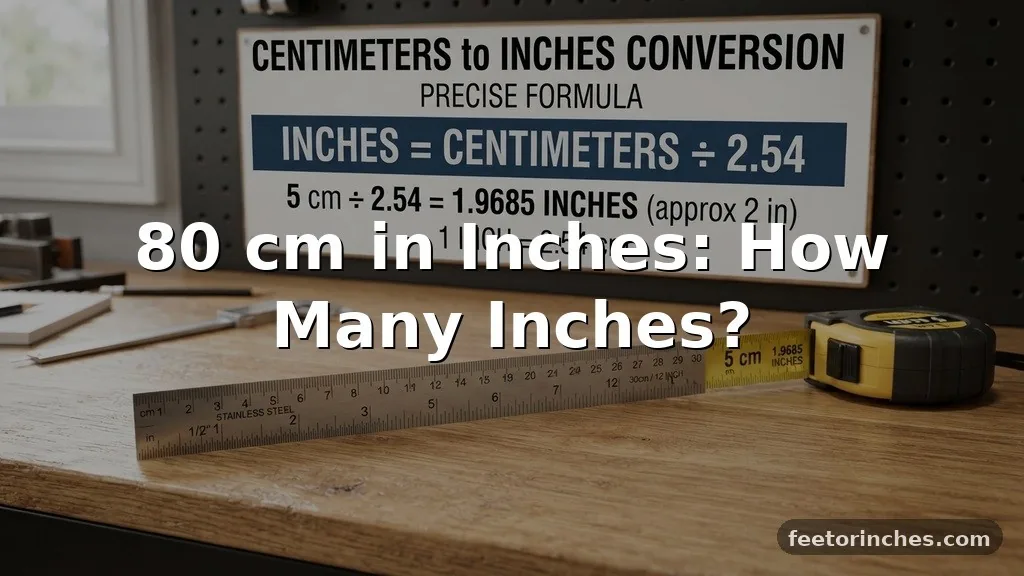
Calculating 80 cm in inches is a frequent task for anyone working between the metric and imperial systems. When you need to know exactly how many inches are in 80 centimeters, the answer is 31.4961 inches.
Most people round this figure to 31.5 inches for everyday projects, which provides sufficient accuracy for most home improvement or clothing measurements. Understanding this conversion helps bridge the gap between global standards and the customary system used in the United States.
Whether you are measuring furniture, fabrics, or architectural spaces, knowing how to handle these conversions quickly saves time. This guide provides the precise data you need to move between these two units of length without confusion. You will find that mastering this simple math makes it much easier to shop for items produced in international markets.
The Precise Conversion Formula
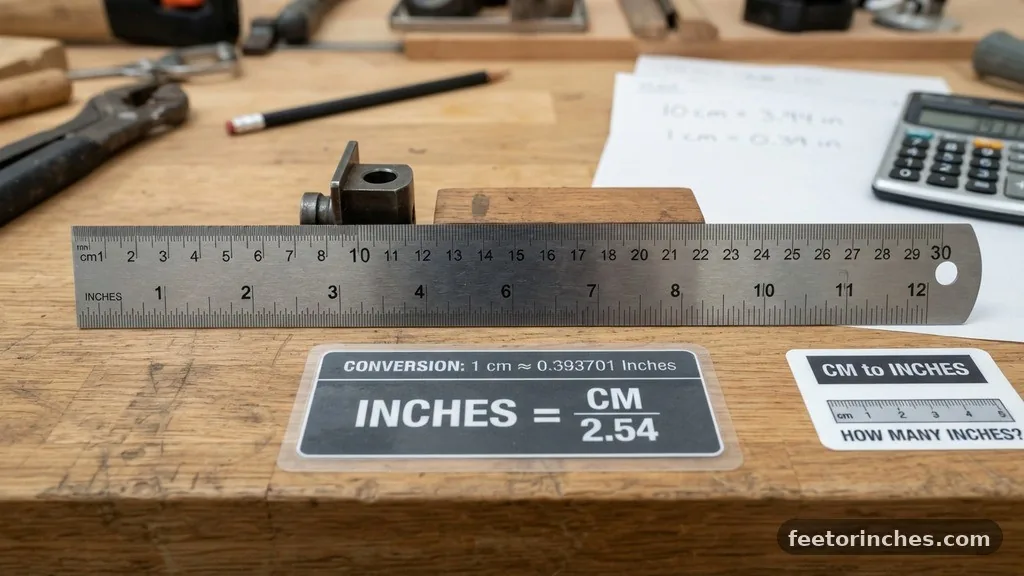
To convert length accurately, you must rely on the international standard where one inch is defined as exactly 2.54 centimeters. Because the metric system is base-ten and the imperial system relies on different increments, the math requires a simple division. You take your length in centimeters and divide by 2.54 to reach the inch equivalent.
For 80 centimeters, the calculation is 80 / 2.54, which results in 31.49606299. In practical, real-world applications, industry professionals almost always round this to 31.5 inches.
This 0.004-inch difference is negligible for construction, tailoring, or general design. If you require absolute scientific precision, however, keep the full decimal string to avoid compounding errors in larger projects.
| Measurement in cm | Measurement in Inches | Measurement in Feet |
|---|---|---|
| 80 cm | 31.50 in | 2.62 ft |
| 70 cm | 27.56 in | 2.30 ft |
| 90 cm | 35.43 in | 2.95 ft |
| 100 cm | 39.37 in | 3.28 ft |
80 Centimeters vs Other Common Lengths
Comparing 80 cm to other lengths helps you visualize the scale of the measurement. While 80 cm is roughly 31.5 inches, it sits in a unique spot between two and three feet.
It is slightly longer than the standard yardstick’s three-quarter mark, which is 27 inches. Understanding how this relates to standard imperial units allows you to estimate sizes without constantly reaching for a calculator.
When comparing this length to furniture or doorways, consider that 80 cm is a common width for a standard interior door or a small desk surface. It is also a frequent height for low-profile cabinets or bathroom vanities.
By linking these physical objects to the number, you build a mental map of the metric system. If you want to check your own measurements against official standards, you can visit the National Institute of Standards and Technology to learn more about unit definitions.
Eighty Centimeters in Daily Life: 80 Objects
Visualizing 80 cm, or 31.5 inches, is easier when you consider common items. Below are 80 objects categorized by their typical dimensions.
- Kitchen: Standard counter height (depth), width of a slim dishwasher, length of a large serving platter, width of a small kitchen island, height of a bar stool seat.
- Tech: Diagonal of a large computer monitor, width of a standard printer tray, height of a floor-standing speaker, length of a heavy-duty power strip, width of a large laptop bag.
- Furniture: Depth of a standard armchair, width of a small bookshelf, height of a bedside table, width of a narrow hallway console, depth of a standard desk.
- Clothing: Inseam of tall-sized trousers, length of a standard scarf, width of a folded winter coat, length of a child’s floor-length dress, sleeve length of a large jacket.
- Travel: Height of a medium-sized suitcase, width of a standard carry-on, length of a travel umbrella, width of a yoga mat bag, length of a standard duffel bag.
- Home Decor: Height of a floor lamp, width of a decorative mirror, length of a standard shelf, width of a hallway rug, height of a large decorative vase.
- Automotive: Width of a car seat, length of a wiper blade, width of a spare tire, length of a standard jumper cable, height of a small car battery.
- Gardening: Length of a standard garden trowel, height of a small potted plant, width of a garden box, length of a hand rake, height of a bird feeder.
- Office: Width of a standard drawer, length of a desk lamp arm, height of a filing cabinet shelf, width of a keyboard tray, length of a large mousepad.
- Fitness: Width of a standard weight bench, length of a resistance band, height of a medicine ball rack, width of a small treadmill, length of a foam roller.
- Sports: Length of a baseball bat, width of a small equipment bag, height of a wicket, length of a goalie stick, width of a golf club bag base.
- Crafting: Length of a standard cutting mat, width of a large fabric bolt, height of a sewing machine table, length of a yarn winder, width of a framing square.
- Hardware: Length of a standard level, width of a tool chest shelf, height of a small folding ladder, length of a pipe section, width of a miter saw base.
- Bedding: Width of a small pillow, length of a baby crib mattress, width of a folded duvet, length of a bed skirt panel, height of a headboard leg.
- Outdoor: Length of a camping chair, width of a small cooler, height of a mailbox post, length of a porch railing section, width of a patio table leg.
- Miscellaneous: Length of a standard guitar case, width of a large pet crate, height of a small trash can, length of a window blind, width of a bicycle frame section.
Estimating 14 Inches and 31.5 Inches Without Tools
You can estimate 31.5 inches using your body if you know your own proportions. The average adult arm span from the center of the chest to the fingertips is roughly 30 to 32 inches.
By extending your arm fully from the center of your sternum, you can approximate the 80 cm mark with surprising accuracy. Another trick involves using standard letter-sized paper, which is 11 inches long; three sheets placed end-to-end measure 33 inches, putting you just slightly over the target.
Using these physical references helps when you are in a hardware store or an apartment and do not have a tape measure handy. Remember that these are estimates meant for quick assessment, not precision engineering. When accuracy is critical, always use a calibrated tool to verify your measurements against the 80 cm requirement.
Addressing Common Measurement Misconceptions
One of the most frequent errors in measurement is confusing linear dimensions with diagonal measurements. When you see a “14-inch” laptop, that measurement refers to the screen diagonal, not the width of the chassis.
A 14-inch diagonal screen is usually about 12 inches wide, which creates confusion for buyers expecting a larger device. Always check whether a specification refers to a diagonal, a diameter, or a flat width.
Another point of confusion is the difference between circumference and diameter. If you are measuring the size of a pipe or a tree trunk, 80 cm of circumference is significantly different from 80 cm of diameter.
Circumference is the distance around the object, while diameter is the distance straight through the center. Always clarify which dimension you are measuring before finalizing your plans or purchasing materials.
Comparing Measurements: 12, 13, 14, 15, and 16 Inches
Understanding how 80 cm (31.5 inches) fits into the spectrum of smaller measurements helps you scale your projects. If you are dealing with common screen sizes or standard shelf depths, you often work with increments between 12 and 16 inches. These small differences are vital when designing cabinetry or installing hardware.
A 12-inch measurement is a standard ruler length, while 16 inches is the typical spacing for wall studs in construction. By knowing the gap between these numbers, you can determine if a 31.5-inch object will fit into a specific space.
For example, two 16-inch segments equal 32 inches, which is just half an inch larger than 80 cm. This proximity makes 16-inch intervals a useful benchmark for estimating larger metric lengths.
FAQ
Is 80 cm exactly 30 inches?
No, 80 cm is not 30 inches. It is closer to 31.5 inches. 30 inches is equal to 76.2 centimeters.
What is 80 cm in feet and inches?
80 cm is approximately 2 feet and 7.5 inches. You calculate this by dividing 31.5 by 12, which gives you 2.625 feet, or 2 feet and 7.5 inches.
Is 32 inches equal to 80 cm?
32 inches is equal to 81.28 centimeters. While it is very close, it is slightly larger than 80 cm.
How do I convert centimeters to inches quickly?
The fastest way is to divide your centimeter value by 2.54. If you just need a rough estimate, you can divide by 2.5, though this will be slightly less accurate than the precise calculation.
Conclusion
Mastering the conversion of 80 cm in inches is a practical skill that helps you navigate both metric and imperial environments. By keeping the conversion factor of 2.54 in mind, you can reliably translate any measurement into the units you need.
Whether you are shopping for furniture, planning a home renovation, or simply comparing product specifications, remembering that 80 cm equals 31.5 inches allows you to make informed decisions quickly. If you find yourself needing to perform these calculations frequently, keeping a small conversion chart or using a digital calculator will ensure your projects remain accurate.
We hope this breakdown clarifies how to handle these measurements and gives you the confidence to work across different systems. If you have a specific project in mind that requires precise metric-to-imperial translations, feel free to reach out or explore more of our measurement resources.
You may also like: 18 mm in Inches
You may also like: 225 mm to Inches




