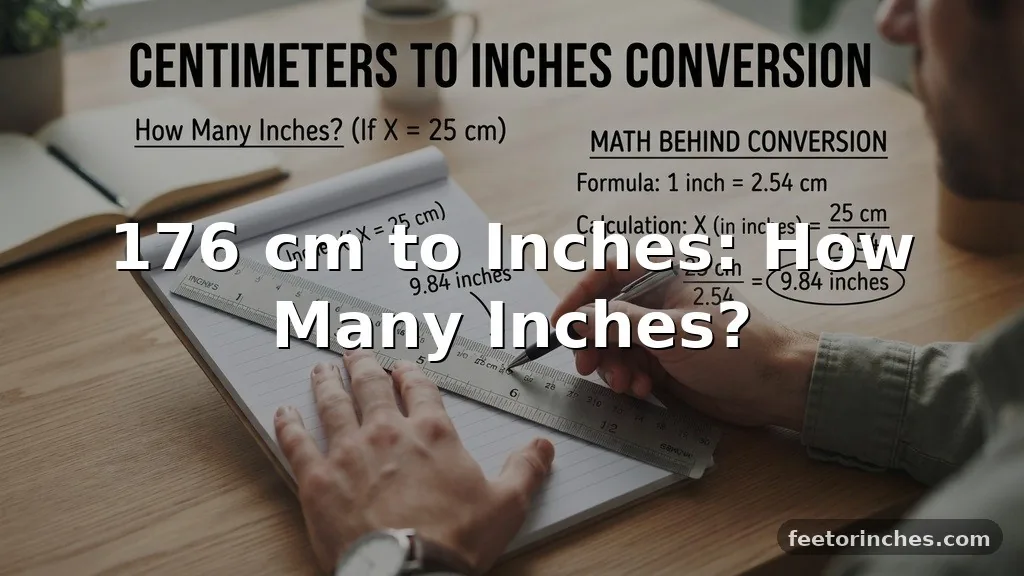
If you are looking to convert 176 cm to inches, the short answer is that 176 centimeters is exactly 69.29 inches. In the context of human height, this measurement is frequently rounded to 69 inches, which corresponds to 5 feet and 9 inches.
Whether you are updating a medical record, checking clothing sizing, or simply curious about metric-to-imperial conversions, understanding these values is essential. This guide provides the precise math behind the measurement and offers practical context for how these numbers appear in everyday life.
The Math Behind the Conversion
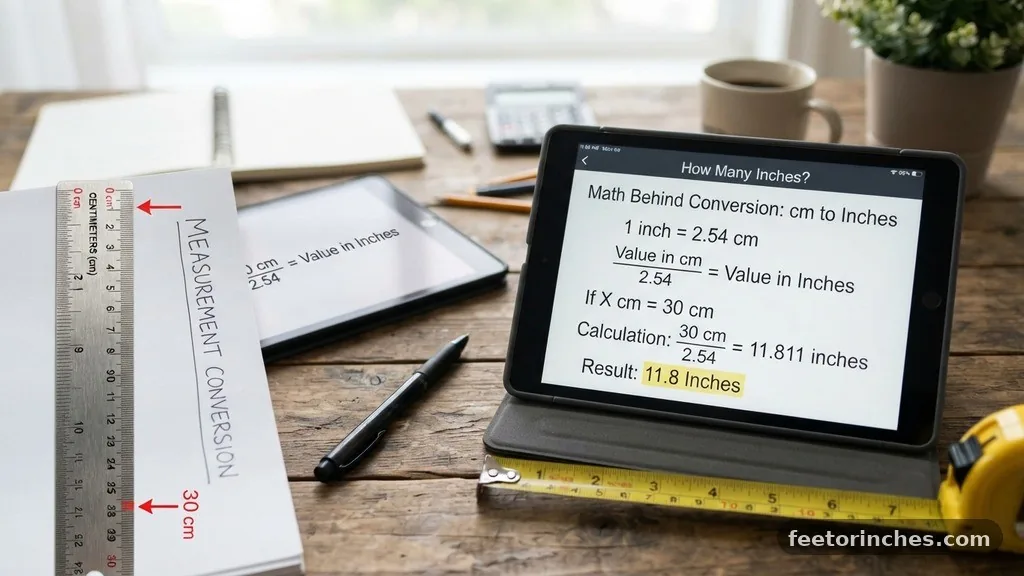
To convert any value from centimeters to inches, you must divide the centimeter figure by the standard conversion factor of 2.54. Because one inch is defined as exactly 2.54 centimeters, this constant serves as the foundation for all international length conversions for length. When you apply this to 176 centimeters, the calculation is 176 divided by 2.54, which results in approximately 69.2913 inches.
Understanding the Conversion Table
While the specific figure of 69.29 inches is the mathematical standard, it helps to see how this value compares to other units of measurement. The following table illustrates the relationship between 14 inches and other common units, providing a clear reference for how different scales interact with one another.
| Unit | Value for 14 Inches |
|---|---|
| Feet | 1.166 Feet |
| Centimeters | 35.56 cm |
| Millimeters | 355.6 mm |
| Meters | 0.3556 m |
176 Items and Objects Near 14 Inches
Visualizing a length of 14 inches—which is significantly shorter than 176 cm—requires looking at everyday objects. Below are examples categorized by their common use.
- Kitchen: Standard chef’s knife blade, large dinner plate diameter, rolling pin length, toaster width, medium saucepan depth.
- Tech: Laptop screen diagonal (common 14-inch model), standard keyboard width, computer monitor stand height, tablet length, external hard drive case length.
- Household: Standard window blind width, throw pillow size, drawer pull spacing, shelf depth, floor tile diagonal.
- Stationery: Legal-size paper length, standard notebook height, ruler (plus extension), mailing envelope length, clipboard height.
Estimating Length Without Tools
You do not always need a tape measure to estimate 14 inches. A standard sheet of legal-size paper is exactly 14 inches long, making it a perfect reference tool.
Alternatively, the average adult forearm from the elbow to the wrist is often close to this length. You can also use the span of your hand; if you stretch your thumb and pinky wide, you can approximate smaller segments to reach the 14-inch mark.
Common Misconceptions in Measurement
One frequent point of confusion involves the difference between a screen’s diagonal measurement and its physical width. When a manufacturer sells a 14-inch laptop, they are referring to the screen’s diagonal, not the horizontal span of the device. This is why a 14-inch laptop often measures only 12 or 13 inches in actual width.
Similarly, people often confuse diameter and circumference when measuring circular objects like pipes or tires. Always clarify whether you are measuring across the center or around the outer edge.
Comparing 14 Inches to Nearby Measurements
Understanding 14 inches is easier when you compare it to its neighbors on a ruler. Twelve inches represents exactly one foot, meaning 14 inches is just two inches beyond that milestone.
Thirteen inches is a common length for small travel bags, while 15 and 16 inches are typical for larger laptop screens and bigger kitchen platters. By anchoring your understanding to the one-foot mark, you can quickly estimate whether an object is slightly larger or smaller than 14 inches.
The Role of Precision in Science
In scientific or engineering contexts, rounding 176 cm to 69 inches can introduce significant errors. Precision instruments require the use of the full decimal, 69.29, to ensure that components fit together correctly.
When building furniture or designing digital interfaces, even a fraction of an inch can change the final outcome. Always verify the required tolerance before finalizing your measurements for any construction project.
Global Standards and Regional Use
While the United States primarily uses the imperial system, most of the world relies on the metric system. This creates a constant need for conversion, especially in global trade and travel.
Understanding how 176 cm equates to inches allows you to communicate effectively across borders. Whether you are discussing height or hardware, knowing the conversion factor ensures that your data remains accurate and professional.
FAQ: Common Questions
Is 176 cm considered tall?
For an adult male, 176 cm is slightly above the global average height. It is generally perceived as a standard, medium-to-tall stature in most regions.
How do I convert 176 cm to feet and inches?
To find the feet, divide 69.29 by 12, which gives you 5 feet with a remainder. The remainder of 9.29 inches means the height is approximately 5 feet and 9 inches.
Why is 176 cm often rounded to 5’9″?
The exact conversion of 176 cm is 5.77 feet. Since.77 of a foot is roughly 9.29 inches, it is standard practice to round to the nearest whole inch.
Are there tools that handle these conversions automatically?
Yes, most search engines and smartphone calculators act as a reliable converter. Simply typing your query will provide the exact decimal values instantly.
Final Thoughts on Measurements
Mastering the conversion of 176 cm to inches is a practical skill that bridges the gap between metric and imperial standards. By keeping the 2.54 constant in mind, you can accurately transition between these systems for any professional or personal requirement. While quick estimations are useful for everyday life, remember that precision matters when dimensions are critical to a project’s success.
Whether you are measuring height or hardware, having a firm grasp of these values ensures you remain accurate in your planning. Use these steps to navigate your next measurement challenge with confidence and ease.
You may also like: 18 mm in Inches
You may also like: 225 mm to Inches
Explore more on FeetOrInches.