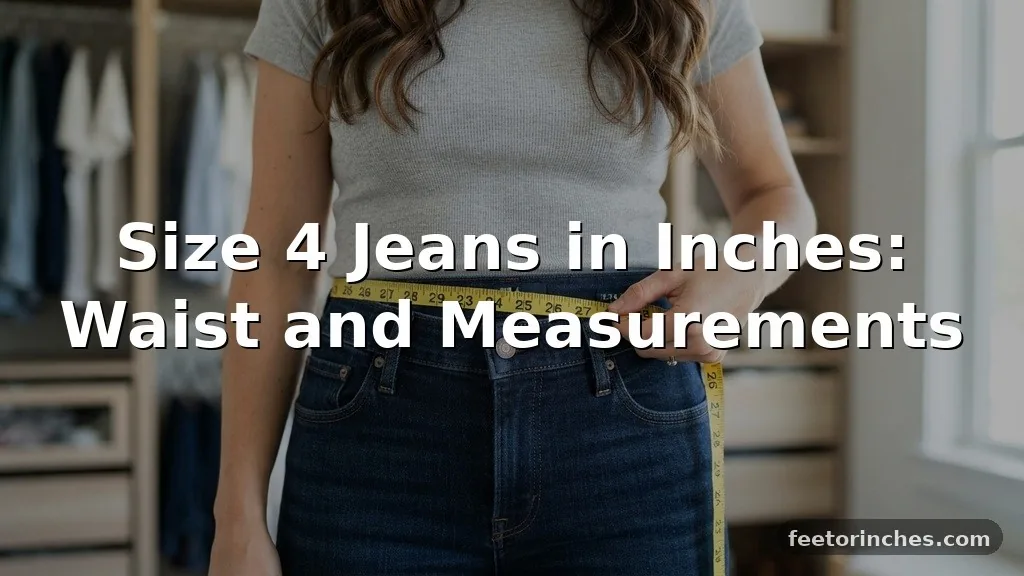
Finding the right fit often feels like a guessing game when you look at how size 4 jeans in inches translate across different brands. A standard size 4 in women‘s apparel typically corresponds to a waist measurement between 26 and 27 inches, though this is far from universal.
Because vanity sizing and manufacturing variations exist, the label inside your waistband might not reflect your actual dimensions. Understanding how to measure yourself and interpret these numbers will save you from the frustration of returns and ill-fitting denim.
By mastering the art of the tape measure, you can confidently shop for jeans that actually suit your body. This guide explains exactly what those size labels mean and how you can find your perfect match.
Defining the Standard Size 4
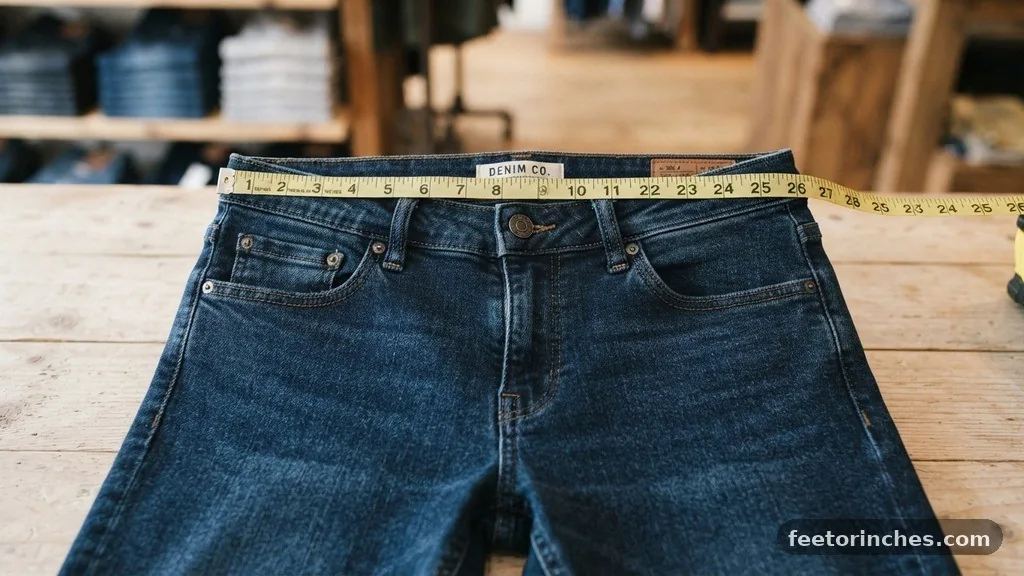
In the world of retail, a size 4 is generally categorized as a small, sitting between sizes 2 and 6. While there is no single global standard for sizing, most mass-market brands align their measurements with a specific set of proportions. If you pick up a pair of size 4 jeans, you are usually looking at a garment designed for a waist circumference of roughly 26.5 inches.
However, modern manufacturing often deviates from these traditional benchmarks. Some high-end designers cut their garments smaller, while fast-fashion retailers may add extra room to account for inconsistencies. This is why you might find a size 4 in one store that feels like a size 2 in another.
Variations in Waist Measurements
The relationship between a size 4 and a specific inch measurement depends heavily on the brand’s target demographic. Some brands cater to a more athletic build, while others focus on a curvier silhouette. You should treat the size label as a starting point rather than a definitive rule.
* Budget-friendly retailers often use larger, more forgiving patterns.
* Designer denim brands frequently utilize tighter, more structured sizing.
* Stretch-denim blends often require a smaller size to account for fabric recovery.
How to Measure Your Waist Accurately
To find your true size, you must measure your body correctly using a flexible sewing tape measure. Do not rely on your pants size, as that number is often obscured by marketing tactics. Stand in front of a mirror with your feet hip-width apart, ensuring you aren’t holding your breath or pulling the tape too tight.
Locate your natural waist, which is the narrowest part of your torso, typically positioned above your belly button and below your rib cage. Wrap the tape measure around this point, keeping it parallel to the floor. If you are shopping for low-rise jeans, you will need to measure lower, right where the waistband of those specific jeans will sit on your hips.
Tips for Consistent Results
Consistency is key when you measure yourself for new clothing. Always use a fabric tape measure rather than a metal carpenter’s rule, which cannot wrap around your body. If you don’t have a tape measure, use a piece of string and then lay it flat against a standard ruler.
Record your measurements in both inches and centimeters to make shopping easier across international websites. Many manufacturers provide a detailed sizing chart that can help you convert your specific measurements into their proprietary sizes. Always check this chart before finalizing a purchase, especially when buying online.
Comparing Size 4 to Other Measurements
Understanding how a size 4 relates to other common sizes helps you navigate the differences between brands. If you find a size 4 is too tight, you can estimate your need for a size 6, which typically adds about an inch to the waist. The following table provides a general reference for how these sizes usually correlate to waist measurements in inches.
| US Size | Waist Measurement (Inches) | General Fit |
|---|---|---|
| Size 2 | 25 – 26 inches | Extra Small / Small |
| Size 4 | 26 – 27 inches | Small |
| Size 6 | 27 – 28 inches | Small / Medium |
| Size 8 | 28 – 29 inches | Medium |
Keep in mind that these figures are approximations. The actual fit of your jeans depends on the cut, the rise, and the percentage of elastane or spandex in the fabric. A pair of 100% cotton jeans will have zero stretch, meaning your waist measurement must be precise to ensure comfort.
The Role of Inside Leg and Rise
Waist size is only one part of the equation when you are looking for the perfect pair of jeans. The inside leg, also known as the inseam, determines where the hem hits your ankle. A standard size 4 might come in varying lengths, such as short, regular, or long, to accommodate different heights.
The rise is equally important, as it dictates where the jeans sit on your torso. High-rise jeans sit at the natural waist, while mid-rise jeans rest slightly lower. If you have a longer torso, a low-rise jean might feel uncomfortable, regardless of whether the waist measurement is technically correct for your body.
Common Misconceptions in Denim Sizing
One of the most persistent myths is that a specific size label implies a universal fit. In reality, vanity sizing means that a size 4 in 2024 might be significantly larger than a size 4 from two decades ago. Manufacturers often adjust their sizing to make the customer feel smaller, which complicates the process of finding your true size.
Another mistake is confusing the waist measurement with the hip measurement. Your jeans size is often determined by the widest part of your hips, especially if you are buying a slim-fit or skinny style. If you have wider hips, you might need to size up from a 4 to a 6 to ensure the fabric doesn’t pull or pucker across the seat.
Why Fabric Content Matters
When you look at the tag of your jeans, notice the material composition. Cotton-heavy denim is rigid and holds its shape, meaning it won’t “give” much throughout the day. If you are between sizes, this is the time to opt for the larger size to ensure you can move comfortably.
Denim with added stretch, such as spandex or elastane, is much more forgiving. These jeans are designed to hug your curves and will expand slightly as you wear them. If you prefer a very snug fit, you might be able to size down, but always test the jeans by sitting down to ensure they don’t pinch.
How to Estimate Without a Tape Measure
If you find yourself shopping without a tape measure, you can use common objects to estimate your waist. A piece of standard letter-sized paper is 8.5 inches wide. You can fold it or use it as a rough guide to compare against the waistband of the jeans.
Another trick is the forearm test. While this is less precise, many people find that the length of their forearm from elbow to wrist is roughly equivalent to their waist diameter. Use these methods only as a last resort, as they are not a substitute for accurate measurements taken with a proper tool.
Frequently Asked Questions
Is a size 4 jean always a 27-inch waist?
Not necessarily. While 26 to 27 inches is the industry average for a size 4, some brands define a size 4 as having a 25-inch waist, while others might go up to 28 inches. Always check the brand’s specific size chart.
What is the difference between a size 4 and a size 28?
Size 4 is a general clothing size, whereas 28 usually refers to the actual waist measurement in inches. In many brands, a 28-inch waist corresponds to a size 6 or 8, depending on the cut and the brand’s sizing philosophy.
Does the rise affect the size I should buy?
Yes, the rise changes where the waistband sits on your body. If you are buying high-rise jeans, you are measuring your true waist, but for low-rise jeans, you are measuring your hips, which are typically wider.
Should I size up if the jeans are 100% cotton?
If the jeans have no stretch, it is often better to size up if you are between sizes. Rigid denim does not adjust to your body, so a pair that is too tight initially will likely remain uncomfortable throughout the day.
Finding Your Perfect Fit
Navigating the world of women’s denim requires a mix of patience and precise data. By understanding that size 4 jeans in inches represent a range rather than a fixed point, you can stop relying on labels and start focusing on your actual body measurements. Use the information provided here to build a baseline for your own sizing, and remember that every brand has its own unique interpretation of fit.
Taking the time to measure your waist and inseam before you shop is the most effective way to ensure your next pair of jeans feels custom-made. Don’t be discouraged if you find yourself wearing different sizes across various brands; it is a common reality of modern fashion.
Once you know your measurements, you can shop with confidence and find the perfect denim for your wardrobe. Feel free to reach out if you need help interpreting specific brand charts or understanding complex sizing systems.
Related conversions: Size 16 Jeans in Inches: Waist and Measurements, How Many Inches in a Foot? (Complete Guide with Real Examples & Visuals), How Many Inches in a Yard? Complete Conversion Guide With Examples, What Is 6 mm in Inches? Complete Conversion Guide.
Explore more on FeetOrInches.