
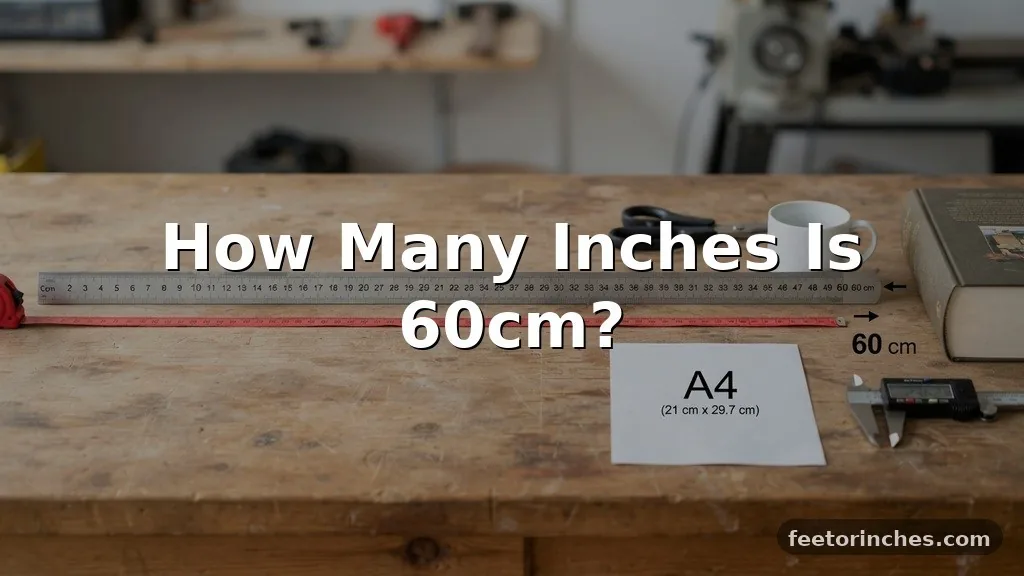
When you find yourself asking how many inches is 60cm, you are likely working on a project that requires bridging the gap between the metric and imperial systems. Understanding this conversion is essential because 60 centimeters is a common dimension for furniture, appliance widths, and even standard monitor sizes. By grasping this value, you can ensure your measurements align with international standards.
Whether you are ordering a part online or sizing up a piece of equipment, knowing exactly how these units relate saves you time and prevents costly errors. This guide provides the precise figures and practical mental anchors you need to master this conversion with confidence.
The relationship between these two units is fixed by international agreement. One inch is defined as exactly 2.54 centimeters. To find out how many inches 60cm represents, you simply divide 60 by 2.54.
This calculation results in approximately 23.62 inches. If you need to be precise for engineering or carpentry, keep that decimal in mind. For most casual purposes, rounding to 23.6 inches is more than sufficient for your planning.
Using an official measurement reference helps confirm these figures. The metric system is used globally for scientific and commercial standardization, whereas the customary system remains deeply embedded in American daily life.
When you need to convert between these two, remembering the 2.54 factor is the most reliable method. Most people find that keeping a small conversion chart nearby is more efficient than performing the division manually every time they encounter a metric label.
| Measurement Unit | Value for 60cm |
|---|---|
| Inches | 23.62 inches |
| Feet | 1.97 feet |
| Millimeters | 600 mm |
| Meters | 0.6 meters |
Visualizing 60 Centimeters
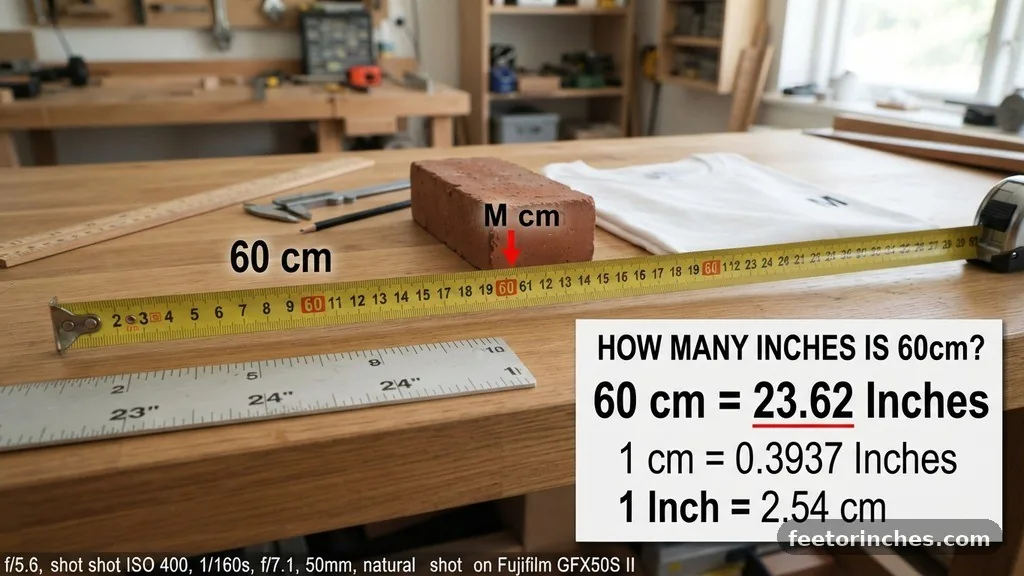
Seeing the length in your mind is often more useful than looking at a raw number. A standard kitchen countertop depth is frequently around 60 centimeters, which translates to just under 24 inches.
If you have a standard gas or electric stove, the width is often exactly 60 centimeters, fitting perfectly into those tight galley kitchen gaps. Imagine two standard 12-inch rulers laid end to end; that is almost exactly your 60-centimeter target.
When you think about human scale, 60 centimeters is roughly the distance from your elbow to your fingertips if you have average-length arms. It is also a common size for a medium-sized suitcase width, making it a familiar sight at airports.
Recognizing these objects helps you estimate sizes on the fly without needing a measuring tape. You can quickly eyeball a space to see if a box or appliance will fit by comparing it to these known, everyday items.
Common Conversion Pitfalls
Many people mistakenly assume that 60 centimeters is exactly 2 feet. While 60 centimeters is very close to 2 feet, which would be 60.96 centimeters, it is technically about 0.96 centimeters short.
In high-precision work, that missing centimeter can be the difference between a part fitting and a part rattling. Always verify if your project requires the exact 23.62-inch measurement or if a rough estimate is acceptable.
Another common issue is confusing 60 centimeters with the diagonal measurement of a screen. If a monitor is advertised as 60 centimeters, that usually refers to the diagonal length, not the width or height.
This is a classic trap in electronics shopping. Always check the specifications for the actual width and height if you are trying to fit the screen into a specific wall unit or desk cubby.
Practical Estimation Techniques
When you do not have a ruler or a tape measure, you can use your body as a rough guide. A human palm is often around 3 to 4 inches wide.
If you place six palms side by side, you are getting very close to the 23-24 inch range. This is not scientific, but it works perfectly for checking if a piece of furniture will fit in a hallway.
You can also use household items as makeshift measuring tools. A standard sheet of printer paper is 11 inches long. Two sheets laid end to end give you 22 inches, which is just shy of 60 centimeters.
Adding about an inch and a half to that length gives you a very accurate mental representation of the 60-centimeter mark. Having these “mental rulers” allows you to make quick decisions in a store.
System Measurement Context
It helps to remember that the metric system is based on powers of ten, making it very easy to adjust. If you have 60 centimeters, you have 600 millimeters.
This is a clean, simple relationship that the imperial system lacks. When you look at an inch part, you are dealing with fractions like eighths or sixteenths, which can get complicated quickly.
The imperial system measurement style is based on historical units that were often tied to physical objects like barleycorns or human feet. Because of this, it can feel less intuitive than the metric system’s decimal structure.
When you are forced to work with inches, treat each inch as a whole unit and then break it down into decimals for the smaller parts. This approach keeps your math clean and prevents the frustration of working with complex fractions.
Comparing 60cm to Nearby Sizes
Understanding how 60 centimeters stacks up against other common lengths is helpful. A 12-inch measurement is exactly 30.48 centimeters, which makes 60 centimeters almost exactly double that length. When you see 15-inch or 16-inch laptops, you can visualize that 60 centimeters is significantly larger, being nearly 8 inches wider than those devices.
The following list provides a quick comparison to help you place 60 centimeters in context:
- 12 inches (30.48 cm): Exactly half of our target length.
- 18 inches (45.72 cm): A standard cabinet width, significantly smaller than 60cm.
- 24 inches (60.96 cm): The closest standard imperial measurement, just slightly longer than 60cm.
- 30 inches (76.2 cm): A common wide-screen dimension, noticeably larger than 60cm.
Why Accuracy Matters in Conversions
Precision is non-negotiable in manufacturing and construction. A slight miscalculation when converting centimeters to inches can lead to structural failure or wasted materials.
If you are ordering custom glass or metal, always provide the exact measurement if possible. Suppliers often prefer the metric system because it reduces the chance of rounding errors during the design phase.
If you are working with older, pre-metric blueprints, you will often find dimensions in inches. Converting these to centimeters is a standard task for modern contractors.
By keeping a reliable conversion factor of 2.54 in your head, you ensure your work stays consistent. It is better to double-check your math twice than to cut a piece of expensive material based on a rounded estimate.
Frequently Asked Questions
Is 60cm exactly 24 inches?
No, 60 centimeters is slightly less than 24 inches. While 24 inches equals 60.96 centimeters, 60 centimeters is approximately 23.62 inches.
How do I convert 60cm to feet?
Since there are 12 inches in a foot, you divide your inch total by 12. 60 centimeters is about 1.97 feet, which is very close to 2 feet.
Can I use 60cm as a substitute for 2 feet in furniture building?
It depends on your project. If you are building a shelf that needs to fit into a 2-foot space, 60 centimeters will fit with a tiny bit of wiggle room. If you need a precise fit, that missing centimeter might leave a gap.
Is 60cm the same as 600mm?
Yes, because there are 10 millimeters in every centimeter. Multiplying 60 by 10 gives you exactly 600 millimeters, making it a very easy conversion.
Final Thoughts on Metric and Imperial
Mastering the conversion of 60 centimeters into its imperial equivalent is a highly practical skill for anyone navigating global product standards. By remembering that 60 centimeters is approximately 23.62 inches, you can confidently estimate sizes and make informed purchasing decisions. Whether you are measuring a kitchen appliance or planning a DIY project, relying on the 2.54-centimeter-per-inch conversion factor ensures you stay accurate.
You now have the tools to visualize this length using common objects and body measurements, removing the need for a ruler in most daily situations. If you find yourself frequently working across these two systems, keeping a simple conversion table or bookmarking a reliable tool will save you from repetitive mental math. Feel free to reach out if you have more questions about specific measurements or conversions.




