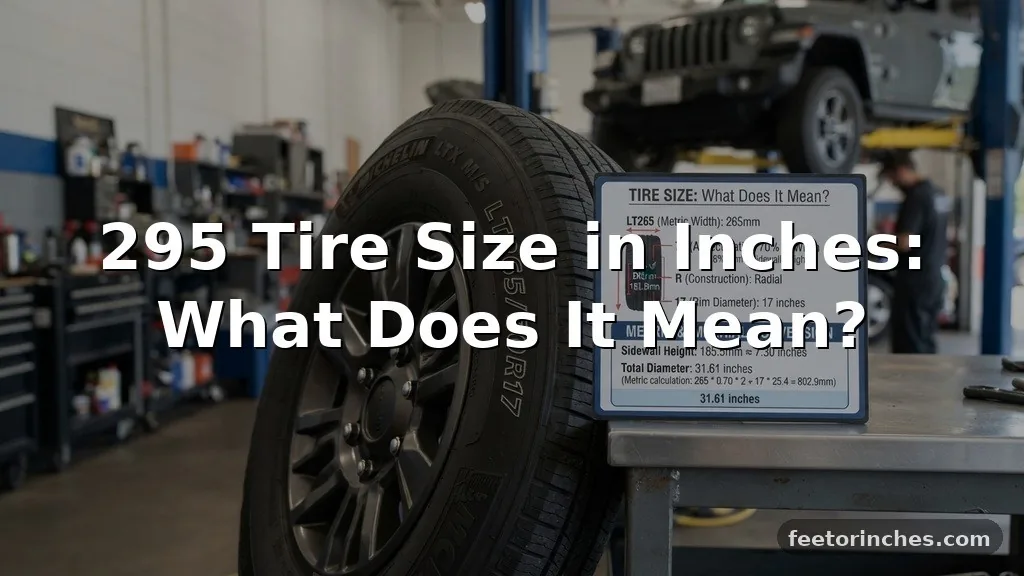
When you look at the sidewall of a performance or off-road tire, you see a long string of numbers that can feel like a secret code. A 295 tire size in inches is not explicitly stated on the rubber because the industry uses a hybrid metric-imperial system that often confuses drivers.
You are here to decode what those numbers actually represent in terms of physical dimensions. Understanding tire size in inches helps you avoid fitment issues, rubbing, and speedometer errors when upgrading your vehicle.
The number 295 refers specifically to the width of the tire in millimeters, not inches. This width is measured from sidewall to sidewall at the widest point when the tire is mounted on a specified rim width.
By converting this metric figure into inches, you gain a clearer picture of how much contact patch you are putting on the road. This article breaks down the math and the practical implications of running this specific width.
The Metric to Imperial Conversion
To understand the width of your tire in inches, you must apply a simple conversion factor. One inch is equal to exactly 25.4 millimeters.
Therefore, when you see a 295, you are looking at a tire that is 295 millimeters wide. Dividing 295 by 25.4 gives you approximately 11.61 inches of section width.
This number represents the width of the tire at its widest point, which is often different from the tread width. The tread width is the portion of the tire that actually touches the pavement, which is usually narrower than the section width. Below is a quick reference table to help you visualize how this measurement compares to other common sizes found on passenger and light truck vehicles.
| Tire Width (mm) | Width in Inches (Approx.) |
|---|---|
| 245 | 9.65 inches |
| 265 | 10.43 inches |
| 285 | 11.22 inches |
| 295 | 11.61 inches |
| 315 | 12.40 inches |
Decoding the Full Tire String
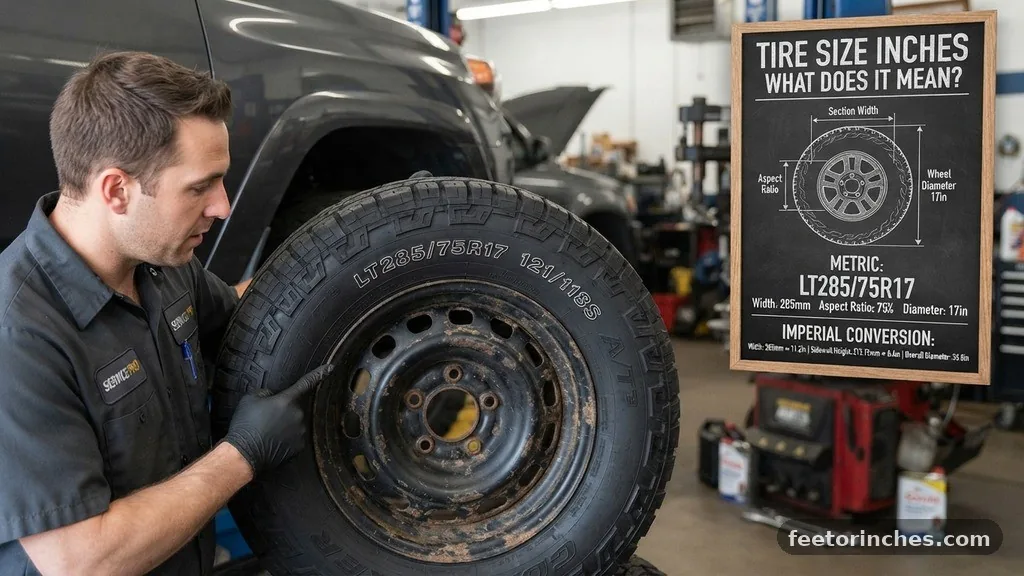
A tire size is never just the width; it is part of a complete designation like 295/70R17. The first number is the section width in millimeters.
The second number, the aspect ratio, represents the height of the sidewall as a percentage of the width. In a 295/70 tire, the sidewall height is 70 percent of 295mm, which equals 206.5mm or roughly 8.13 inches.
The “R” stands for radial construction, and the final number is the wheel size in inches. To find the overall diameter of the tire, you add the sidewall height of the top half, the sidewall height of the bottom half, and the wheel diameter. You can consult an official tire fitment guide to ensure your calculations match the manufacturer’s specifications for your specific vehicle.
Common Misconceptions About Tire Width
Many drivers assume that a wider tire automatically provides better traction in every condition. While a 295 tire increases the surface area for dry pavement grip, it can actually lead to hydroplaning in heavy rain. Because the tire is wider, it has to displace more water, which can cause the vehicle to lose contact with the road surface.
Another common mistake involves the relationship between the tire and the rim. If you mount a 295 tire on a rim that is too narrow, the sidewalls will bulge outward, creating a rounded contact patch.
This uneven wear pattern reduces the lifespan of the tire and negatively impacts handling. Always check the recommended rim width range for your specific tire model before making a purchase.
Comparing 295 to Other Popular Sizes
Drivers often debate whether to move from a 285 to a 295. The difference in width is only about 0.4 inches, which sounds negligible on paper but can be significant in a tight wheel well. A 295 tire is often taller as well, depending on the aspect ratio, which can affect your final gear ratio.
If you are trying to decide which size fits your truck or SUV, consider these factors:
- Clearance: Will the extra 0.2 inches of radius cause rubbing at full steering lock?
- Speedometer accuracy: A larger overall diameter will make your speedometer read slower than your actual speed.
- Fuel economy: Wider tires generally increase rolling resistance and aerodynamic drag.
- Weight: Larger tires add unsprung weight, which can make your suspension work harder.
- Off-road performance: The wider footprint helps with flotation in soft sand or mud.
Estimating 14 Inches Without Tools
While a 295 tire is roughly 11.6 inches wide, you might sometimes need to estimate 14 inches for other automotive or garage tasks. A standard sheet of legal-size paper is 14 inches long, making it an excellent reference point. If you do not have paper, the average distance from the tip of your thumb to the tip of your pinky when your hand is spread wide is often close to 8 or 9 inches.
You can also use common household items to gauge distance. A standard dinner plate is usually about 10 to 12 inches in diameter, so adding a few inches will get you into the 14-inch range. If you are working on a car, remember that the length of a standard wrench or a common breaker bar handle often provides a good visual estimate for medium-sized components.
Objects That Measure Approximately 14 Inches
To help you visualize 14 inches, here is a list of common items that fall into that size category.
1. Household: A standard legal-size piece of paper (length).
2. Kitchen: A large pizza pan (diameter).
3.
Tech: A compact laptop screen (diagonal).
4. Tools: A standard large pipe wrench (length).
5. Fashion: A standard men’s size 14 shoe (length).
Frequently Asked Questions
Is a 295 tire equivalent to a 35-inch tire?
No, they are not the same. A 295 refers to the width in millimeters, while a 35 refers to the overall diameter of the tire in inches. You can have a 295/70R17 that stands roughly 33 inches tall, or a 295/60R20 that stands nearly 34 inches tall.
Which tire is taller, 285 or 295?
The width does not dictate height. A 285/75R17 is often taller than a 295/60R17 because the aspect ratio (the 75 vs the 60) plays a much larger role in the final diameter than the width does.
Will a 295 tire fit a 9-inch rim?
Yes, a 295 tire is generally well-suited for a 9-inch wide rim. Most manufacturers list an approved rim width range for their tires, and 9 inches typically falls right in the middle of the acceptable range for a 295-width tire.
Does width affect tire pressure?
The width of the tire does not change the physics of air pressure, but it does change the volume of air inside the tire. You should always follow the vehicle manufacturer’s recommended pressure found on the door jamb sticker, regardless of the tire width.
Final Thoughts on Tire Sizing
Navigating the complexities of tire size in inches is a necessary skill for any vehicle owner looking to customize their ride. By understanding that a 295 is a metric measurement of width, you can better predict how a tire will perform and fit on your specific wheels. Always prioritize safety and manufacturer recommendations when selecting new rubber for your vehicle.
Take the time to measure your current wheel wells and consult a professional if you are planning a significant change in tire size. Getting the right fit ensures your vehicle remains safe, efficient, and reliable on the road.
If you have questions about specific tire models, reaching out to a local tire shop is always a smart next step. Remember that the numbers on your sidewall are the keys to maintaining your vehicle’s performance and handling characteristics.
Explore more on FeetOrInches.