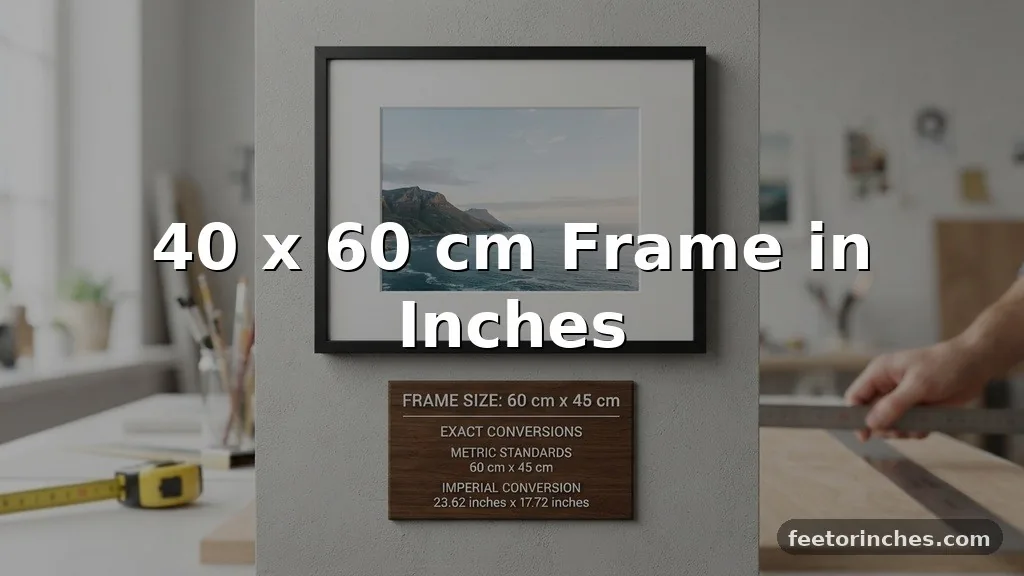
Finding a 40 x 60 cm frame in inches is a frequent task for anyone printing artwork or displaying photographs. A 40 x 60 cm frame is approximately 15.75 by 23.62 inches. Because most frames are manufactured using either the metric system or the imperial system, you will often find that a product labeled as 40 x 60 cm does not perfectly align with standard inch-based paper sizes.
Knowing these exact conversions helps you avoid frustration when you’re looking for the right fit for your prints. This guide provides the measurements you need to ensure your artwork displays perfectly without any awkward gaps or trimming errors.
Exact Conversions and Metric Standards
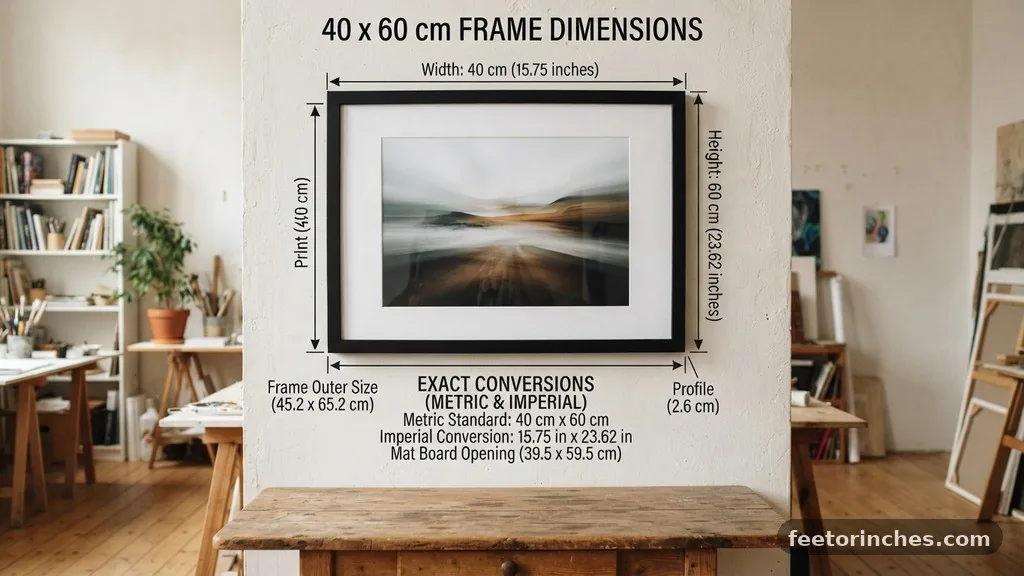
When you translate metric dimensions into the imperial system, the results are rarely round numbers. To convert centimeters to inches, you divide the centimeter value by 2.54.
Consequently, a 40 x 60 cm frame is exactly 15.748 by 23.622 inches. Most manufacturers round these to 15.75 by 23.6 inches for simplicity.
If you are shopping for a frame and see these dimensions, you must account for the frame’s internal rabbet, which is the groove where the glass and backing sit. If your print is exactly 16 x 24 inches, it will not fit into a 40 x 60 cm frame. You would need to trim the print or order a custom frame.
| Dimension | Centimeters | Inches (Decimal) | Inches (Fractional) |
|---|---|---|---|
| Width | 40 cm | 15.75″ | 15 3/4″ |
| Height | 60 cm | 23.62″ | 23 5/8″ |
| Diagonal | 72.11 cm | 28.39″ | 28 3/8″ |
Why Frame Sizing Matters for Your Art
The visual impact of your artwork depends heavily on the relationship between the print and the frame. A frame that is too tight can cause the paper to buckle if humidity levels fluctuate. Conversely, a frame that is too large creates unsightly gaps unless you use a mat board to fill the space.
When you’re looking for a frame, consider the weight and thickness of your print. High-quality art prints often require a border around the image to prevent the glass from pressing directly against the ink or pigment. This is why many professionals use a mat, which acts as a spacer and adds a layer of sophistication to the presentation.
- Measure your artwork twice before purchasing any frame.
- Check the internal frame dimensions, not just the external footprint.
- Ensure the frame depth can accommodate your print plus any mounting board.
- Account for the width of the frame moulding itself if space on your wall is limited.
- Verify if the frame includes a glass, acrylic, or plastic front.
Common Misconceptions About Frame Dimensions
A frequent point of confusion involves the difference between the frame’s outer dimensions and the image area. A frame sold as 40 x 60 cm almost always refers to the size of the glass or the opening for the artwork. The actual outer edge of the frame might be several centimeters wider depending on the moulding style.
Another issue is the assumption that standard sizes are universal across all countries. In the United States, frames are typically sold in inch increments, such as 16 x 24 inches.
In Europe, 40 x 60 cm is a common standard. If you buy a 40 x 60 cm print from an international seller, do not assume it will fit into a standard 16 x 24 inch frame bought at a local big-box store.
Comparing 40 x 60 cm to Standard Sizes
Understanding how this specific size compares to others helps in planning a gallery wall or a cohesive display. A 16 x 24 inch frame is slightly larger than a 40 x 60 cm frame in both width and height. This small difference of about 0.25 inches in width can be the difference between a perfect fit and a ruined print.
For reference, a 16 x 24 inch frame provides roughly 38 square inches more viewing area than a 40 x 60 cm frame. If you have a 40 x 60 cm print, placing it in a 16 x 24 inch frame will leave a visible gap of about an eighth of an inch on all sides. While this is often covered by a mat, it is something to keep in mind when buying frames online.
Estimating Measurements Without Tools
Sometimes you are at a flea market or a thrift store and need to know if a frame will work without a tape measure. You can use common objects to approximate the size. A standard sheet of legal-size paper is 8.5 x 14 inches, which can serve as a useful reference point.
If you know the size of your hand span or the length of your forearm, you can use those as rough gauges. However, for precise art framing, never rely solely on estimation.
You can find more information on standardized sizing through resources like the Library of Congress preservation guidelines regarding how to properly house and display paper-based collections. Always carry a small retractable metal tape measure if you frequent shops for pre-owned frames.
The Role of Matting in Framing
Matting is the most effective way to bridge the gap between a non-standard print and a standard frame. If you have a 40 x 60 cm print but only have access to a slightly larger frame, a custom-cut mat can hold the print securely. The mat acts as a visual transition between the art and the wall, drawing the eye inward.
You can select mat boards in various colors, textures, and thicknesses. A neutral white or cream mat is a classic choice that works with almost any style of photography or illustration. Always ensure the mat is acid-free to prevent yellowing or damage to your artwork over time.
Wall Space and Visual Balance
When hanging a 40 x 60 cm frame, consider the scale of your wall. This size is large enough to function as a focal point in a small hallway or a bedroom. If you’re hanging it in a large living room, it might get lost unless you group it with other frames.
Try to position the center of the frame at eye level, which is generally 57 to 60 inches from the floor. This provides the most natural viewing experience for someone standing in the room. If you are creating a gallery wall, keep the spacing between frames consistent to maintain a professional, organized look.
FAQ
Is a 40 x 60 cm frame the same as 16 x 24 inches?
Not exactly. A 40 x 60 cm frame is 15.75 x 23.62 inches. While they are very close, a 16 x 24 inch frame is slightly larger, which will leave a small gap if you use a 40 x 60 cm print.
Can I use a 40 x 60 cm frame for a 16 x 24 inch poster?
You likely cannot use it without trimming the poster. The poster is larger than the frame opening, meaning it will either buckle or need to be cut to fit the frame’s inner dimensions.
What is the best way to hang a frame of this size?
For a frame of this size, use two-point hanging. This involves attaching D-rings to the sides of the frame and using two hooks on the wall to keep the frame level and secure.
Do all 40 x 60 cm frames include glass?
Most do, but some lightweight or poster frames use clear acrylic or styrene instead. Check the product description carefully, as acrylic is lighter and less likely to shatter but can scratch more easily than glass.
Final Thoughts
Selecting the right frame is essential for protecting your artwork and ensuring it looks its best on your wall. While a 40 x 60 cm frame is a common size, the slight discrepancy between metric and imperial standards requires a bit of extra attention during the selection process. Always verify your print dimensions and the internal frame size before finalizing your purchase.
Whether you choose to use a custom mat or hunt for a frame that matches your print exactly, understanding these measurements gives you the confidence to display your pieces with professional results. If you need further help with specific framing techniques, feel free to reach out or explore additional resources on art preservation to keep your collection in peak condition.
Related conversions: What is 30 cm in inches? With examples, What Is 20 Centimeters in Inches? 10 Everyday Comparisons, 157 cm to Inches: How Many Inches?, 5.8 Inches in cm: How Many Centimeters?.
Explore more on FeetOrInches.