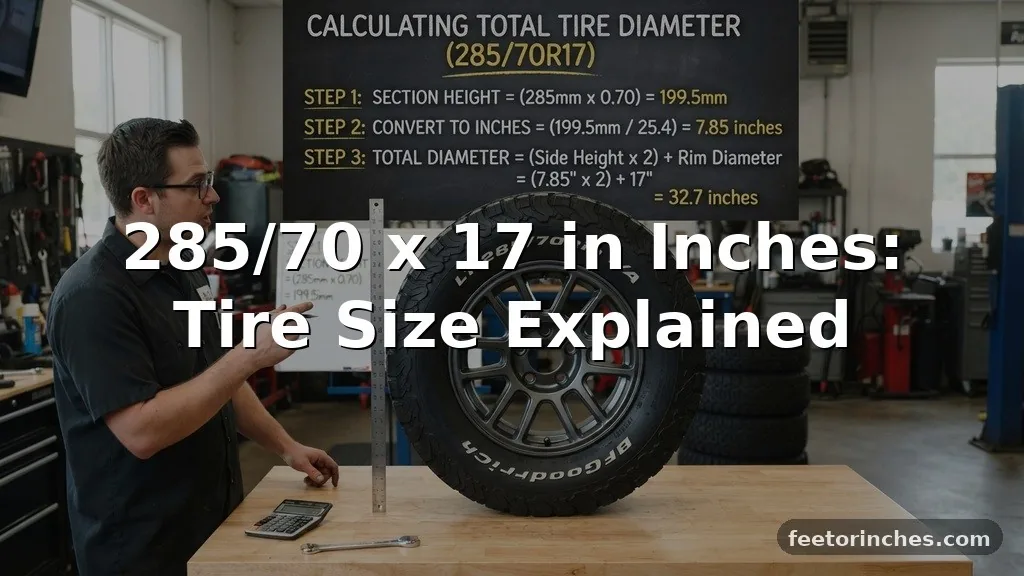
Understanding how to read a 285/70 x 17 in inches tire size is essential for anyone looking to upgrade their truck or SUV. This specific metric tire sizing tells you everything you need to know about your tire’s physical footprint, sidewall height, and fitment requirements.
By breaking down the numbers, you can determine if a new set of tires will fit your wheel wells without rubbing or requiring a major suspension modification. Whether you are aiming for a more aggressive look or improved off-road performance, knowing these dimensions helps you avoid costly mistakes during the installation process.
Metric tire sizing can feel like a foreign language if you are used to the older flotation size system. The number 285 refers to the section width of the tire in millimeters.
This is the measurement from sidewall to sidewall at the widest point of the tire when mounted on the correct rim. A width of 285mm translates to approximately 11.22 inches.
The second number, 70, represents the aspect ratio. This is a percentage, not a measurement in inches.
It indicates that the height of the tire’s sidewall is 70% of the section width. To find the sidewall height, you multiply 285mm by 0.70, which equals 199.5mm, or roughly 7.85 inches.
Finally, the 17 denotes the rim diameter in inches. This is the size of the wheel that the tire is designed to fit.
When you put these numbers together, you gain a precise understanding of the tire’s profile. Understanding these components is the first step in calculating the total tire diameter and rolling radius for your vehicle.
Calculating Total Tire Diameter in Inches
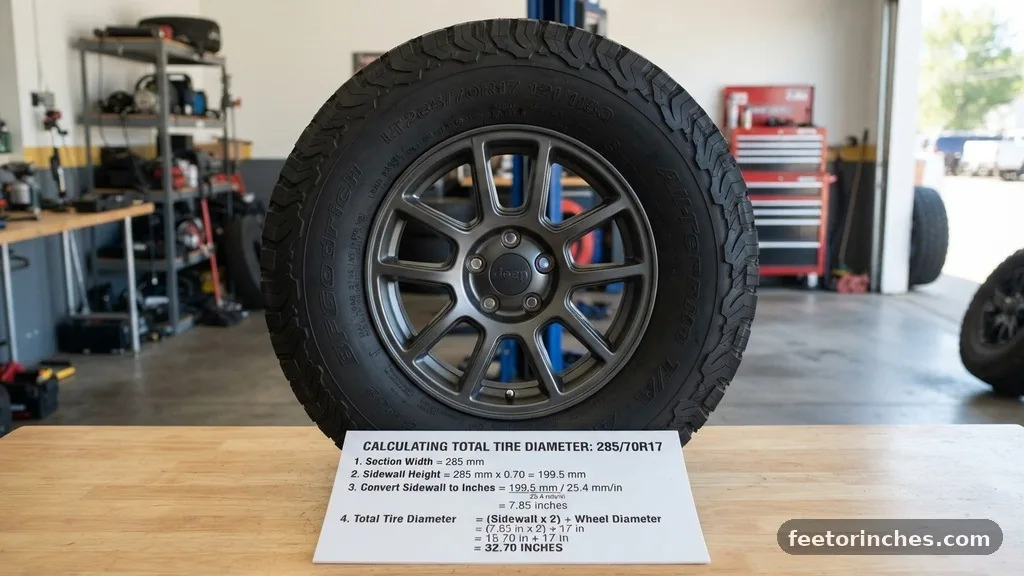
To find the total tire diameter in inches, you must combine the sidewall height with the rim diameter. Since the tire has two sidewalls—one on top and one on bottom—you multiply the 7.85-inch sidewall height by two. This gives you 15.7 inches of total sidewall height for the entire assembly.
Next, you add the rim diameter of 17 inches to that sum. The math looks like this: 15.7 inches plus 17 inches equals 32.7 inches.
Therefore, a 285/70 x 17 tire has an approximate diameter of 32.7 inches. Keep in mind that real-world results can vary slightly based on the manufacturer’s specific mold design and the width of the wheel it is mounted on.
| Dimension | Metric Value | Inches (Approx.) |
|---|---|---|
| Section Width | 285 mm | 11.22″ |
| Sidewall Height | 199.5 mm | 7.85″ |
| Rim Diameter | 17 inches | 17.00″ |
| Total Diameter | 830.5 mm | 32.70″ |
Common Misconceptions About Tire Dimensions
Many enthusiasts assume that all 285/70 x 17 tires measure exactly 32.7 inches, but that is rarely the case. Variations in rubber compounds, tread depth, and casing construction mean that two different brands of the same size may have slightly different physical footprints. Some mud-terrain tires feature deep, aggressive lugs that add to the outer diameter, while all-terrain models might sit slightly lower.
Another frequent error involves confusing the section width with the tread width. The section width is the widest point of the tire, which usually occurs at the sidewall bulge.
The actual contact patch—the part of the tire that touches the road—is often narrower than the section width. Always check the manufacturer’s specifications if you are worried about tire clearance in your wheel wells.
You should also be aware that tire pressure significantly affects the rolling radius. When a tire is under-inflated, it squishes, effectively reducing its height and changing your speedometer reading. Always maintain the recommended tire pressure to ensure your diameter remains consistent with your vehicle’s calibration.
The Impact on Speedometer Calibration
Installing a 32.7-inch tire when your vehicle came with smaller factory rubber will throw off your speedometer. Because the tire has a larger circumference, it covers more ground with every single rotation.
Your truck will be traveling faster than what the dashboard indicates. If you don’t adjust your vehicle’s computer, you might unknowingly exceed speed limits or miscalculate your fuel economy.
Most modern vehicles require a digital recalibration to account for this change. This is often done using a handheld tuner or a specialized module that plugs into the OBD-II port. Ignoring this step might also confuse your transmission shift points, as the computer expects a different tire rolling radius for optimal performance.
- Check the tire load index to ensure it meets your vehicle’s weight requirements.
- Verify the speed rating matches or exceeds the factory specifications.
- Measure your current tire clearance to avoid rubbing during full-lock turns.
- Consider the weight of larger tires, as they can affect braking distance.
- Consult the National Highway Traffic Safety Administration regarding tire safety standards.
Wheel Offset and Tire Clearance
Upgrading to a wider 285mm tire often requires you to think about wheel offset. If you keep your factory wheels, the extra width of the tire might cause it to rub against the frame, sway bar, or suspension components during a turn. A wheel with a more negative offset pushes the tire further outward, creating more space between the rubber and the inner suspension parts.
However, pushing the tire too far out can cause it to rub against the fender liner or the body mount. This is where a vehicle lift kit becomes a common solution.
A lift kit provides the necessary tire clearance to prevent damage to your vehicle’s bodywork. Before buying new wheels or tires, measure the distance from your current tire to the nearest obstruction at full steering lock.
Tire Footprint and Off-Road Performance
The 285/70 x 17 size is a popular choice for off-roaders because it provides a wider tire footprint compared to stock tires. A wider footprint helps distribute the vehicle’s weight over a larger area, which is beneficial when driving on soft surfaces like sand or loose dirt. When you lower your tire pressure for trail riding, that footprint expands even further.
This expansion increases traction by allowing the tire to conform to rocks and uneven terrain. Radial construction is standard for these tires, offering a balance between flexibility and durability. Just remember that wider tires can be prone to “hydroplaning” on wet pavement if the tread depth is low or the road surface is covered in deep water.
Comparing 285/70 x 17 to Other Sizes
Understanding how this size compares to others helps you visualize the scale of your upgrade. Many drivers look at the 285/70 x 17 as a “true 33-inch” tire, even though it measures slightly less. It sits comfortably between the narrower 265/70 x 17 and the much larger 35-inch tires.
Comparing these sizes is useful if you are trying to balance aesthetics with fuel efficiency. A larger tire increases unsprung weight, which can make your engine work harder and decrease your miles per gallon. If you want a more aggressive look without a massive performance penalty, the 285/70 x 17 is often considered the “sweet spot” for many half-ton trucks.
Frequently Asked Questions
Is a 285/70 x 17 tire the same as a 33-inch tire?
It is very close, but not exact. A 285/70 x 17 measures roughly 32.7 inches, while a standard 33-inch tire is slightly taller. Many people refer to them as 33s for simplicity, but the difference is noticeable when calculating speedometer error or clearance.
Will a 285/70 x 17 tire rub on a stock truck?
It depends on your vehicle’s specific suspension geometry and wheel offset. Some trucks can accommodate this size without any modifications, while others may experience rubbing on the inner frame or fender liners at full steering lock. Always check your clearance before finalizing a purchase.
How does this tire size affect my gas mileage?
Moving to a larger, heavier tire usually results in a slight decrease in fuel economy. The increased rolling resistance and extra weight require more power to get the vehicle moving. You may also see a decrease in acceleration unless you re-gear your differentials.
Does the tire load index matter?
Yes, the load index is crucial for safety. It dictates the maximum weight the tire can support at a specific tire pressure. You must ensure your new tires have a load index that meets or exceeds the requirements set by your vehicle’s manufacturer.
Final Thoughts on Tire Selection
Selecting the right tire size is a balance of utility, aesthetics, and mechanical reality. The 285/70 x 17 in inches is a highly versatile choice that bridges the gap between factory sizing and extreme off-road modifications. By understanding your vehicle’s clearance limits and the necessity of recalibrating your speedometer, you can ensure a smooth transition to your new setup.
Always prioritize the load index and speed rating that your vehicle requires for safe daily operation. If you are uncertain about the fitment or how these tires will affect your specific driving habits, consult with a local tire professional who can inspect your wheel wells.
Taking the time to calculate these dimensions properly will save you significant frustration in the long run. Enjoy the improved look and performance that comes with your new tires.
You may also like: 285/65R20 in Inches
You may also like: 285/55R20 in Inches
Explore more on FeetOrInches.