
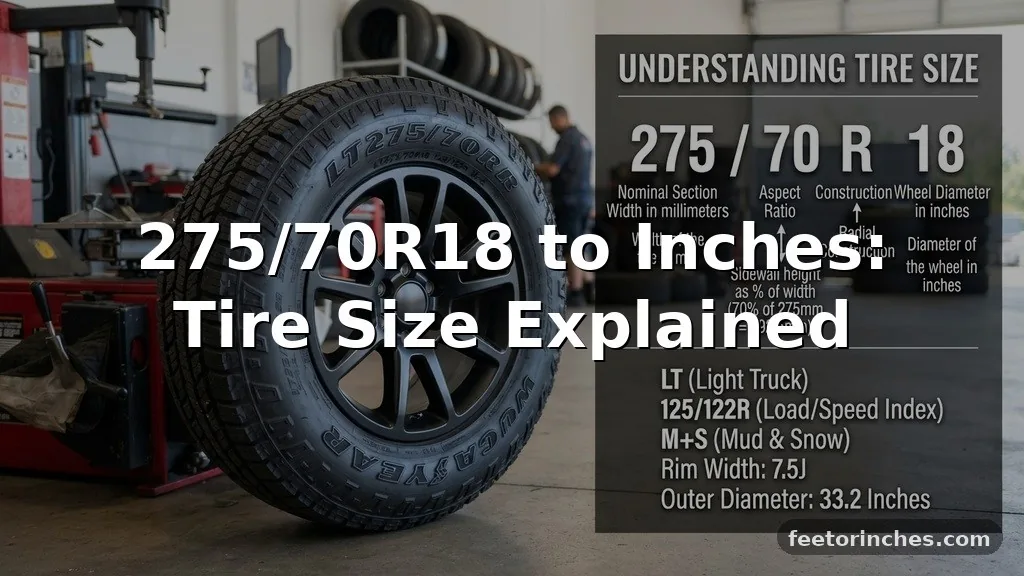
Deciphering tire dimensions can feel like learning a foreign language, especially when you are trying to bridge the gap between metric measurements and standard inches. If you are looking at a 275/70R18 tire and wondering exactly how that translates into a standard height for your vehicle, you are not alone. Understanding the math behind these numbers is essential for ensuring proper fitment and maintaining your vehicle’s performance.
By breaking down the section width, aspect ratio, and rim diameter, you can easily convert these specs to inches yourself. This article provides the clarity you need to master tire sizing and make informed decisions for your next set of tires.
Decoding the Metric Sizing System
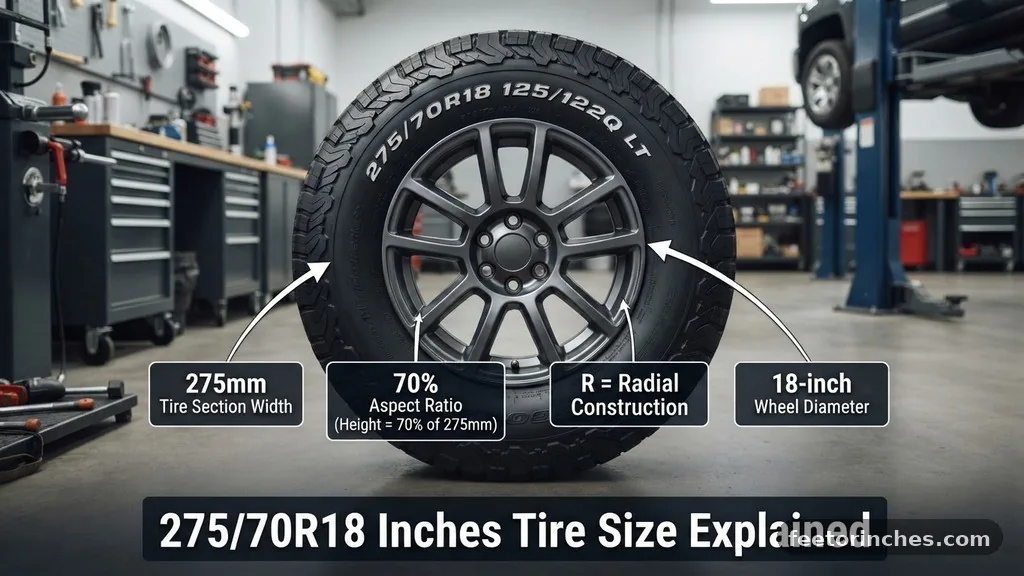
The sequence 275/70R18 is a standardized code that tells you the physical dimensions of the tire. Each segment of this string serves a specific purpose in describing the tire’s profile.
The first number, 275, represents the section width in millimeters. This is the measurement of the tire from sidewall to sidewall at its widest point.
The second number, 70, is the aspect ratio. This is a percentage, not a measurement in inches or millimeters.
It indicates that the height of the sidewall is 70% of the section width. Finally, the R18 denotes the construction type, which is radial, and the wheel diameter in inches.
Calculating the total tire diameter requires a bit of simple arithmetic. You must first find the sidewall height by multiplying the width by the aspect ratio.
Since there are two sidewalls—one on top and one on the bottom—you double that result. You then add the rim diameter to get the final height.
The Math Behind the Conversion
To convert 275/70R18 to inches, you start by converting the width from millimeters to inches. Since 25.4 millimeters equals one inch, you divide 275 by 25.4 to get approximately 10.83 inches. This represents the width of the tire tread surface.
Next, you calculate the sidewall height by taking 70% of 10.83 inches, which equals roughly 7.58 inches. Because the tire diameter includes both the top and bottom sidewall, you multiply 7.58 by two to get 15.16 inches. Adding the 18-inch rim diameter to this figure results in a total tire height of approximately 33.16 inches.
This conversion process is consistent across all metric tire sizes. Whether you are looking at all-terrain tires or specialized off-road rubber, the formula remains the same. Using a reliable National Highway Traffic Safety Administration tire safety guide can help you verify these calculations against manufacturer specifications for your specific vehicle.
| Measurement Component | Metric Value | Calculated Inches |
|---|---|---|
| Section Width | 275 mm | 10.83 inches |
| Sidewall Height (Single) | 192.5 mm | 7.58 inches |
| Rim Diameter | 18 inches | 18.00 inches |
| Total Tire Diameter | 842.5 mm | 33.16 inches |
Comparing 275/70R18 to Popular Sizes
Many enthusiasts compare this size to the standard 33-inch tire. Because 33.16 inches is remarkably close to that common benchmark, these tires are often marketed as 33-inch equivalents. However, small variations in tread depth and manufacturing tolerances mean no two tires are exactly the same.
When you look at a 265/70R18, you are dealing with a slightly narrower tire. A 265/70R18 calculates to a diameter of roughly 32.6 inches. Moving up to a 285/70R18 increases the width and the sidewall height, resulting in a total diameter closer to 33.7 inches.
Understanding these increments helps in avoiding rubbing issues in your wheel well. A half-inch difference might seem negligible on paper, but it can significantly impact clearance during full steering lock. Always check your vehicle’s specific clearance requirements before upsizing.
Key Factors in Tire Fitment
Beyond just the diameter, you must consider the load index and speed rating. The load index tells you how much weight a single tire can safely support at maximum air pressure. You will find this number printed on the sidewall, usually followed by a letter representing the speed rating.
Ply rating is another critical aspect, especially for those interested in off-road tires. A higher ply rating generally indicates a stiffer sidewall and increased puncture resistance. These tires are often heavier, which can affect your vehicle’s unsprung weight and fuel economy.
Fitment also depends on the offset of your wheels. Even if a tire fits the diameter of your wheel well, the wrong offset could cause the tire to protrude past the fender. Ensure your wheel width is compatible with the 275 width of the tire to prevent uneven wear.
- Check the manufacturer’s recommended rim width range.
- Verify the load index meets or exceeds your vehicle’s GVWR.
- Inspect the speed rating for your typical driving conditions.
- Consider the tread pattern for your climate and terrain.
- Confirm that the total diameter won’t cause speedometer calibration errors.
Common Misconceptions in Tire Math
A frequent point of confusion is the difference between physical diameter and the “advertised” size. Manufacturers often round their tire sizes for marketing purposes. A tire labeled as a 33-inch tire might actually measure 32.8 or 33.2 inches depending on the brand.
Another misconception involves the relationship between screen sizes and tire sizes. While a 14-inch laptop is measured by its diagonal, a tire is measured by its absolute physical diameter. You cannot apply screen-sizing logic to mechanical components.
Circumference is often overlooked in favor of diameter. However, the circumference is what determines your actual distance traveled per rotation. Changing your tire size will alter the number of rotations per mile, which directly impacts your speedometer accuracy.
Estimating Measurements Without Tools
You can estimate tire dimensions when you don’t have a tape measure handy. Most modern light-duty truck tires are roughly 30 to 35 inches in total diameter. If you know a standard sheet of legal paper is 14 inches long, you can use that as a visual anchor.
Two and a half lengths of legal paper provide a rough estimate of 35 inches. By holding a reference object near the tire, you can gauge if the tire is significantly larger or smaller than your known baseline. This is helpful for a quick visual check at a dealership or salvage yard.
Using your own body is another classic estimation trick. An average hand span from thumb to pinky is often around 8 to 9 inches. By measuring your own hand, you can create a quick reference tool for estimating sidewall height or tread width on the fly.
Practical Applications for Off-Roaders
For off-road enthusiasts, the 275/70R18 size offers a balanced profile. The taller sidewall provides more cushion when airing down for sand or rocky trails. This extra height allows for a larger footprint when the pressure is reduced.
All-terrain tires in this size are popular because they maintain good road manners. They don’t generate the excessive noise of aggressive mud-terrain tires but still offer superior grip on loose surfaces. They are a versatile choice for daily drivers who occasionally tackle moderate trails.
When switching to these tires, consider the impact on your gearing. Larger tires change the effective gear ratio of your vehicle, making it feel more sluggish during acceleration. Some drivers opt to re-gear their axles to compensate for the added weight and diameter.
FAQ: Common Questions About Tire Sizes
Is a 275/70R18 the same as a 33-inch tire?
Technically, no, but it is very close. The calculated diameter of a 275/70R18 is approximately 33.16 inches. Most manufacturers and consumers refer to it as a 33-inch tire for simplicity in conversation and shopping.
Does a wider tire always provide more grip?
Not necessarily. While a wider tire increases the contact patch, grip depends heavily on the rubber compound and tread design. On loose surfaces like snow, a narrower tire can sometimes provide better penetration to reach the harder ground underneath.
How does tire diameter affect my speedometer?
Your vehicle’s computer is calibrated for the factory tire size. If you install a larger tire, the wheel rotates fewer times per mile, which will cause your speedometer to read slower than your actual speed. You may need to recalibrate the speedometer using an electronic tuner.
Can I put these tires on my stock wheels?
You need to check the width of your stock wheels. A 275mm tire generally requires a rim width between 7 and 9 inches. If your stock wheels are too narrow, the tire sidewalls will bulge, leading to unsafe handling and uneven tread wear.
What does the R in 275/70R18 stand for?
The R stands for radial construction. This is the industry standard for modern passenger and light truck tires, where the internal fabric cords run at right angles to the centerline of the tread.
Final Thoughts on Tire Sizing
Mastering the conversion of 275/70R18 to inches empowers you to make smarter choices for your vehicle. By understanding how the width, aspect ratio, and rim diameter interact, you avoid costly mistakes and potential safety hazards. Whether you are upgrading for better off-road performance or simply replacing worn-out rubber, this knowledge serves as the foundation for a successful installation.
Always verify your vehicle’s specific clearance and load requirements before finalizing any purchase. Taking the time to perform these calculations ensures that your truck stays reliable and safe on the road. If you have questions about your specific vehicle’s fitment, feel free to consult with a local tire professional or your owner’s manual for the most accurate specifications available.
Explore more on FeetOrInches.




