

When you need to know how 7.5 inches to cm translates, the math is straightforward: 7.5 inches is exactly 19.05 centimeters. Whether you are measuring for a DIY project, checking a shoe size, or verifying a product dimension, this conversion is a staple in everyday life. Understanding how the imperial and metric units interact helps you move between these systems without confusion.
Because the inch is a defined part of the customary system and the centimeter is a fundamental part of the metric system, they don’t always align perfectly in whole numbers. You will find that knowing this specific conversion saves time when you are working with tools or materials labeled in different units. Keep reading to see how these measurements compare across various scales and practical applications.
The Conversion Math Explained
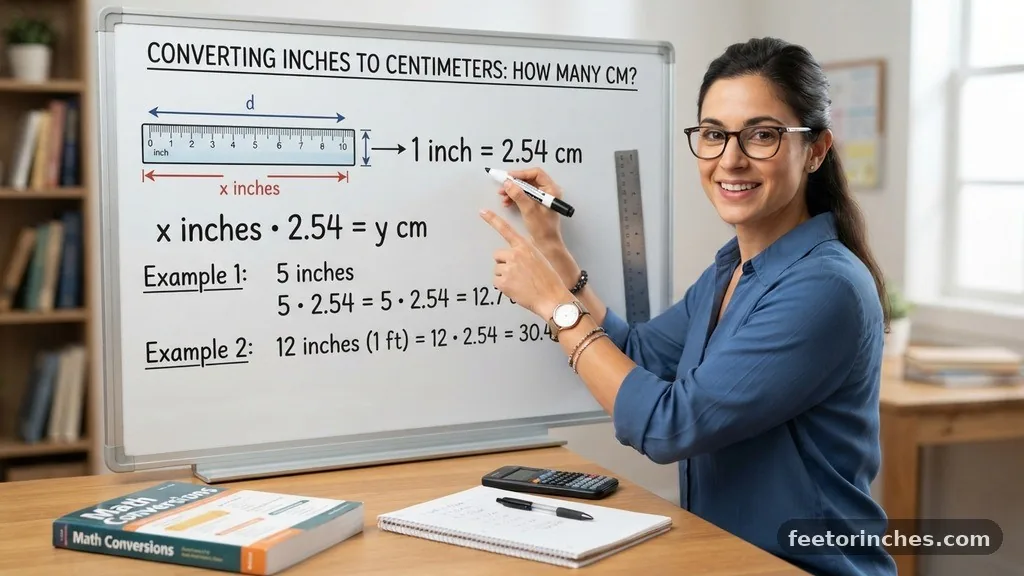
To convert any value from inches to centimeters, you multiply the number of inches by the conversion factor of 2.54. This factor represents the exact number of centimeters defined for a single inch. Since the metric system is based on powers of ten, it often provides more precision for smaller increments than the traditional inch part of the customary system.
When you calculate 7.5 multiplied by 2.54, you arrive at exactly 19.05 centimeters. This calculation is consistent whether you are working with hardware, textiles, or digital design.
Accuracy is vital in engineering, so always use the 2.54 constant rather than rounding up or down prematurely. You can visit the National Institute of Standards and Technology to learn more about how these units are internationally defined for trade and science.
| Measurement in Inches | Measurement in Centimeters | Measurement in Millimeters |
|---|---|---|
| 1.0 inch | 2.54 cm | 25.4 mm |
| 5.0 inches | 12.7 cm | 127 mm |
| 7.5 inches | 19.05 cm | 190.5 mm |
| 10.0 inches | 25.4 cm | 254 mm |
Common Objects at 7.5 Inches
Visualizing 7.5 inches can be difficult without a ruler handy. Many everyday items fall near this length, serving as useful mental anchors for estimation. Here are several objects categorized by their typical use.
- Standard kitchen spatula: The handle length often measures close to 7.5 inches.
- Large chef’s knife blade: Many professional blades are exactly 7.5 inches long from heel to tip.
- Standard dinner plate diameter: While variable, many small salad plates are approximately 7.5 inches across.
- Common drinking glass: Taller tumblers often reach this height when measured from the base to the rim.
- Small cutting board: Compact boards used for quick prep work frequently feature a 7.5-inch width.
- Smartphone screens: The diagonal measurement of some larger mobile devices sits in this range.
- Tablet styluses: Many ergonomic pens for digital tablets are designed to be roughly 7.5 inches long.
Estimating Measurements Without Tools
If you find yourself without a measuring tape, you can rely on body parts or household staples. Using the width of your hand is a classic method, though it varies by person. For most adults, the distance from the tip of the thumb to the tip of the index finger when stretched can approximate a few inches, but it is rarely precise.
A more reliable method involves using standard paper sizes. A standard piece of legal-size paper is 14 inches long, meaning that roughly half of the length is 7 inches.
By adding a small margin, you can quickly visualize 7.5 inches with reasonable accuracy. Always remember that these are estimations and should not replace a calibrated ruler for precision tasks.
Understanding Metric vs. Customary Systems
The customary system relies on fractions, whereas the metric system uses decimals. This fundamental difference is why converting inches to centimeters can feel unintuitive.
When you convert inches, you are essentially translating a base-12 and base-16 logic into a base-10 structure. This is why 7.5 inches, or 7 1/2 inches, results in a clean decimal like 19.05.
Measurement whereas the metric system is universal, the customary system remains deeply embedded in American construction and retail. You will often see products listed in both units to bridge this gap.
If you are ever unsure, remember that every inch contains 2.54 centimeters. This single conversion factor is the key to navigating any convert scenario you encounter.
Comparing Measurements Near 7.5 Inches
It is helpful to see how 7.5 inches sits in relation to other common sizes. Small increments can significantly change the scale of an object, especially in clothing or electronics. The following list highlights the progression of these lengths in centimeters:
- 6 inches equals 15.24 cm.
- 7 inches equals 17.78 cm.
- 7.5 inches equals 19.05 cm.
- 8 inches equals 20.32 cm.
- 9 inches equals 22.86 cm.
As you can see, the jump from 7 to 8 inches is a full 2.54 cm. By identifying where 7.5 inches sits, you can better judge whether a specific item will fit your needs. This is particularly important when ordering parts or accessories online where exact dimensions are listed in either centimeters inches or vice versa.
Precision in Digital and Physical Design
In digital design, screens are measured diagonally, which is a common point of confusion. A 7.5-inch screen refers to the line drawn from one corner to the opposite corner, not the width of the display itself. Always check the manufacturer’s aspect ratio if you need the physical width or height of a device.
Physical objects like bracelets or watch bands are measured by circumference. Measuring 7.5 inches around the wrist requires a flexible tape measure rather than a rigid ruler.
If you are designing or buying jewelry, ensure you account for the thickness of the material. A 7.5-inch band might feel tighter if it is made of thick leather compared to a thin metal chain.
The Importance of Standardized Units
Standardization prevents errors in manufacturing and trade. The adoption of 2.54 as the international standard for the inch ensures that a part made in one country fits a machine made in another. Without this consensus, the system of measurement would be prone to costly errors and incompatibility.
Whether you are a student learning to convert inches or a professional working in logistics, the metric system provides a consistent language for size. Using an interactive tool can make this process faster, but knowing the underlying math ensures you are never dependent on technology. You can explore these relationships further by comparing the centimeter part of the metric system to the inch part of the customary system in various engineering manuals.
FAQ
Is 7.5 inches the same as 19 cm?
No, 7.5 inches is exactly 19.05 cm. While 19 cm is a close approximation for casual use, the 0.05 cm difference can matter in precision manufacturing or tight-fitting components.
How do I convert 7.5 inches to centimeters quickly?
Multiply 7.5 by 2.54. If you need a mental shortcut, multiply by 2.5 and add a small amount, though using a calculator is always safer for exact results.
Does a 7.5-inch shoe size mean the foot is 7.5 inches long?
No, shoe sizing is not a direct measurement of the foot’s length in inches. Shoe sizes are based on specific industry scales that vary by brand and region, so a size 7.5 shoe will be longer than 7.5 inches.
Are centimeters and inches interchangeable?
They are not interchangeable, but they are easily convertible. You must use the 2.54 conversion factor to translate one into the other correctly.
Final Thoughts on Measurement
Mastering the conversion of 7.5 inches to cm is a simple yet effective way to improve your accuracy in daily tasks. By understanding that 7.5 inches equals 19.05 centimeters, you gain the confidence to handle international product specifications and DIY projects with ease. Whether you are using a ruler, a tape measure, or an online tool, keeping the 2.54 factor in mind ensures your results remain consistent.
Remember that measurement is a fundamental skill that bridges different systems and cultures. By practicing these conversions, you become more capable of navigating a world that often uses both the customary and metric systems simultaneously.
If you have specific measurements you frequently use, consider keeping a small reference table nearby to streamline your workflow. Feel free to reach out if you need further help with complex conversions or specific unit comparisons.
Explore more on FeetOrInches.