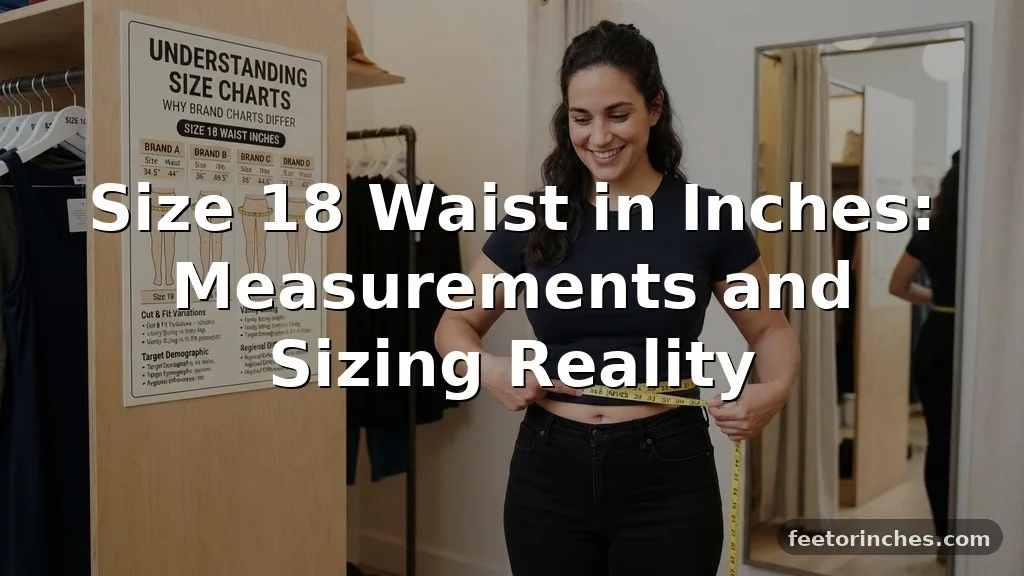
Understanding a size 18 waist in inches requires moving past vanity sizing and industry-wide inconsistencies to reach the actual numbers. Because clothing brands rarely follow a universal standard, a garment labeled as a size 18 can vary wildly depending on the manufacturer, the country of origin, and the intended demographic.
This article clarifies what these measurements typically represent, why they shift across different retailers, and how you can accurately assess your own proportions for a better fit. By breaking down the reality of standardized sizing versus actual body metrics, you will gain the clarity needed to shop with confidence and avoid the frustration of ill-fitting clothes.
The most critical takeaway is that a size 18 is not a fixed universal measurement. In modern women‘s retail, a size 18 often corresponds to a waist measurement ranging between 36 and 40 inches.
These figures shift based on whether the clothing is categorized as misses, plus-size, or boutique, as each segment uses different sizing blocks. Relying on a single number to define your body will almost always lead to disappointment because the industry lacks a single, legally enforced standard for garment labeling.
The Disconnect Between Labels and Reality
The primary reason you cannot find a single, definitive inch count for a size 18 is the practice of vanity sizing. Over the last several decades, manufacturers have intentionally increased the actual dimensions of their clothing while keeping the size labels the same.
A garment tagged as an 18 today may be significantly larger than a size 18 produced thirty years ago. This shift helps brands appeal to consumer psychology, but it complicates the process of buying clothes online or through catalogs.
Why Brand Charts Differ
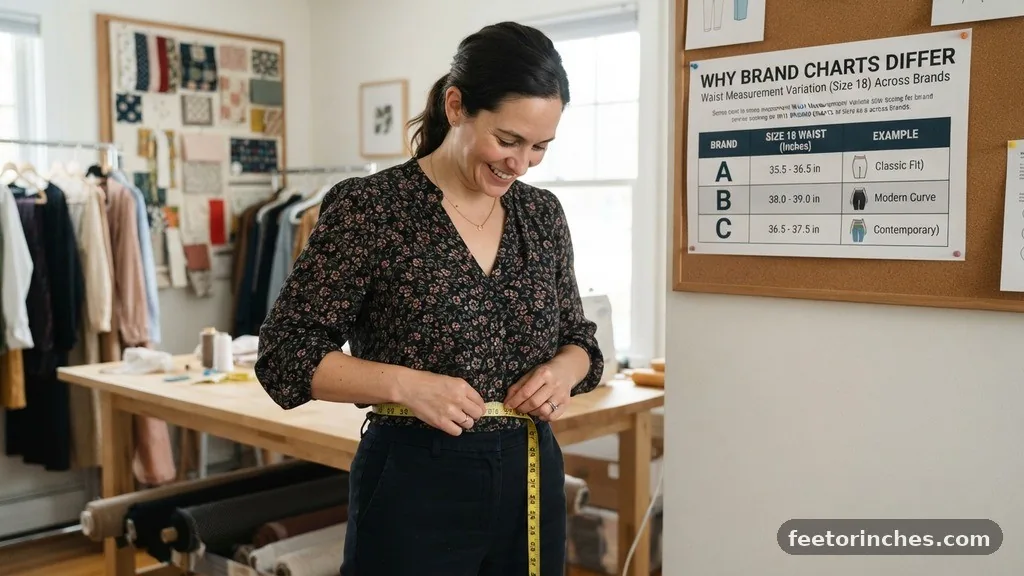
Every manufacturer maintains its own proprietary size charts and grading systems that dictate how a piece of fabric is cut. One brand might design a size 18 for a 36-inch waist, while another targets a 40-inch waist for the same label.
These differences arise from the “fit model” chosen by the design team, who acts as the human reference for the entire size range. If the fit model has a specific body shape, the resulting clothing will be graded to match those proportions, regardless of what the tag says.
- Misses sizing: Often cut with a shorter torso and narrower hips.
- Plus sizing: Designed with more generous room in the waist and thighs.
- International sizing: European and Asian brands typically use smaller sizing blocks than American retailers.
- Retailer-specific blocks: High-end designers often use different metrics than mass-market department stores.
How to Measure Your Waist Accurately
To find your true size, you must stop looking at labels and start using a flexible measuring tape. Stand in front of a mirror with your torso exposed or wearing only thin undergarments.
Locate your natural waist, which is the narrowest part of your torso, typically found just above your belly button and below the rib cage. Do not suck in your stomach; breathe normally, as this provides the most realistic measurement for clothing that needs to stay comfortable throughout the day.
Hold the tape snugly against your skin but do not pull it so tight that it creates an indentation in your flesh. Ensure the tape stays level all the way around your back and front, as a crooked measurement will add unnecessary inches.
If you are struggling to identify your natural waist, bend to the side; the crease that forms is your natural waistline. Write this number down, as it is far more reliable than the size printed on a pair of jeans you bought five years ago.
Comparing Measurements Across Categories
It is helpful to look at how a size 18 compares to the sizes immediately surrounding it. While the jump between sizes is usually one to two inches in the waist, this can fluctuate based on the elasticity of the fabric. The table below illustrates the standard, albeit approximate, range you might encounter in a typical retail environment.
| Clothing Size | Typical Waist (Inches) | General Category |
|---|---|---|
| Size 14 | 32 – 34 | Mid-range |
| Size 16 | 34 – 36 | Mid-range |
| Size 18 | 36 – 40 | Plus-size entry |
| Size 20 | 38 – 42 | Plus-size |
| Size 22 | 40 – 44 | Plus-size |
The Role of Fabric and Construction
The material composition of a garment dictates how a size 18 will perform on your body. Denim with a high percentage of elastane or spandex will accommodate a larger waist measurement than rigid 100% cotton jeans.
When you see a garment with significant stretch, the label might be misleadingly small because the fabric is designed to expand. Conversely, woven fabrics like linen or heavy wool have no give, meaning you must match your physical measurements exactly to the garment’s dimensions.
Woven vs. Knit Garments
Knit fabrics, such as jersey or sweater knits, are forgiving and often hide discrepancies in sizing. If you have a 39-inch waist, you might fit comfortably into a size 18 knit top that is technically sized for a 37-inch waist.
Woven garments, however, require a “ease” factor. Designers add extra room to woven clothes so you can sit, breathe, and move; if a garment lacks this, it will feel restrictive even if the tape measure says it should fit.
Waist Versus Hip and Bust
Many people focus exclusively on the waist, but the fit of a size 18 is often determined by the relationship between your waist, hips, and bust. If you are “pear-shaped,” you might find that a size 18 fits your waist perfectly but is too tight in the hips.
If you are “apple-shaped,” the waist might be the tightest point, while the hips hang loosely. Always check the brand’s specific measurement chart for the hip and bust to see if the garment’s cut aligns with your specific body type.
The Importance of the Rise
The “rise” of a pant—the distance from the crotch seam to the waistband—changes how a size 18 feels. A high-rise pant sits at your natural waist, where you are likely narrowest.
A low-rise pant sits on your hips, which are typically wider. A size 18 with a low rise will feel completely different than a size 18 with a high rise, even if the waist measurement on the tag is identical.
Common Misconceptions About Clothing Sizes
One of the most persistent myths is that a size 18 is definitively an XXL or a 2XL. In reality, size labels are just signposts, not rules.
Some brands consider 18 to be the top of their “misses” range, while others use it as the starting point for their “plus” range. Because these categories use different patterns and proportions, a person might wear a size 18 in one department and a 20 or 22 in another.
Standardization Failures
There is no federal or international law requiring retailers to use a specific set of measurements for a size 18. This lack of standardization is intentional, as it allows brands to market to specific demographics without being restricted by outdated government tables.
Do not feel that your body is “wrong” if you fluctuate between sizes across different stores. The issue lies entirely with the lack of consistency in how clothing is manufactured and labeled.
Practical Tips for Online Shopping
When you cannot try clothes on, you must rely on the brand’s provided size charts. Look for the “garment measurements” rather than “body measurements” if they are available.
Body measurements tell you what size body the clothing is intended to fit, while garment measurements tell you the actual, physical size of the item. If the garment measurements for a size 18 are smaller than your own, you know that the item will be too tight.
Using Your Existing Wardrobe
Take your favorite, most comfortable pair of pants and measure them flat. Lay them out, buttoned up, and measure across the waist from side to side. Double that number to get the total circumference.
Compare this number to the online size chart to see how that specific brand’s sizing aligns with what you already own and enjoy wearing. This is the most effective way to translate your physical body size into the language of online retail tags.
FAQ
Is a size 18 considered plus-size?
In most mainstream retail settings, a size 18 is often the transition point where a brand shifts from standard sizing to plus-size categories. Many retailers begin their plus-size lines at size 16 or 18, utilizing different patterns that account for a wider waist and different proportions.
Why do my pants feel different even if they are both size 18?
Clothing feels different because of fabric content, the cut of the garment, and the specific brand’s sizing philosophy. A rigid cotton pant will have no give, while a pant with spandex will stretch to accommodate movement, making the same size 18 feel much looser.
Should I size up if I am between sizes?
When in doubt, it is usually better to buy the larger size and have it tailored to fit. A professional tailor can easily take in a waist or hem a pant leg, but they cannot add fabric to a garment that is too small.
How do I know if I am buying from a vanity-sized brand?
If you find that you consistently wear a smaller size in a specific store than you do elsewhere, that brand is likely using vanity sizing. High-end or “designer” brands often use smaller, more traditional sizing, while mass-market retailers often size up their labels to make customers feel smaller.
Final Thoughts on Finding Your Fit
Navigating the complexities of a size 18 waist in inches is ultimately about prioritizing your comfort over the number on a tag. Because sizing remains inconsistent across the fashion industry, your best tool is always a reliable tape measure and a clear understanding of your own proportions. When you stop viewing clothing labels as a reflection of your body and start seeing them as the inconsistent guides they are, shopping becomes less about frustration and more about finding pieces that actually suit you.
Take the time to measure your own body and compare those numbers to the specific charts provided by the brands you frequent. If you continue to struggle with finding a consistent fit, consider finding a local tailor who can adjust your favorite pieces to match your unique shape.
Understanding the reality of your size 18 waist in inches is the first step toward building a wardrobe that makes you feel confident and comfortable every single day. Feel free to reach out with your own experiences or questions about finding the perfect fit.
Related conversions: 18 mm in Inches: How Many Inches?, How Many Inches in a Foot? (Complete Guide with Real Examples & Visuals), How Many Inches in a Yard? Complete Conversion Guide With Examples, What Is 6 mm in Inches? Complete Conversion Guide.
Explore more on FeetOrInches.