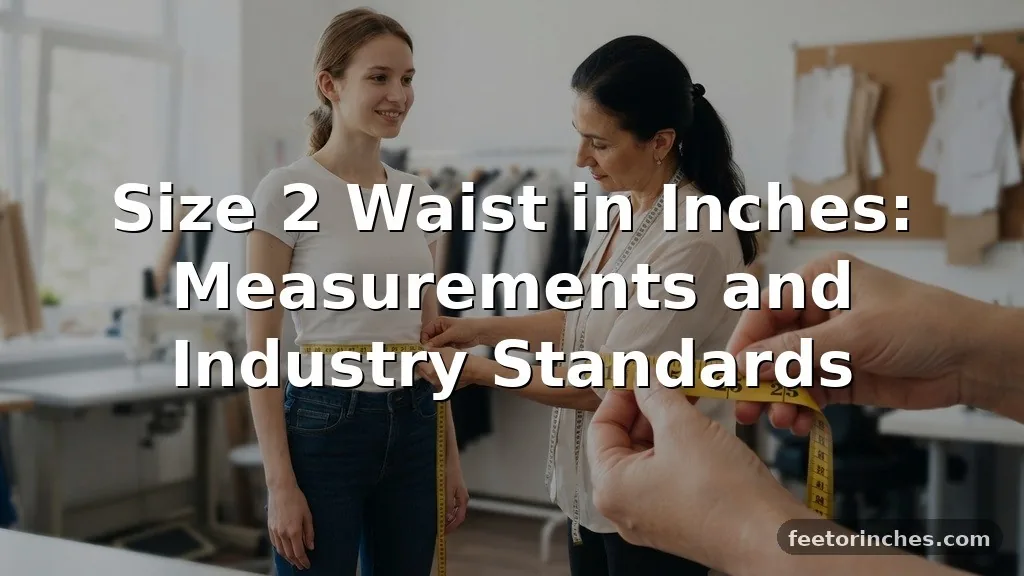
Finding the exact size 2 waist in inches is a frequent challenge because retail sizing lacks a universal standard. A size 2 typically corresponds to a waist measurement between 25 and 26 inches, but this varies significantly between brands.
You will find that high-end designers often cut their garments differently than mass-market retailers. Understanding these variations helps you select clothing that fits your frame correctly without relying solely on the label.
Knowing how your body compares to these industry benchmarks allows for more accurate online shopping. By learning to measure your waist correctly and understanding how different companies interpret a size 2, you can avoid the frustration of returning ill-fitting items.
Defining the Size 2 Waist in Inches
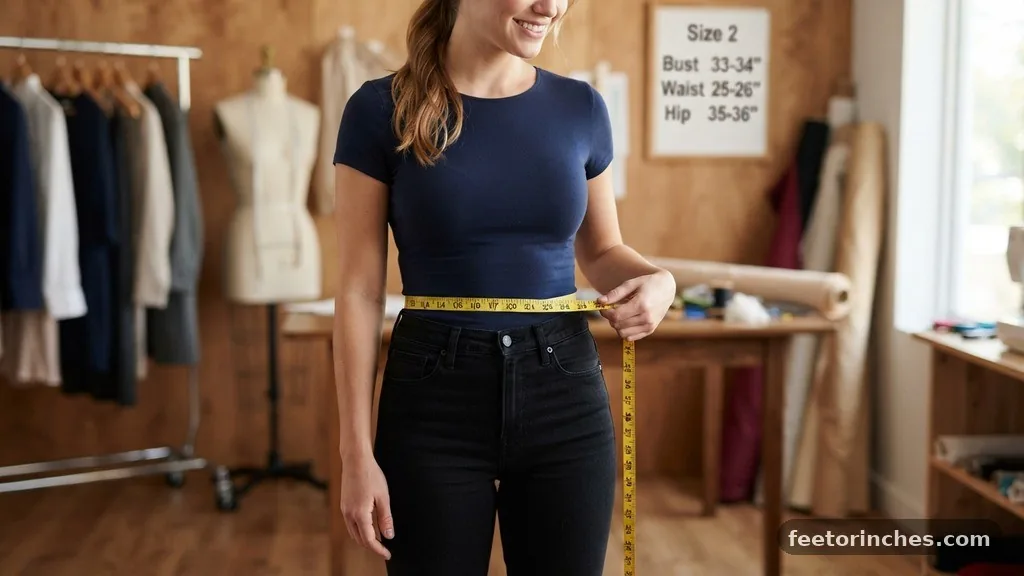
Most commercial clothing brands define a size 2 as having a waist measurement ranging from 25 to 26 inches. This measurement assumes a natural waist, which is the narrowest point of your torso, usually located just above the belly button. However, vanity sizing—the practice of labeling garments with smaller numbers than their actual dimensions—can shift this range.
Some mass-market retailers might label a 27-inch waist as a size 2 to appeal to customers. Conversely, luxury brands often stick to more traditional, smaller silhouettes where a size 2 might strictly measure closer to 24 or 25 inches. Because these standards are not regulated, the number on the tag is often less reliable than a tape measure.
How to Measure Your Waist Accurately
To determine your actual waist size, you need a flexible cloth tape measure. Stand in a relaxed position with your feet slightly apart and exhale naturally. Do not pull your stomach in or hold your breath, as this will lead to an inaccurate measurement.
Place the tape measure around your torso at the level of your natural waist. This point is typically found by bending to the side; the crease that forms is your natural waistline. Ensure the tape is level all the way around your body, parallel to the floor, and snug against your skin without digging in.
- Ensure the tape is not twisted before you begin.
- Measure directly against your skin or over very thin undergarments.
- Keep the tape parallel to the floor for consistency.
- Check the measurement at the point where the tape overlaps.
- Record the number in inches for the most common clothing references.
Comparison of Standard Waist Sizes
Because the industry lacks a single, binding standard, comparing a size 2 to surrounding sizes is essential for context. Retailers often use a grading system where each size increment represents roughly one inch in the waist. This table illustrates the typical progression found in many women‘s clothing lines, though individual manufacturer variations remain common.
| Clothing Size | Typical Waist (Inches) |
|---|---|
| Size 0 | 24 – 25 |
| Size 2 | 25 – 26 |
| Size 4 | 26 – 27 |
| Size 6 | 27 – 28 |
| Size 8 | 28 – 29 |
Why Retail Sizing Varies
The primary reason for sizing discrepancies is the target demographic of the clothing company. A brand catering to younger audiences may use a different fit model than a brand targeting professional women. These companies use proprietary “fit models” to determine the dimensions of their size 2 garments.
Furthermore, the intended fit of the garment dictates the measurement. A pair of high-waisted trousers will sit higher on the body than a low-rise jean, requiring a different waist measurement to achieve the same look. Always check the specific size chart provided by the retailer instead of assuming your size 2 waist in inches remains constant across all your favorite stores.
Estimating Measurements Without Tools
If you do not have a tape measure handy, you can estimate your waist size using common objects. A standard sheet of US letter paper is 8.5 inches wide. By holding this against your side, you can gauge your width, though this is far less precise than using a flexible tape.
Another method involves using your hands or a piece of string. Once you wrap a string around your waist, lay it flat against a ruler or a yardstick to get an accurate reading. Never rely on your pants size alone, as different cuts and materials can lead to significant variations in how a garment fits your frame.
Body Measurements Beyond the Waist
While the waist is a critical point, a full profile of your body measurements includes the chest, hips, and inseam. When professional tailors or official clothing standards are involved, they look at the relationship between these points. Your chest is measured at the fullest part, while your hips are measured at the widest part of your lower body.
Understanding these ratios helps when a size 2 waist fits, but the garment feels tight in the shoulders or hips. If you find that your waist fits a size 2 but other areas do not, you might consider tailoring rather than sizing up or down. A garment that fits the largest part of your body can always be taken in at the waist.
Common Misconceptions About Sizing
A common error is equating a specific waist measurement to a single size across all clothing categories. A size 2 in jeans often has a different waist measurement than a size 2 in a formal dress or a structured blazer. This occurs because different fabrics have varying levels of elasticity and structure.
Denim, for example, often contains elastane, allowing it to stretch and accommodate different body shapes. A woven silk dress, however, offers no give, meaning the size 2 must be cut to your exact measurements. Never assume that because you wear a size 2 in one category, you will automatically wear it in another.
FAQ
Is a 24-inch waist always a size 2?
No, a 24-inch waist is often considered a size 0 or even a 00 in many modern clothing brands. Sizing varies so widely that a 24-inch waist might be a size 2 in one brand and a size 0 in another.
Do men’s and women’s sizes align?
They do not align at all. Women’s sizing uses arbitrary numbers like 2, 4, or 6, while men’s clothing is typically measured in actual inches for the waist and inseam.
Should I measure my waist while wearing clothes?
It is best to measure against your skin or thin undergarments. Measuring over thick clothing like jeans or sweaters adds extra inches and leads to an inaccurate reading.
Why does my size 2 waist measurement feel different in different brands?
Companies use different fit models and design philosophies. A brand that prioritizes a “relaxed fit” will make their size 2 feel larger than a brand that aims for a “slim” or “tailored” silhouette.
Conclusion
Navigating the complexities of a size 2 waist in inches requires moving beyond the label on your clothing. Because sizing remains inconsistent across the fashion industry, your best tool is a reliable tape measure and an understanding of your own body measurements. By focusing on your actual dimensions rather than the number on a tag, you can ensure that every piece of clothing you purchase serves your needs effectively.
Take the time to measure yourself periodically, as body composition can change over time. When shopping online, always cross-reference your measurements with the specific brand’s size chart rather than relying on your historical size. With these simple habits, you will find it much easier to build a wardrobe that fits you perfectly every single time.
Related conversions: How Many Inches in a Foot? (Complete Guide with Real Examples & Visuals), How Many Inches in a Yard? Complete Conversion Guide With Examples, What Is 6 mm in Inches? Complete Conversion Guide, How Many Cubic Inches in a Cubic Yard? Complete Conversion Guide.
Explore more on FeetOrInches.